 Skip to content
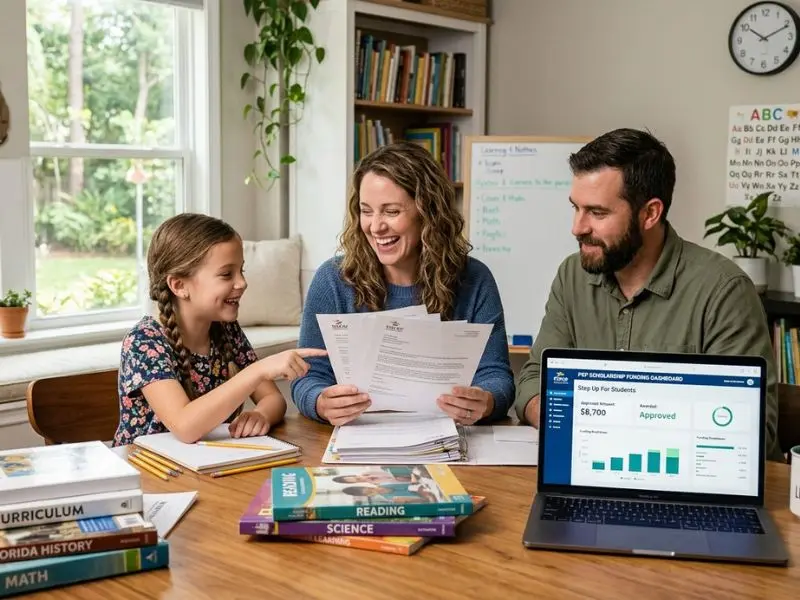
Seeing homeschool costs on paper can stop some families before they even begin. Curriculum, tutoring, online classes, and educational activities quickly turn an exciting idea into a budget concern. For many Florida parents, the biggest question is not how to homeschool, but how to afford it.
The good news is that Florida offers several funding programs that can help eligible homeschool families pay for educational expenses. Understanding how these programs work can make it easier to find financial assistance and choose the option that best fits your child’s needs.
- Key Takeaways
- Can Homeschoolers Get Grants in Florida?
- Are There Homeschool Grants in Florida?
- How Florida Homeschool Funding Works
- Florida Homeschool Funding Programs at a Glance
- What Is the Personalized Education Program (PEP)?
- Who Qualifies for the PEP Scholarship?
- How Much Funding Can Florida Homeschoolers Receive?
- Why Florida Homeschool Funding Has Become So Popular
- What Can Florida Homeschool Funds Be Used For?
- What Is a Student Learning Plan?
- Florida Homeschool Grants vs Education Savings Accounts (ESA)
- How to Apply for Florida Homeschool Funding
- Quick Eligibility Checklist
- Florida Homeschool Funding Application Timeline
- Annual Assessment and Evaluation Requirements
- Tips for Maximizing Florida Homeschool Funding
- Can Florida Homeschool Funding Cover Online Learning?
- PEP vs Traditional Florida Homeschooling
- Family Empowerment Scholarship for Students with Unique Abilities (FES-UA)
- Homeschool Funding Options for Special Needs Students
- Alternative Homeschool Funding Sources in Florida
- Florida Homeschool Scholarships vs Grants
- Pros and Cons of Florida Homeschool Funding Programs
- Can Florida Homeschool Funding Be Used for Extracurricular Activities?
- Common Mistakes Florida Parents Make When Applying
- Frequently Asked Questions
- What I Learned While Researching Florida Homeschool Grants
- Conclusion
Key Takeaways
- Florida does not offer traditional homeschool grants, but it does provide scholarship and funding programs.
- The Personalized Education Program (PEP) is one of the main funding options for homeschool families.
- Eligible students may receive thousands of dollars each year for educational expenses.
- Funding can often be used for curriculum, tutoring, online courses, testing fees, and educational services.
- Families should understand the differences between PEP and traditional Florida homeschooling before applying.
Can Homeschoolers Get Grants in Florida?
Florida does not offer traditional homeschool grants in the way many families expect. Instead, eligible students may receive educational funding through programs such as the Personalized Education Program (PEP) and Family Empowerment Scholarship options. These programs provide funding that can often be used for curriculum, tutoring, online courses, educational materials, and other approved learning expenses.
Are There Homeschool Grants in Florida?
Many parents search for Florida homeschool grants because they want help covering homeschooling costs. The answer is both yes and no.
Florida does not currently offer traditional homeschool grants in the way some families expect. Instead, the state provides scholarship programs and education funding opportunities that can help eligible students pay for approved educational expenses.
In most cases, the word “grant” is used by parents as a general term for financial assistance. However, Florida’s programs are usually classified as scholarships or education savings account (ESA) style funding.
Because of this, families searching for Florida homeschool grants are often looking for programs such as:
- Personalized Education Program (PEP)
- Family Empowerment Scholarship
- Family Empowerment Scholarship for Students with Unique Abilities (FES-UA)
- Other approved educational funding opportunities
Understanding this difference is important because it helps parents focus on programs they may actually qualify for.
How Florida Homeschool Funding Works
Florida homeschool funding works differently than many people assume.
Instead of sending money directly to parents as unrestricted cash, approved programs provide funding that must be used for educational purposes. These funds are generally managed through approved systems and can only be spent on eligible educational expenses.
Depending on the program, funding may help cover:
- Homeschool curriculum
- Textbooks
- Tutoring services
- Educational therapy
- Online learning programs
- Standardized testing fees
- Educational supplies
- Approved learning activities
The goal is to support personalized education while ensuring funds are used for student learning.
Florida Homeschool Funding Programs at a Glance

Florida offers several scholarship and education funding programs. Each program serves different types of students and families.
| Program | Who It Is For | Funding Type |
|---|---|---|
| PEP | Homeschool families using a personalized education approach | ESA Funding |
| FES-UA | Students with unique abilities and special needs | ESA Funding |
| FTC Scholarship | Eligible K-12 students | Scholarship |
| FES-EO | Eligible K-12 students seeking educational options | Scholarship |
Understanding these programs can help families focus on the funding opportunities that best match their educational goals.
What Is the Personalized Education Program (PEP)?
The Personalized Education Program, often called PEP, is one of the most popular funding options available to Florida homeschool families.
PEP was created to give families greater flexibility in directing their child’s education. Parents can review the official Personalized Education Program requirements and eligibility details through the Florida Department of Education’s PEP FAQ resource.
Unlike traditional public school enrollment, PEP gives parents more control over educational decisions. Families can choose learning resources, educational services, and curriculum options that match their child’s needs.
Many parents view PEP as one of the closest programs available to what people commonly call a homeschool grant.
Main Features of PEP
- Annual scholarship funding
- Flexible educational planning
- Curriculum choices selected by parents
- Access to approved educational providers
- Support for individualized learning paths
Who Qualifies for the PEP Scholarship?
Eligibility requirements can change as state programs evolve, but several common factors determine whether a student may qualify.
Generally, students must meet Florida residency requirements and satisfy program-specific eligibility guidelines.
Factors that may affect eligibility include:
- Student residency status
- Age requirements
- Program capacity limits
- Available funding
- Application deadlines
Priority Considerations
Some scholarship programs may give priority consideration to:
- Returning scholarship recipients
- Income-based considerations
- Program-specific requirements
- Available funding capacity
How Much Funding Can Florida Homeschoolers Receive?

Funding amounts vary depending on the specific program and annual state allocations.
However, many eligible families receive several thousand dollars per student annually through approved scholarship programs.
Example Funding Scenarios
| Number of Students | Example Annual Funding |
|---|---|
| 1 Student | Approximately $8,000 |
| 2 Students | Approximately $16,000 |
| 3 Students | Approximately $24,000 |
Actual funding amounts may be higher or lower depending on current program rules.
Why Florida Homeschool Funding Has Become So Popular
Homeschooling has grown rapidly across Florida in recent years. Many families want more flexibility, individualized learning, and educational choices that fit their children’s needs.
At the same time, rising education costs have increased interest in homeschool funding programs.
Parents often use scholarship funds to:
- Reduce curriculum expenses
- Access specialized tutoring
- Support children with unique learning needs
- Purchase educational resources
- Expand learning opportunities outside the home
What Can Florida Homeschool Funds Be Used For?

One of the biggest questions parents have about Florida homeschool grants and scholarship programs is how the money can be spent.
Common Approved Educational Expenses
- Homeschool curriculum
- Textbooks and workbooks
- Educational software
- Online learning programs
- Private tutoring
- Standardized testing
- Educational therapies
- Learning materials and supplies
- Approved educational classes
Approved vs Non-Approved Expenses
| Expense | Usually Approved |
|---|---|
| Curriculum | Yes |
| Textbooks | Yes |
| Workbooks | Yes |
| Tutoring Services | Yes |
| Online Courses | Yes |
| Educational Software | Yes |
| Standardized Testing | Yes |
| Educational Therapy | Often Yes |
| School Supplies | Often Yes |
| Laptop or Device | Sometimes |
| Internet Service | Usually No |
| Family Vacation | No |
| Entertainment Purchases | No |
What Is a Student Learning Plan?
Families participating in certain scholarship programs may need a Student Learning Plan.
A Student Learning Plan outlines educational goals and learning objectives for the student.
It may include:
- Academic goals
- Subject areas
- Curriculum choices
- Learning activities
- Educational resources
- Progress tracking methods
Florida Homeschool Grants vs Education Savings Accounts (ESA)
Many parents searching for Florida homeschool grants eventually come across the term Education Savings Account, often called an ESA.
An ESA is a funding model that allows approved educational funds to be used for qualified learning expenses.
Common ESA-funded expenses may include:
- Curriculum
- Textbooks
- Tutoring
- Educational therapies
- Online learning programs
- Standardized testing
Florida’s Personalized Education Program (PEP) operates through an ESA-style funding model.
How to Apply for Florida Homeschool Funding

Step 1: Confirm Eligibility
Verify:
- Florida residency
- Student age requirements
- Program eligibility rules
Step 2: Gather Required Documents
Examples include:
- Proof of residency
- Student identification documents
- Parent information
Step 3: Complete the Application
Carefully review all information before submission.
Step 4: Submit Supporting Documentation
Missing paperwork is one of the most common reasons applications take longer to process.
Step 5: Monitor Application Status
Check for updates regularly and respond quickly if additional documents are requested.
Quick Eligibility Checklist
You may qualify for Florida homeschool funding if most of the following apply:
- You are a Florida resident.
- Your child meets the program’s age and enrollment requirements.
- You can provide required documents.
- You follow scholarship program rules.
- You submit the application before the deadline.
Florida Homeschool Funding Application Timeline
| Month | Recommended Action |
|---|---|
| January | Research available programs |
| February | Gather documents |
| March | Begin applications |
| April | Review application status |
| May | Submit missing documents |
| Summer | Funding distribution often begins |
| Fall | Start using approved educational funds |
Annual Assessment and Evaluation Requirements
Parents should understand that homeschool funding programs may include annual assessment requirements.
Students participating in programs such as PEP are generally expected to complete an annual assessment that demonstrates educational progress.
Annual assessments may include:
- Standardized testing
- Evaluations by qualified professionals
- Other approved assessment methods
Meeting annual assessment requirements helps students remain in good standing.
Tips for Maximizing Florida Homeschool Funding
Create an Annual Budget
Plan curriculum, testing, tutoring, and activity expenses before the school year starts.
Prioritize Core Learning Resources
Focus on:
- Math
- Language Arts
- Science
- History
Keep Educational Records
Good record keeping supports budgeting, planning, and documentation.
Can Florida Homeschool Funding Cover Online Learning?
Yes. Many families use scholarship funds for:
- Virtual homeschool programs
- Self-paced homeschool curriculum
- Accredited online courses
- Teacher-supported online learning
PEP vs Traditional Florida Homeschooling

Many parents are surprised to learn that Florida offers more than one homeschooling path.
Traditional Homeschooling
Parents:
- Select curriculum
- Keep records
- Arrange evaluations
- Cover educational costs themselves
Personalized Education Program (PEP)
PEP provides scholarship funding while allowing parents significant educational flexibility.
Comparison Table
| Feature | Traditional Homeschooling | PEP |
|---|---|---|
| Parent-Controlled Education | Yes | Yes |
| Scholarship Funding | No | Yes |
| Curriculum Choice | Yes | Yes |
| Learning Flexibility | Yes | Yes |
| Educational Expense Assistance | No | Yes |
Family Empowerment Scholarship for Students with Unique Abilities (FES-UA)
FES-UA supports students with unique learning needs.
What FES-UA May Help Cover
- Specialized curriculum
- Educational therapy
- Speech therapy
- Occupational therapy
- Assistive technology
- Adaptive learning tools
Homeschool Funding Options for Special Needs Students
Families may also explore:
- FES-UA programs
- Disability-related educational assistance
- Therapy support organizations
- Nonprofit educational grants
Alternative Homeschool Funding Sources in Florida
Homeschool Co-ops
These may provide:
- Shared classes
- Group learning opportunities
- Reduced educational costs
Nonprofit Scholarships
Some organizations offer educational assistance for qualifying families.
Community Organizations
Local churches, foundations, and educational groups may provide learning support.
Curriculum Discounts and Free Resources
Many homeschool families use:
- Free homeschool curriculum
- Public library resources
- Open educational resources
Florida Homeschool Scholarships vs Grants
Many parents use the words grant and scholarship interchangeably.
Traditional grants generally provide funding for a specific purpose.
Florida’s major homeschool funding opportunities operate through scholarship and ESA-style programs such as:
- PEP
- FES-UA
- Family Empowerment Scholarship options
Pros and Cons of Florida Homeschool Funding Programs
Pros
- Reduces educational expenses
- Supports personalized learning
- Expands curriculum choices
- Provides tutoring access
Cons
- Eligibility requirements apply
- Funding rules can change
- Approved purchases may be limited
- Additional paperwork may be required
Can Florida Homeschool Funding Be Used for Extracurricular Activities?
Depending on program rules and approved providers, some enrichment activities may qualify.
Examples include:
- Music lessons
- Art classes
- Educational clubs
- STEM programs
- Foreign language instruction
- Educational field trips
- Learning workshops
These opportunities can help students develop skills beyond traditional academics.
Common Mistakes Florida Parents Make When Applying
Confusing PEP With Traditional Homeschooling
Understanding the differences can prevent future problems.
Waiting Until the Last Minute
Early applications often provide a smoother experience.
Submitting Incomplete Documents
Missing paperwork commonly delays approvals.
Purchasing Materials Too Early
Always verify that purchases qualify before spending money.
Ignoring Annual Requirements
Missing assessments or reporting requirements can affect future participation.
Frequently Asked Questions
Can homeschoolers get free money in Florida?
Eligible students may receive educational funding through scholarship programs such as PEP and FES-UA.
Is the PEP scholarship a homeschool grant?
Many parents call it a homeschool grant, but technically it is a scholarship program.
How much funding can Florida homeschoolers receive?
Funding varies each year, but eligible students may receive several thousand dollars annually.
Can homeschool funding pay for curriculum?
Yes. Curriculum is one of the most common approved educational expenses.
What I Learned While Researching Florida Homeschool Grants
While researching Florida homeschool grants, one thing became clear. Most parents searching for grants are actually looking for scholarship funding, education savings accounts, or financial assistance programs.
The biggest challenge is not finding funding. It is understanding which program matches your family’s situation. Many families miss opportunities simply because they do not know the difference between traditional homeschooling and funded options like PEP.
Conclusion
One lesson stood out during my review of Florida homeschool funding programs: the challenge is rarely finding information, but understanding which opportunity fits your situation. Families who learn how PEP, FES-UA, and other funding options work are usually in a stronger position to lower costs and build a sustainable homeschool plan.