 Skip to content
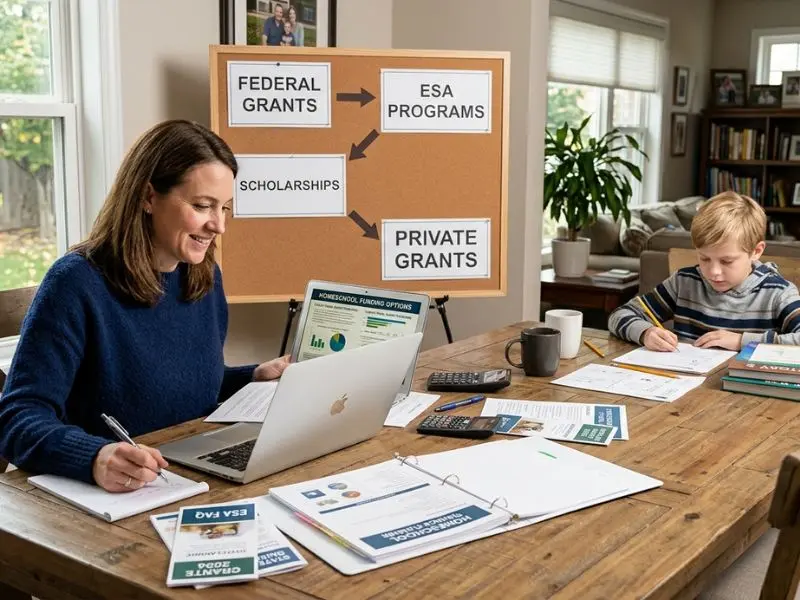
Few homeschool topics create more confusion than money. A parent hears about grants, another mentions ESA funding, and someone else talks about scholarships. Before long, it becomes difficult to tell what help is real and what only sounds promising. That uncertainty is why many families start searching for federal grants for homeschooling.
While comparing homeschool funding programs across different states, I noticed that the biggest obstacle was not a lack of options. It was misinformation. Many families were looking in the wrong place for support. Once the funding system is explained clearly, the available opportunities become much easier to understand.
- Key Takeaways
- TL;DR
- Are There Federal Grants for Homeschooling?
- Featured Snippet Answer
- Why Parents Search for Federal Grants for Homeschooling
- How Much Does It Really Cost to Homeschool?
- Government Funding for Homeschooling
- Federal Funding vs State Homeschool Funding
- Important Warning About Grant Scams
- Types of Financial Assistance Available for Homeschooling
- Why Understanding Funding Sources Matters
- Understanding State-Specific Homeschool Funding
- What Are Education Savings Accounts (ESAs)?
- Key States Offering Homeschool Funding
- States Offering Homeschool Funding at a Glance
- What Can State Homeschool Funding Cover?
- Who Can Qualify for Homeschool Funding?
- Why ESA Programs Matter More Than Federal Grants
- Private Grants for Homeschool Families
- Homeschool Funding Is Not the Same as Getting Paid
- HSLDA Compassion Grants
- HSLDA Grant Eligibility
- Curriculum Grants
- Disaster Relief Grants
- Other Financial Assistance Opportunities
- Additional Financial Assistance Resources
- How to Apply for Homeschool Funding
- Common Mistakes to Avoid When Applying for Financial Assistance
- Funding Options Based on Your Situation
- Why Many Families Combine Multiple Funding Sources
- Challenges and Considerations in Homeschool Funding
- Common Myths About Federal Grants for Homeschooling
- How to Find the Best Funding Opportunity
- Homeschool Funding Checklist
- A Rewarding and Affordable Choice
- Conclusion
Key Takeaways
- There is currently no nationwide federal grant program created specifically for homeschool families.
- Most homeschool funding comes from state programs, Education Savings Accounts (ESAs), scholarships, and private grants.
- Some states provide thousands of dollars per student through school choice programs.
- Private organizations offer homeschool grants for curriculum, emergencies, and special situations.
- Eligibility rules vary by state and funding program.
- Understanding the difference between federal funding and state funding helps families find the right financial assistance.
TL;DR
Many parents search for federal grants for homeschooling hoping to receive government assistance for educational expenses. While there is no federal homeschool grant available nationwide, homeschool families may qualify for state-funded ESA programs, scholarships, tax-advantaged education accounts, and private homeschool grants. Most funding opportunities come from state school choice programs rather than direct federal education grants.
Are There Federal Grants for Homeschooling?
No. The federal government does not currently offer a nationwide grant program specifically designed for homeschool families.
This answer surprises many parents because the phrase “federal grants for homeschooling” appears frequently online. In reality, most funding opportunities discussed on homeschool websites come from state programs, scholarship organizations, or private grants.
That does not mean financial help is unavailable.
Many homeschool families receive assistance through:
- Education Savings Accounts (ESAs)
- School choice programs
- Scholarship programs
- Curriculum grants
- Private homeschool grants
- State-funded educational assistance
The key is understanding where the funding actually comes from.
Featured Snippet Answer
Can You Get Federal Grants for Homeschooling?
No, there is currently no federal grant program that directly pays homeschool families nationwide. Most homeschool funding comes from state Education Savings Accounts (ESAs), school choice programs, scholarships, and private grants. Eligibility depends on state laws and individual program requirements.
Why Parents Search for Federal Grants for Homeschooling
Homeschooling offers flexibility and personalized education, but it also creates expenses that traditional public schools often cover.
Common homeschool costs include:
- Curriculum packages
- Online learning programs
- Textbooks
- Educational software
- Tutors
- Testing fees
- Field trips
- Co-op memberships
- School supplies
As these expenses increase, many families begin searching for government funding options.
Parents often ask:
- Can the government help pay for homeschooling?
- Are there grants for homeschool families?
- Can homeschoolers receive educational funding?
- Does the federal government reimburse homeschool costs?
These are reasonable questions, especially for families homeschooling multiple children.
How Much Does It Really Cost to Homeschool?
Homeschooling costs vary widely depending on teaching style, curriculum choices, and educational goals.
Some families homeschool on a very small budget using free resources. Others spend several thousand dollars each year.
Typical Homeschooling Expenses
| Expense Category | Estimated Annual Cost |
|---|---|
| Curriculum | $200–$1,500 |
| Online Programs | $100–$1,200 |
| Books and Materials | $100–$500 |
| Testing and Assessments | $25–$300 |
| Field Trips | $50–$500 |
| Co-op Memberships | $100–$1,000 |
| Educational Supplies | $100–$500 |
The actual amount depends on family preferences and state requirements.
Some homeschool families spend less than $500 per year, while others invest several thousand dollars in customized educational programs.
Government Funding for Homeschooling
The phrase “government funding for homeschooling” can mean several different things.
Many parents assume it refers to federal grants. However, most government funding comes from state-level programs.
These programs may allow parents to use educational funds for:
- Curriculum purchases
- Online classes
- Tutoring services
- Educational therapy
- Learning materials
- Approved extracurricular activities
The structure varies from state to state.
Some states provide direct educational accounts, while others use scholarship systems or reimbursement programs.
Understanding this distinction helps parents avoid wasting time applying for programs that do not apply to homeschoolers.
Federal Funding vs State Homeschool Funding

This is one of the most misunderstood areas of homeschooling.
Many articles combine federal grants, state programs, and private funding into one category. Doing so creates confusion.
The table below shows the difference.
| Feature | Federal Funding | State Homeschool Funding |
|---|---|---|
| Available Nationwide | Rare | Depends on State |
| Designed Specifically for Homeschoolers | Usually No | Often Yes |
| Direct Family Funding | Rare | Common |
| Curriculum Purchases | Limited | Often Allowed |
| Tutoring Coverage | Limited | Frequently Allowed |
| Program Rules | Federal Agencies | State Education Programs |
For most homeschool families, state funding opportunities are far more important than federal education programs.
Important Warning About Grant Scams
Parents searching for federal grants for homeschooling should be careful when reviewing funding opportunities online.
Some websites advertise “free federal homeschool grants” or claim the government pays families to homeschool. In most cases, these claims are misleading.
Federal grant programs are generally designed for organizations, schools, nonprofits, and research institutions rather than individual homeschool families. Families can verify legitimate federal funding opportunities through Grants.gov, the official U.S. government grants database, rather than relying on third-party websites that make misleading funding claims.
Before applying for any funding opportunity:
- Verify the source
- Check official state education websites
- Review program requirements carefully
- Avoid services that charge large upfront fees to access grant information
Using trusted sources can help families avoid scams and focus on legitimate homeschool funding opportunities.
Types of Financial Assistance Available for Homeschooling
Financial assistance comes from several sources.
The most common include:
State Education Grants
Some states provide educational funding through school choice programs.
These programs may help pay for:
- Curriculum
- Tutors
- Educational services
- Online learning
Education Savings Accounts (ESAs)
Education Savings Accounts are becoming one of the most popular homeschool funding options.
Eligible families receive educational funds that can be used for approved learning expenses.
Many of the largest homeschool funding programs today operate through ESA systems.
Homeschool Scholarships
Some organizations offer scholarships that help families reduce educational costs.
Scholarship eligibility may depend on:
- Income
- Location
- Educational needs
- Program participation
Private Homeschool Grants
Private organizations sometimes provide grants for:
- Curriculum purchases
- Emergency situations
- Special educational circumstances
These grants often fill funding gaps that state programs do not cover.
Why Understanding Funding Sources Matters
Finding homeschool financial assistance becomes much easier when families understand where the money actually comes from.
Many parents spend time searching for federal homeschool grants that do not exist. Meanwhile, they may overlook state-funded programs that could provide significant assistance.
The most successful homeschool families usually focus on:
- State school choice programs
- ESA opportunities
- Scholarship funding
- Private homeschool grants
- Community support resources
These sources provide the majority of homeschool financial assistance available today.
Understanding State-Specific Homeschool Funding
Although there are no nationwide federal grants for homeschooling, many states now offer educational funding programs that homeschool families can use.
Most of these programs operate through Education Savings Accounts (ESAs), scholarship programs, or school choice initiatives.
Instead of giving money directly as a federal grant, states place educational funds into approved accounts. Families can then use those funds for qualified learning expenses.
Depending on the state, approved expenses may include:
- Curriculum
- Online courses
- Private tutoring
- Educational therapy
- Testing fees
- Learning materials
- Special education services
Because every state creates its own rules, eligibility and funding amounts can vary significantly.
What Are Education Savings Accounts (ESAs)?

An Education Savings Account (ESA) is a state-funded program that allows eligible families to use education funds outside the traditional public school system.
Think of an ESA as an education budget assigned to a student.
Families can use the money for approved educational expenses instead of attending a public school full-time.
Many modern homeschool funding programs are built around ESA models.
Common ESA Benefits
Many ESA programs allow spending on:
- Homeschool curriculum
- Online homeschool programs
- Learning software
- Private tutors
- Educational therapy
- Testing services
- Special needs support
Some states provide several thousand dollars per child each year.
This is why many parents searching for federal grants for homeschooling eventually discover that ESA programs are often the real funding source they need.
Key States Offering Homeschool Funding
Several states have created funding programs that homeschool families may qualify for.
The availability and funding levels continue to change as school choice laws expand across the country.
Arizona ESA Funds: Empowerment Scholarship Account
Arizona is often considered one of the most homeschool-friendly funding states.
The Empowerment Scholarship Account program allows eligible families to use educational funds for approved homeschool expenses.
Families may use ESA funds for:
- Curriculum
- Educational materials
- Online learning
- Tutoring
- Educational therapies
Arizona’s program is frequently cited as one of the most flexible school choice options in the United States.
Florida FES Funds: Family Empowerment Scholarship
Florida offers several educational funding opportunities through its Family Empowerment Scholarship programs.
Eligible homeschool families may receive assistance for:
- Instructional materials
- Curriculum
- Educational services
- Approved educational expenses
Florida continues to be one of the most active states in expanding educational choice programs.
Many Florida homeschool families also participate through the Personalized Education Program (PEP), which allows eligible students to access education savings account funding for approved educational expenses.
Alabama ESA Funds: The CHOOSE Act
Alabama introduced the CHOOSE Act to expand educational options for families.
The program is designed to provide eligible students with education funds that may be used for approved educational expenses outside the traditional public school setting.
As implementation continues, Alabama is becoming an increasingly important state to watch for homeschool funding opportunities.
Utah Fits All Scholarship
Utah created the Fits All Scholarship Program to provide educational funding for qualifying students.
Approved expenses may include:
- Curriculum
- Private educational services
- Learning programs
- Educational resources
Many homeschooling families view this program as a significant funding opportunity.
West Virginia Hope Scholarship
The Hope Scholarship Program gives eligible families access to educational funding that can be used outside the traditional public school system.
Approved uses may include:
- Homeschool curriculum
- Tutoring
- Educational services
- Online courses
West Virginia’s program is often referenced as one of the largest school choice initiatives available to homeschool families.
New Hampshire Education Freedom Account
New Hampshire operates an Education Freedom Account program that allows eligible families to direct educational funds toward approved learning expenses.
Families may use funds for:
- Homeschool materials
- Online education
- Tutoring
- Specialized educational services
The program continues to attract attention from families seeking educational flexibility.
North Carolina Funding Opportunities
North Carolina offers several educational funding options depending on student circumstances and program eligibility.
Funding opportunities may include:
- Opportunity Scholarships
- Education savings programs
- Special education assistance
North Carolina families may also explore ESA+ programs designed for certain qualifying students. Eligibility depends on student needs and current program requirements.
Availability depends on program requirements and state regulations.
States Offering Homeschool Funding at a Glance
| State | Funding Program | Homeschool Use Allowed |
|---|---|---|
| Arizona | Empowerment Scholarship Account | Yes |
| Florida | Family Empowerment Scholarship | Yes |
| Alabama | CHOOSE Act | Yes |
| Utah | Fits All Scholarship | Yes |
| West Virginia | Hope Scholarship | Yes |
| New Hampshire | Education Freedom Account | Yes |
| North Carolina | Various Scholarship Programs | Limited to Program Rules |
This list changes frequently as states expand school choice legislation.
Families should always verify the latest eligibility requirements before applying.
What Can State Homeschool Funding Cover?
Coverage varies by program.
However, many state-funded education programs allow spending on the following educational needs.
Curriculum Purchases
Many programs cover:
- Complete curriculum packages
- Subject-specific courses
- Digital curriculum subscriptions
- Educational workbooks
Online Learning Programs
Funding may be used for:
- Online homeschool curriculum
- Virtual classes
- Educational software
- Learning platforms
Tutoring Services
Some programs allow payment for:
- Academic tutoring
- Reading specialists
- Math instruction
- Subject experts
Special Education Services
Certain programs help families pay for:
- Speech therapy
- Occupational therapy
- Educational evaluations
- Specialized instruction
Testing and Assessments
Approved programs may cover:
- Standardized testing
- Academic assessments
- Progress evaluations
Who Can Qualify for Homeschool Funding?
Eligibility depends on state law and individual program requirements.
However, many programs look for similar qualifications.
Common Eligibility Requirements
✓ School-age student
✓ State residency
✓ Program application completed
✓ Educational participation requirements
✓ Approved expenses
✓ Compliance with state rules
Some programs have income requirements.
Others are open to most families regardless of income.
Because rules vary widely, families should review program guidelines carefully before applying.
Why ESA Programs Matter More Than Federal Grants
When parents search for federal grants for homeschooling, they are usually looking for financial help with educational expenses.
In practice, ESA programs often provide far more support than a federal grant program would.
Many families receive funding for:
- Curriculum
- Educational services
- Tutoring
- Learning materials
As school choice programs continue expanding across the United States, ESA funding is becoming one of the most important sources of homeschool financial assistance available today.
Private Grants for Homeschool Families
While federal grants for homeschooling do not exist as a nationwide program, private organizations provide financial assistance to homeschool families every year.
These grants are often easier to access than many people realize.
Some programs help with curriculum costs. Others provide emergency assistance or support families facing unexpected hardships.
Private homeschool grants can be especially valuable for families who do not qualify for state-funded programs.
Homeschool Funding Is Not the Same as Getting Paid
Many parents searching for federal grants for homeschooling are actually asking whether parents can get paid to homeschool their children.
In most cases, homeschool funding does not work like a paycheck.
Programs such as Education Savings Accounts (ESAs), scholarships, and grants are typically designed to cover approved educational expenses rather than provide personal income.
Funding may be used for:
- Curriculum
- Tutoring
- Online courses
- Educational materials
- Learning services
Understanding this distinction helps families set realistic expectations when exploring homeschool financial assistance.
HSLDA Compassion Grants
The Home School Legal Defense Association (HSLDA) operates one of the best-known homeschool assistance programs in the country.
Its Compassion Grant program helps homeschool families experiencing financial hardship.
These grants may help families continue homeschooling during difficult circumstances such as:
- Job loss
- Medical emergencies
- Family crises
- Unexpected financial hardship
Funding availability varies throughout the year.
Families should review current eligibility requirements before applying.
HSLDA Grant Eligibility
Families interested in HSLDA grants should review eligibility requirements before applying.
Requirements may change over time, but curriculum grants are generally intended for families experiencing significant financial need.
Applicants may be asked to provide:
- Proof of homeschooling
- Financial information
- Details about educational needs
- Information about curriculum expenses
Reviewing current requirements before applying can help families determine whether they qualify for assistance.
Curriculum Grants
Curriculum costs can be one of the largest homeschooling expenses.
Several organizations offer curriculum grants designed to help families purchase educational materials.
These grants may cover:
- Complete curriculum packages
- Textbooks
- Educational subscriptions
- Learning materials
- Online homeschool programs
Curriculum grants are particularly helpful for families teaching multiple children.
Disaster Relief Grants
Natural disasters can create major educational disruptions.
Some organizations offer disaster relief grants to help homeschool families recover after events such as:
- Hurricanes
- Floods
- Wildfires
- Tornadoes
- Severe storms
These grants may assist with replacing:
- Lost curriculum
- Educational materials
- School supplies
- Learning equipment
Disaster assistance programs often become available shortly after major emergencies occur.
Other Financial Assistance Opportunities

In addition to grants, homeschool families can often reduce costs through scholarships, discounts, and community resources.
Many of these opportunities are overlooked simply because families do not know they exist.
Homeschool Scholarships
Some educational organizations provide scholarships that help cover learning expenses.
Depending on the program, scholarships may support:
- Curriculum
- Educational programs
- Tutoring
- Academic enrichment activities
Requirements vary by organization.
Community Assistance Programs
Local organizations sometimes provide support through:
- Educational foundations
- Community grants
- Church assistance programs
- Nonprofit educational initiatives
These programs may not appear in national homeschool searches, making local research especially valuable.
Homeschool Co-op Assistance
Some homeschool co-ops offer:
- Reduced membership fees
- Scholarship opportunities
- Volunteer exchange programs
These options can lower overall educational costs while providing additional learning opportunities.
Additional Financial Assistance Resources
Many homeschool families reduce expenses by combining multiple funding sources.
Using several smaller resources often produces better results than relying on a single grant program.
College Courses
Some high school homeschool students can participate in:
- Dual enrollment programs
- Community college partnerships
- Early college opportunities
In certain situations, educational costs may be reduced through these programs.
Field Trips and Educational Discounts
Many organizations offer educational discounts for homeschool families.
Potential savings may include:
- Museums
- Science centers
- Zoos
- Aquariums
- Educational events
Small discounts can add up significantly over time.
Curriculum Resources
Free and low-cost curriculum options continue to grow.
Popular resources include:
- Public library systems
- Open educational resources
- Free online learning platforms
- Educational websites
These resources can help families lower yearly homeschooling expenses.
Grants and Funding Directories
Funding directories can help parents discover:
- State programs
- Private grants
- Scholarship opportunities
- Local funding sources
Checking multiple sources regularly improves the chances of finding available assistance.
How to Apply for Homeschool Funding

Many families miss funding opportunities because they are unsure how to begin the application process.
Following a simple step-by-step approach can make the process much easier.
Step 1: Research Available Opportunities
Start by identifying programs available in your state.
Look for:
- ESA programs
- Scholarship opportunities
- Private grants
- Community assistance programs
Pay close attention to eligibility requirements.
Step 2: Gather Required Documents
Most funding programs require documentation.
Common examples include:
- Proof of residency
- Student information
- Educational plans
- Expense records
- Program applications
Having documents prepared ahead of time can speed up the process.
Step 3: Complete the Application Forms
Carefully review all instructions before submitting an application.
Mistakes can delay approval.
Double-check:
- Names
- Dates
- Required signatures
- Supporting documents
Accurate applications improve approval chances.
Step 4: Track Your Application and Follow Up
After submitting an application:
- Save copies of all documents
- Monitor deadlines
- Respond quickly to requests for information
Many funding programs have limited application windows.
Missing a deadline may mean waiting until the next funding cycle.
Common Mistakes to Avoid When Applying for Financial Assistance
Many applicants make avoidable mistakes that reduce their chances of receiving funding.
Understanding these common problems can save time and frustration.
Applying for Programs That Do Not Allow Homeschool Participation
Not every educational funding program supports homeschooling.
Always confirm eligibility before investing time in an application.
Missing Application Deadlines
Many grants and scholarship programs have strict deadlines.
Late submissions are often rejected automatically.
Create a calendar to track important dates.
Failing to Read Program Rules
Every funding program has different requirements.
Some funds may only be used for approved educational expenses.
Understanding the rules helps prevent future problems.
Not Keeping Expense Records
Some programs require receipts or spending documentation.
Maintaining organized records makes reporting much easier.
Ignoring Smaller Funding Opportunities
Many parents focus only on large grants.
However, several smaller scholarships and assistance programs combined can significantly reduce homeschooling costs.
Funding Options Based on Your Situation
Different funding opportunities work better for different families.
The table below can help simplify your search.
| Situation | Best Funding Option |
|---|---|
| Need Curriculum Help | Curriculum Grants, ESA Programs |
| Need Emergency Assistance | HSLDA Compassion Grants |
| Special Needs Student | ESA Programs, Scholarship Programs |
| Multiple Children | State Funding Programs |
| Low-Income Family | Private Grants and Scholarships |
| Online Learning Expenses | ESA Programs and Curriculum Grants |
Starting with the option that best matches your situation often produces the fastest results.
Why Many Families Combine Multiple Funding Sources
Successful homeschool families rarely depend on a single funding program.
Instead, they combine:
- State ESA funding
- Private grants
- Scholarships
- Community resources
- Educational discounts
This strategy reduces educational costs while increasing flexibility.
As homeschool funding opportunities continue expanding, families who understand all available options are often in the strongest position to reduce expenses and build a sustainable homeschool plan.
Challenges and Considerations in Homeschool Funding
Homeschool funding can reduce educational expenses, but it is important to understand the challenges that come with these programs.
Funding opportunities continue to expand, yet not every family will qualify for every program.
Knowing the limitations ahead of time helps families plan more effectively.
Different Rules in Every State
One of the biggest challenges is that homeschool funding rules vary by state.
A program available in Arizona may not exist in another state.
Some states offer:
- Education Savings Accounts
- Scholarship programs
- Reimbursement programs
- School choice funding
Others provide little or no homeschool-specific financial assistance.
Families should always review the most current state regulations before making educational decisions.
Limitations and Requirements
Most funding programs come with rules.
Depending on the program, families may need to:
- Meet residency requirements
- Submit applications annually
- Use approved vendors
- Keep spending records
- Follow reporting requirements
Understanding these obligations helps prevent unexpected issues later.
Changing Laws and Programs
Homeschool funding programs frequently change.
New legislation can:
- Expand eligibility
- Increase funding amounts
- Modify approved expenses
- Create entirely new programs
Because of this, families should verify information each year rather than relying on outdated resources.
Common Myths About Federal Grants for Homeschooling
There is a lot of misinformation online about homeschool funding.
Let’s clear up some common myths.
Myth #1: The Federal Government Pays Parents to Homeschool
This is one of the most common misconceptions.
There is currently no nationwide federal program that pays parents simply for homeschooling their children.
Most funding comes from state school choice programs and private organizations.
Myth #2: Every Homeschool Family Qualifies for Funding
Eligibility depends on the program.
Some opportunities are open to many families, while others have specific requirements.
Qualification may depend on:
- State residency
- Student eligibility
- Program rules
- Available funding
Myth #3: Homeschool Grants Cover Every Expense
Most funding programs only cover approved educational expenses.
Personal household costs are generally not eligible.
Always review spending guidelines before making purchases.
Myth #4: Funding Is Only Available for Low-Income Families
While some programs consider income, many school choice programs are not income-based.
Eligibility varies significantly between states.
How to Find the Best Funding Opportunity
The best funding source depends on your situation.
Start by asking these questions:
Do You Live in a State With ESA Funding?
If yes, begin there.
ESA programs often provide the largest funding opportunities available to homeschool families.
Do You Need Help With Curriculum Costs?
Look for:
- Curriculum grants
- ESA programs
- Scholarship opportunities
Are You Facing Financial Hardship?
Private grants and compassion-based assistance programs may be the best fit.
Do You Have a Special Needs Student?
Some state programs provide additional support for special education services and therapies.
Matching your needs to the correct funding source can save time and improve your chances of success.
Homeschool Funding Checklist
Use this quick checklist before applying for any program.
Before You Apply
✓ Confirm program eligibility
✓ Verify application deadlines
✓ Gather required documents
✓ Review approved expenses
✓ Create a recordkeeping system
✓ Save copies of all applications
✓ Monitor application status
✓ Keep receipts for educational purchases
A simple checklist can prevent many common application mistakes.
A Rewarding and Affordable Choice
Finding accurate information about federal grants for homeschooling can feel frustrating because many resources mix federal funding, state programs, and private grants together.
From my experience researching homeschool funding, the families who benefit most are the ones who focus on available state programs and private assistance rather than searching only for federal grants. Understanding where funding actually exists makes the process much easier and opens more opportunities for long-term homeschool success.
Conclusion
After reviewing homeschool funding programs, one lesson stands out. Families who focus only on federal grants often overlook the funding sources that are actually available. From my experience analyzing homeschool policies and assistance programs, understanding the difference between federal, state, and private funding is what helps parents find realistic financial support and make better homeschooling decisions.