 Skip to content
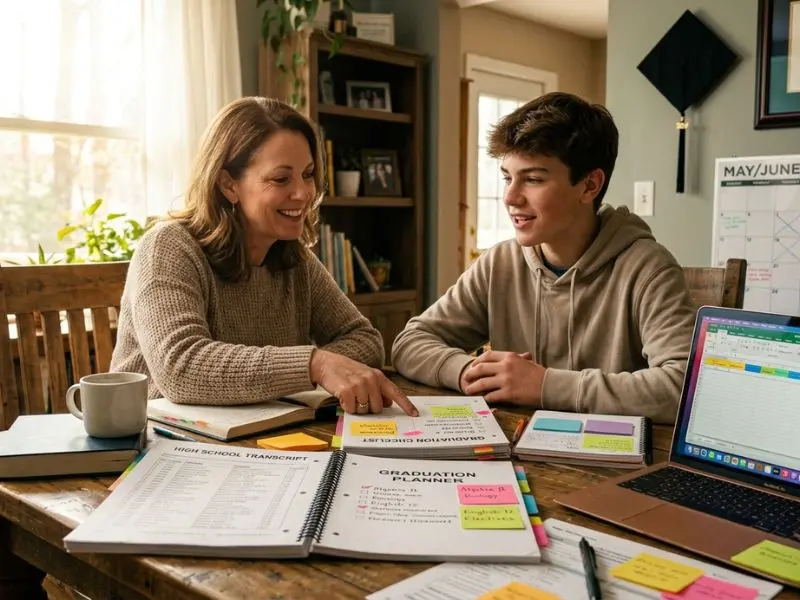
A homeschool diploma represents years of learning, yet many families spend more time worrying about graduation than teaching high school. The uncertainty usually isn’t about education, it’s about whether the credits, records, and graduation plan will truly support a student’s future after homeschool.
The more homeschool graduation stories and state guidance you explore, the clearer one fact becomes: confident families don’t wait until senior year to understand homeschool graduation requirements. They build a simple plan early, keep organized records, and make informed decisions that prepare their teenager for college, careers, or any path they choose.
- Before You Plan Homeschool Graduation
- Who Sets Homeschool Graduation Requirements?
- Are Homeschool Graduation Requirements the Same as Public School Requirements?
- Why Planning Before Ninth Grade Makes Graduation Easier
- How Homeschool Graduation Requirements Vary by State
- What Tests Do Homeschoolers Need to Graduate?
- How Many Credits Does a Homeschooler Need to Graduate?
- How to Award High School Credits
- Create a Four-Year Homeschool Graduation Plan
- When Can a Homeschool Student Graduate?
- Common Mistakes Parents Make When Planning Graduation
- Homeschool Graduation Requirements Based on Your Student's Future Goals
- Homeschool Graduation Requirements for Students With Special Learning Needs
- What Documents Does a Homeschool Graduate Need?
- Homeschool Diploma vs Transcript vs GED
- Does a Homeschool Diploma Need to Be Accredited?
- Homeschool Graduation Checklist
- Frequently Asked Questions
- Conclusion
Before You Plan Homeschool Graduation
Homeschool graduation requirements depend on your state’s homeschool laws, the homeschool option your family uses, and your student’s future plans. Some states include specific graduation requirements for homeschoolers, while many allow parents to establish their own graduation standards while following applicable homeschool laws.
The most important step is understanding that there is no single nationwide homeschool graduation standard. Instead of copying another family’s graduation plan, create one that meets your state’s legal requirements while preparing your student for college, career training, military service, or employment.
Most homeschool graduation plans include:
- Following applicable state homeschool laws
- Completing planned high school coursework
- Earning documented high school credits
- Keeping accurate transcripts and records
- Issuing a homeschool diploma when graduation requirements have been completed
Starting with a written graduation plan before ninth grade helps families stay organized throughout high school.
Who Sets Homeschool Graduation Requirements?

One of the biggest misconceptions about homeschooling is that every student must meet the same graduation requirements. In reality, several factors can influence how graduation is planned.
Understanding who establishes graduation requirements helps parents make informed decisions and avoid confusion later. It also provides peace of mind because families know they are building a graduation plan based on the rules that actually apply to them.
State Homeschool Laws
Homeschool laws are created by individual states, not by the federal government. Because of this, graduation requirements can differ from one state to another.
A few states include specific graduation requirements within their homeschool laws. In many other states, parents determine the graduation requirements for an independent homeschool while continuing to follow all applicable homeschool regulations.
Before planning high school courses, families should review their state’s current homeschool laws. Doing this early helps prevent misunderstandings and ensures graduation plans remain legally compliant.
Parents as the Homeschool Administrator
For many independent homeschool families, parents serve as both the teacher and the school administrator. This often means they are responsible for deciding when graduation requirements have been completed.
Parents commonly determine:
- Required courses
- Elective courses
- Credit requirements
- Grading methods
- Graduation standards
- Graduation date
This flexibility allows families to create a personalized high school education that reflects a student’s interests, abilities, and long-term goals.
Rather than waiting until senior year, experienced homeschool families usually create a written graduation plan before ninth grade. Updating that plan each year makes graduation much less stressful.
Umbrella Schools, Private Schools, and Diploma Programs
Not every homeschool operates independently.
Some families homeschool through:
- Umbrella schools
- Church schools
- Accredited online schools
- Correspondence schools
- Diploma programs
These organizations may establish their own graduation policies. Students may need to complete specific courses, earn a minimum number of credits, or meet additional academic requirements before receiving a diploma.
Families should review these policies before enrolling so they understand how graduation will be determined.
Colleges, Trade Schools, Employers, and the Military
Graduating from homeschool is only one part of preparing for adulthood.
The student’s next destination often influences which high school courses should be completed.
For example:
- Four-year colleges may recommend advanced mathematics, laboratory sciences, and world languages.
- Community colleges often request an official transcript during admission.
- Trade schools may focus more on technical education and career preparation.
- Military branches have their own enlistment requirements.
- Employers may request proof of high school completion.
These organizations usually do not determine homeschool graduation requirements. Instead, they establish admission or hiring expectations that students should prepare for while completing high school.
Why Planning Early Builds Confidence
Many parents worry that they will accidentally miss an important graduation requirement. In reality, most graduation problems happen because planning starts too late or records are incomplete.
Creating a graduation plan before high school begins gives families time to review state laws, choose appropriate courses, document credits consistently, and adjust the plan if the student’s goals change.
Key Takeaway: Parents often have significant responsibility for establishing homeschool graduation standards, but those decisions should always align with applicable homeschool laws and the student’s future plans.
Are Homeschool Graduation Requirements the Same as Public School Requirements?
One of the most common questions parents ask is whether they must follow the same graduation requirements as their local public school.
For most independent homeschool families, the answer is no.
Public schools follow graduation requirements established by state education agencies or local school districts. Independent homeschool families often follow different legal rules depending on their state’s homeschool laws.
That does not mean public school graduation plans have no value. Many homeschool parents use them as academic planning guides because they reflect coursework that colleges and employers often recognize.
Homeschool Requirements vs Public School Requirements
The differences become easier to understand when viewed side by side.
| Area | Independent Homeschool | Public School |
|---|---|---|
| Graduation standards | Often determined by parents while following homeschool law | Established by the state or school district |
| Curriculum | Parent-selected | State-approved |
| Credit requirements | Vary by homeschool law or graduation plan | Fixed by district graduation policy |
| Diploma issuer | Parent, homeschool administrator, or diploma program | Public school |
| Graduation schedule | Often flexible within applicable laws | School calendar |
Many parents use public-school graduation standards as a planning benchmark, even when they are not legally required to follow them. This approach can help students build transcripts that colleges and employers easily understand while preserving the flexibility homeschooling offers.
When Public School Requirements May Apply
Although public-school graduation requirements usually do not apply to independent homeschool students, there are situations where different rules may exist.
Students enrolled through public virtual schools, charter programs, umbrella schools, accredited private schools, or diploma programs may need to follow the graduation policies established by those organizations.
Families should always understand which educational program they are using before creating a graduation plan.
Every Student’s Graduation Plan Can Look Different
One of the greatest strengths of homeschooling is flexibility.
Instead of requiring every student to complete the exact same courses, homeschooling allows families to design graduation plans around individual goals.
For example:
- A future engineer may complete advanced mathematics and laboratory sciences.
- A student interested in graphic design may complete additional art and technology courses.
- A future electrician may focus on career training and technical education.
- A student planning to start a business may study entrepreneurship, accounting, and communication.
The purpose of homeschool graduation is not to create identical graduates. It is to prepare each student for success after high school.
Why Planning Before Ninth Grade Makes Graduation Easier
Many graduation problems can be avoided by planning early.
Waiting until senior year often leads to missing credits, incomplete transcripts, forgotten extracurricular activities, or unnecessary stress.
Graduation planning becomes much easier when families treat high school as a four-year journey instead of a final-year project.
Starting before ninth grade allows parents to:
- Create a written graduation plan
- Choose a consistent credit system
- Build the transcript year by year
- Save course descriptions
- Record extracurricular activities
- Organize important academic documents
- Adjust coursework if future goals change
Small updates each year prevent last-minute surprises and help parents feel confident that graduation requirements are being met.
Families who stay organized throughout high school usually spend less time correcting paperwork and more time helping their students prepare for the opportunities that come after graduation.
How Homeschool Graduation Requirements Vary by State
One of the first things parents should do before planning high school is understand their state’s homeschool laws. There is no nationwide set of homeschool graduation requirements, so the rules that apply in one state may be different in another.
This difference often causes confusion because parents compare advice from websites, friends, or public schools without realizing they may be following different homeschool laws. Knowing which rules apply to your homeschool helps you create a graduation plan with confidence.
States With Specific Homeschool Graduation Requirements
A few states include graduation requirements within their homeschool laws or require families to meet certain high school expectations.
Depending on the state and homeschool option, families may need to:
- Teach required subjects
- Complete annual evaluations
- Maintain portfolios
- Keep attendance records
- Submit additional documentation
Parents should understand these requirements before high school begins so they have enough time to prepare.
States Where Parents Set Graduation Standards
Many states allow parents operating an independent homeschool to establish their own graduation standards while following applicable homeschool laws.
Parents may decide:
- Which subjects will be studied
- Which electives will be completed
- How credits will be awarded
- How grades will be calculated
- When graduation requirements have been completed
This flexibility allows families to build a personalized education that matches the student’s learning style, interests, and future plans.
Why Your Homeschool Option Matters
Not every homeschool follows the same legal path.
Some families homeschool independently, while others participate in:
- Umbrella schools
- Church schools
- Accredited online schools
- Diploma programs
- Public virtual or charter programs where available
Each option may have its own graduation requirements, transcript policies, and diploma procedures.
Before creating a four-year graduation plan, families should understand which educational arrangement they are using and which graduation rules apply.
How to Check Your State’s Graduation Requirements
Instead of relying on general advice found online, use a simple process to verify the requirements that apply to your homeschool.
Step 1: Identify Your Homeschool Option
Some states offer more than one legal homeschool option. Graduation expectations may vary depending on which option your family uses.
Step 2: Review State Homeschool Laws
Check whether your state requires:
- Specific subjects
- Annual testing
- Evaluations
- Portfolios
- Recordkeeping
Step 3: Review Program Requirements
If your student is enrolled through an umbrella school, online academy, private school, or diploma program, review its graduation policies as well.
Step 4: Consider Future Goals
After understanding the legal requirements, compare them with the expectations of colleges, trade schools, military branches, employers, or scholarship programs your student may pursue.
Planning with all four steps in mind helps families avoid surprises during senior year.
What Tests Do Homeschoolers Need to Graduate?
Many parents assume homeschool students must pass a graduation test before receiving a diploma. In most cases, this is not true.
There is no single national homeschool graduation exam.
Some states require annual assessments or evaluations during the homeschool years, but these are usually different from graduation requirements.
Students enrolled in umbrella schools, private schools, or diploma programs may also have additional testing expectations established by those organizations.
Colleges, scholarship programs, military branches, or career certifications may require entrance exams or placement tests. These requirements are separate from homeschool graduation.
Do Homeschoolers Need a GED?
Homeschooled students do not usually need a GED simply because they were educated at home.
A GED is a high school equivalency credential. It is designed for individuals who did not graduate through a traditional high school or homeschool graduation process.
A student who successfully completes the homeschool graduation plan may receive a homeschool diploma when allowed under applicable homeschool laws.
Families should only consider the GED when it is specifically required for their individual circumstances.
How Many Credits Does a Homeschooler Need to Graduate?

This is one of the questions parents ask most often.
Unfortunately, there is no single answer because homeschool graduation requirements differ by state, homeschool program, and future educational goals.
Instead of asking how many credits every homeschooler needs, ask how many credits will best prepare your student for the next step after graduation.
Planning with future goals in mind usually creates a stronger graduation plan than simply copying another school’s requirements.
Legal Requirements vs Recommended High School Credits
Legal graduation requirements and recommended academic planning are not always the same.
Legal requirements come from:
- State homeschool law
- Your homeschool option
- Your homeschool graduation plan
Recommended credits are often based on common college-preparatory expectations.
The table below provides a general planning example rather than a nationwide legal requirement.
| Subject | Common College-Prep Recommendation |
|---|---|
| English | 4 credits |
| Mathematics | 3–4 credits |
| Science | 3–4 credits |
| Social Studies | 3–4 credits |
| World Language | 2–3 credits |
| Fine Arts | 1 credit |
| Physical Education | 1 credit |
| Health | 0.5–1 credit |
| Electives | 4–8 credits |
Students should always review the admission requirements of the colleges, scholarships, military branches, or career programs they hope to pursue.
Is There a Total Number of Credits?
There is no nationwide homeschool credit requirement.
Some states establish graduation standards for certain homeschool options, while many parents determine the total credits required for graduation.
Rather than trying to reach a specific national number, families should create a written graduation plan before ninth grade and review it each year to ensure steady progress.
Key Takeaway: There is no universal homeschool credit requirement. Build a graduation plan that satisfies applicable homeschool laws while preparing your student for future opportunities.
How to Award High School Credits
One of the biggest concerns homeschool parents have is whether they are awarding credits correctly.
The good news is that consistency matters more than finding one perfect method. A clear and documented credit policy creates transcripts that are easier for colleges and employers to understand.
Parents operating an independent homeschool can often choose a reasonable method for awarding credits. Families enrolled through umbrella schools or diploma programs should follow that organization’s credit policies.
Curriculum Completion
Many homeschool families award one credit after the successful completion of a full-year high school curriculum.
For example:
- Algebra I
- Biology
- American Literature
- United States History
Semester courses often receive one-half credit.
This method is simple, organized, and widely used.
Mastery-Based Learning
Some students complete coursework more quickly than others.
Instead of measuring only time, parents may award credit after the student demonstrates mastery of the subject through assignments, projects, assessments, or other documented work.
This approach works well for students learning at an accelerated or individualized pace.
Instructional Time
Some homeschool families use instructional time as part of their credit system.
A full-year course commonly earns one credit, while a semester course commonly earns one-half credit.
Parents should use the same method consistently throughout high school and maintain records supporting completed coursework.
Dual Enrollment
Many homeschool students earn college credit while still completing high school.
Dual enrollment allows students to strengthen both their homeschool transcript and their college experience.
Parents should keep:
- Homeschool transcript
- Official college transcript
- Course descriptions
Maintaining both records helps document high school and college coursework accurately.
Career Training and Real-World Learning
Homeschool education often extends beyond traditional textbooks.
Depending on the student’s graduation plan, learning may include:
- Career and technical education
- Apprenticeships
- Internships
- Volunteer service
- Entrepreneurship
- Music instruction
- Competitive athletics
- Leadership activities
- Independent research
- Community service
Parents should establish learning objectives before awarding credit. An activity should not receive high school credit simply because the student participated in it. Credits should reflect meaningful learning that supports the graduation plan.
How to Handle Transfer Credits
Some students begin homeschooling after attending public school, private school, or another homeschool.
Parents should review previous academic records before adding transferred courses to the homeschool transcript.
Helpful documents include:
- Previous transcripts
- Report cards
- Course descriptions
- Credit summaries
- Test scores
- Dual enrollment records
If a student later transfers into a public or private school, the receiving school generally decides which homeschool credits it will accept.
Keeping organized records throughout high school makes transfer decisions much easier.
Create a Four-Year Homeschool Graduation Plan

Graduation planning becomes much easier when parents think about all four years of high school instead of focusing only on senior year.
Small updates each year help families avoid missing credits, incomplete transcripts, or last-minute stress.
Ninth Grade
The first year of high school creates the foundation for graduation.
Parents should:
- Create a written graduation plan
- Start the transcript
- Choose a grading system
- Record completed courses
- Save major assignments
- Track extracurricular activities
Organization during ninth grade makes every year afterward easier.
Tenth Grade
Sophomore year is a good time to review progress and adjust future plans.
Parents should:
- Review earned credits
- Explore career interests
- Research colleges or technical schools
- Continue documenting coursework
- Add electives that match student interests
Eleventh Grade
Junior year is often the busiest year of high school.
Families should:
- Verify graduation progress
- Review college or career requirements
- Explore dual enrollment
- Prepare applications where appropriate
- Identify missing credits early
Making corrections during junior year is much easier than waiting until graduation.
Twelfth Grade
Senior year focuses on completing graduation requirements and preparing for the next stage of life.
Parents should:
- Finish remaining coursework
- Calculate the final GPA
- Complete the transcript
- Prepare the diploma
- Organize permanent records
- Submit applications if needed
Graduation should feel like the natural result of four years of consistent planning rather than a rushed effort to complete unfinished paperwork.
| School Year | Main Priority |
|---|---|
| Before 9th Grade | Create a graduation plan and understand your state’s homeschool laws. |
| 9th Grade | Begin the transcript and track credits from day one. |
| 10th Grade | Review progress and explore future career or college options. |
| 11th Grade | Confirm admission requirements and identify missing credits. |
| 12th Grade | Finalize records, issue the diploma, and prepare for graduation. |
When Can a Homeschool Student Graduate?
Homeschool graduation is usually based on completed graduation requirements rather than a student’s age alone.
Once the student has completed the applicable homeschool graduation plan and any legal requirements, the homeschool may determine that graduation has been achieved.
Early Graduation
Some students complete their graduation requirements earlier than expected.
Parents should carefully document:
- Completed coursework
- Earned credits
- Final grades
- Graduation date
- Transcript
- Diploma
Students planning to attend college or pursue scholarships should review any admission policies related to early graduation.
Graduating Later Than Expected
Some students need additional time because of health concerns, learning differences, career training, or other personal circumstances.
Homeschooling allows families to adjust the learning pace while continuing to maintain accurate records and follow applicable homeschool laws.
Common Mistakes Parents Make When Planning Graduation
Graduation planning is much easier when families learn from common mistakes made by others.
Waiting Too Long to Plan
Many parents postpone graduation planning until the final year of high school.
Starting before ninth grade provides enough time to organize records and adjust coursework when necessary.
Confusing Public School Requirements With Homeschool Laws
Public-school graduation requirements do not automatically apply to every homeschool student.
Parents should first understand their state’s homeschool laws before using public-school graduation plans as academic planning guides.
Poor Recordkeeping
Missing grades, incomplete transcripts, and lost course descriptions often create unnecessary problems during college admissions or employment.
Keeping records updated each year prevents these issues.
Awarding Credits Without Clear Standards
Credits should represent meaningful learning.
Parents should define the course, learning objectives, completed work, and evaluation method before recording credits on the transcript.
Using Inconsistent Credit Methods
Changing credit policies every year can make transcripts confusing.
Choose one reasonable method and use it consistently throughout high school.
Waiting Until Senior Year to Calculate GPA
Recording grades every year makes transcript preparation much easier and reduces the chance of mistakes.
Assuming Every Purchased Diploma Is Valid
A printed diploma alone does not demonstrate that graduation requirements have been completed.
The student’s coursework, transcript, records, and graduation plan provide the evidence supporting the diploma.
Ignoring Future Goals
The strongest graduation plans prepare students for what comes next.
Whether a student plans to attend college, enter a trade, join the military, or begin a career, graduation planning should support those future opportunities instead of following someone else’s plan.
Homeschool Graduation Requirements Based on Your Student’s Future Goals

One of the greatest advantages of homeschooling is the ability to build a graduation plan around the student’s future instead of following a one-size-fits-all path.
While every student should receive a well-rounded education, the courses chosen during high school often depend on what comes after graduation. Planning with a clear goal helps students develop the knowledge, skills, and records they will need for their next step.
Four-Year College
Students planning to attend a four-year college should complete a challenging high school program whenever possible.
Although every college has its own admission requirements, many expect applicants to demonstrate strong preparation through their coursework and transcript.
A college-preparatory graduation plan often includes:
- Four years of English
- Three or four years of mathematics
- Three or four years of science
- Three or four years of social studies
- Two or more years of a world language
- Fine arts
- Academic electives
Students should review the admission requirements of each college they are considering instead of assuming every institution follows the same standards. College-bound homeschool students can also explore ACT’s homeschool planning resources to learn about testing, scholarships, and college preparation.
Community College
Community colleges often provide flexible admission pathways, but students still benefit from completing a structured high school education.
Parents should prepare:
- A complete transcript
- Graduation date
- Credit summary
- Course records
- Placement testing information if required
Many homeschool students also earn college credits through dual enrollment before graduating.
Trade School or Technical Education
Students planning to enter skilled trades can build a graduation plan that supports hands-on careers.
Useful high school courses may include:
- Technical mathematics
- Computer applications
- Business education
- Career and technical education
- Safety training
- Financial literacy
- Communication skills
Internships, apprenticeships, and career certifications can also strengthen a student’s preparation for technical careers.
Military Service
Military branches establish their own enlistment requirements, and those requirements may change over time.
Students considering military service should:
- Maintain a complete homeschool transcript
- Keep accurate graduation records
- Preserve important academic documents
- Speak with an official recruiter to verify current education requirements
Checking current information early helps families prepare confidently.
Employment or Entrepreneurship
Not every homeschool graduate plans to continue formal education immediately.
Students entering the workforce or starting a business often benefit from learning practical skills such as:
- Professional communication
- Time management
- Financial literacy
- Customer service
- Computer skills
- Resume writing
- Interview preparation
- Business planning
Homeschooling allows families to combine academic learning with practical life experiences that prepare students for adulthood.
Students With Different Learning Goals
Every student follows a different path after graduation.
Some may continue to college, while others choose vocational education, military service, employment, entrepreneurship, or independent living.
Instead of comparing students with one another, parents should focus on creating a graduation plan that prepares each student for success in the direction they choose.
| If Your Student Plans To… | Your Main Graduation Focus Should Be… |
|---|---|
| Attend a four-year college | Advanced academics, strong transcript, GPA, and admission requirements. |
| Attend community college | Complete core subjects and maintain organized academic records. |
| Learn a skilled trade | Career training, technical courses, certifications, and practical experience. |
| Join the military | Meet current enlistment education requirements and keep complete graduation records. |
| Enter the workforce | Develop communication, technology, financial, and job-readiness skills. |
Homeschool Graduation Requirements for Students With Special Learning Needs
Homeschooling gives families the flexibility to adapt education to a student’s individual strengths, learning style, and future goals.
Graduation planning may include:
- Modified coursework
- Functional academics
- Life-skills instruction
- Career preparation
- Community-based learning
- Independent living skills
Parents should establish clear graduation goals before high school begins and document completed work throughout each year.
Keeping organized records helps demonstrate the student’s progress while creating a graduation plan that reflects meaningful educational growth.
Families should also review any homeschool laws or program policies that may affect graduation documentation for students with unique learning needs.
What Documents Does a Homeschool Graduate Need?

Completing high school is only one part of graduation.
Parents should also prepare organized academic records that help students apply for college, employment, scholarships, apprenticeships, or military service.
Good recordkeeping makes future requests much easier to manage.
Homeschool Diploma
A homeschool diploma confirms that the student has successfully completed the graduation requirements established by the homeschool or issuing program.
For an independent homeschool, the diploma often includes:
- Student’s full name
- Homeschool name
- Graduation date
- Parent or administrator signature
The diploma certifies graduation but does not provide detailed academic information.
High School Transcript
The transcript is usually the most important graduation document.
It provides a detailed summary of the student’s high school education.
A complete transcript commonly includes:
- Student information
- Homeschool name
- Courses completed
- Credits earned
- Final grades
- Grading scale
- Cumulative GPA
- Graduation date
Many colleges and employers rely on the transcript because it shows the student’s complete academic record.
Who Should Sign the Transcript?
For an independent homeschool, the parent or homeschool administrator usually signs the transcript.
Students graduating through an umbrella school, online academy, or diploma program should follow that organization’s transcript procedures.
Some colleges ask that transcripts be submitted directly by the homeschool administrator, so families should review each institution’s application instructions carefully.
Course Descriptions
Some colleges request course descriptions in addition to the transcript.
Course descriptions may include:
- Major topics studied
- Curriculum or textbooks used
- Projects completed
- Laboratory work
- Learning objectives
Creating these records during high school is much easier than recreating them after graduation.
Supporting Records
Families should also organize supporting documents that may be useful after graduation.
Examples include:
- Standardized test scores
- Dual enrollment transcripts
- Volunteer records
- Awards
- Extracurricular activities
- Work experience
- Career certifications
- Portfolios
Key Takeaway:
A well-organized transcript, diploma, and supporting records often become more valuable after graduation than families expect.
How Long Should Graduation Records Be Kept?
Graduation records may be needed years after high school.
Parents should consider permanently keeping:
- Final transcript
- Diploma copy
- Course descriptions
- Grading scale
- Credit policy
- Dual enrollment transcripts
- Important test scores
- Major portfolios
- Certifications
Keeping both printed and digital copies helps protect important academic records.
Homeschool Diploma vs Transcript vs GED
These documents serve different purposes and should not be confused.
| Document | Purpose |
|---|---|
| Homeschool diploma | Confirms that the student completed the homeschool graduation plan. |
| High school transcript | Lists courses, credits, grades, GPA, and graduation date. |
| GED | High school equivalency credential earned through testing rather than homeschool graduation. |
| Certificate of completion | Indicates program completion but may not carry the same meaning as a diploma. |
Understanding these differences helps families prepare the correct documents for future applications.
Does a Homeschool Diploma Need to Be Accredited?
Many parents worry that a homeschool diploma must come from an accredited school.
Accreditation usually applies to a school or educational program rather than the diploma itself.
Independent homeschool families may issue a diploma after completing their graduation plan when allowed under applicable homeschool laws.
Some families choose accredited online schools or diploma programs because they want structured coursework or program-issued diplomas. Others successfully graduate through independent homeschooling.
The best choice depends on the student’s educational goals and the requirements of future colleges, employers, licensing agencies, or other organizations.
Homeschool Graduation Checklist

Graduation becomes much less stressful when families review a checklist before issuing the diploma.
Many graduation problems happen because one important document or record is missing rather than because the student failed to complete high school.
Before graduation, confirm that you have:
- Reviewed applicable homeschool laws
- Completed the graduation plan
- Verified earned credits
- Calculated the final GPA
- Finished the transcript
- Prepared the diploma
- Saved course descriptions
- Organized evaluation records if required
- Stored dual enrollment transcripts
- Recorded extracurricular activities
- Saved awards and certifications
- Backed up important graduation documents
Reviewing this checklist helps families feel confident that graduation records are complete.
Frequently Asked Questions
Do homeschoolers have graduation requirements?
Yes. Graduation requirements depend on state homeschool laws, the homeschool option being used, and the graduation standards established by the homeschool or issuing program.
Can parents issue a homeschool diploma?
In many independent homeschool situations, parents or homeschool administrators may issue a diploma after the student completes the graduation requirements established by the homeschool while following applicable state laws.
How many credits does a homeschool student need to graduate?
There is no nationwide homeschool credit requirement. The number of credits depends on state law, the homeschool program, the family’s graduation plan, and the student’s future educational or career goals.
Do colleges accept homeschool graduates?
Yes. Many colleges consider homeschool applicants. Admission decisions are usually based on transcripts, completed coursework, and each institution’s published admission requirements.
What if my homeschool graduation plan changes during high school?
Graduation plans can change as a student’s interests, career goals, or college plans develop.
Parents should update coursework, credit plans, and records consistently while continuing to follow applicable homeschool laws and graduation standards.
| Question | Yes / No |
|---|---|
| Do you understand your state’s homeschool graduation requirements? | □ |
| Have you planned all required high school courses? | □ |
| Are your student’s credits recorded consistently? | □ |
| Is the transcript updated each school year? | □ |
| Have you confirmed college or career admission requirements? | □ |
| Are all graduation documents organized? | □ |
If you answered “No” to any question, review that section before your student graduates.
Conclusion
Looking back, homeschool graduation is rarely defined by a single diploma or transcript. It reflects years of thoughtful planning, consistent recordkeeping, and decisions made with a student’s future in mind. When those pieces come together, graduation becomes more than the end of high school, it becomes a confident beginning for whatever comes next.