 Skip to content

Legal questions usually come before lesson plans. When parents start looking into Alabama homeschool laws, it’s often because something at school no longer feels right. At the same time, fear sets in. No one wants a simple paperwork mistake to become a legal problem.
After closely examining Alabama’s education code and how local districts handle enrollment, one thing stands out. The rules are clear once you see the full picture. Alabama homeschool laws follow three defined pathways, and understanding them removes most uncertainty.
- Is Homeschooling Legal in Alabama?
- Alabama Homeschool Laws at a Glance
- The 3 Legal Options Under Alabama Homeschool Laws
- Do You Need a Letter of Intent in Alabama?
- How to Start Homeschooling in Alabama (Step-by-Step)
- Attendance Requirements in Alabama
- Curriculum Requirements
- Testing Requirements
- Record Keeping Requirements
- Immunization Requirements in Alabama
- Alabama Homeschool Graduation Requirements
- Returning to Public School After Homeschooling
- Do Homeschoolers Receive Funding in Alabama?
- Accredited Homeschool Programs in Alabama
- Local Homeschool Resources in Alabama
- Challenges and Considerations
- Conclusion
Is Homeschooling Legal in Alabama?
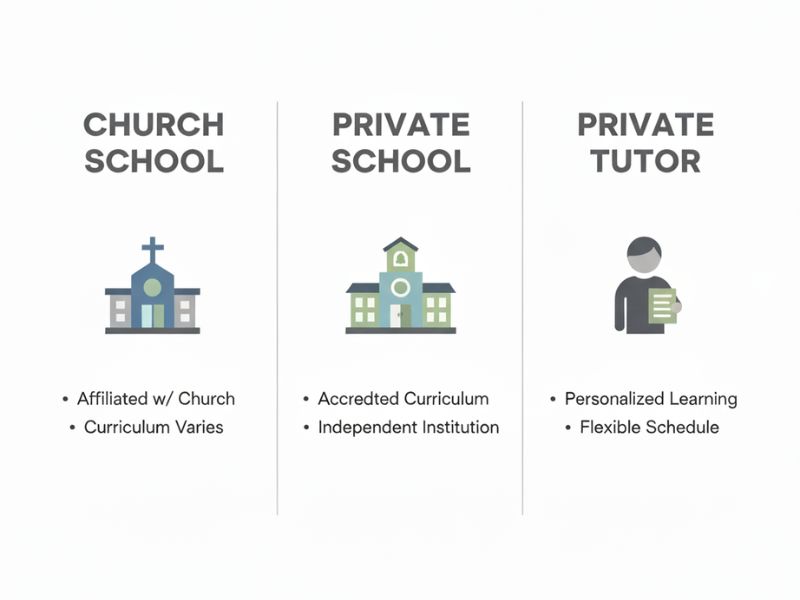
Yes. Homeschooling is legal in Alabama. Homeschooling in Alabama is regulated through three legal pathways that allow parents to educate their children at home while remaining compliant with state law.
Families must operate under one of these three legal pathways:
- Church School
- Private School
- Private Tutor
Alabama recognizes home education through these categories.
Because homeschool regulations vary widely across the country, it can help to see how Alabama fits within the bigger picture. Our complete breakdown of Homeschooling laws by state explains how each state structures its requirements.
Alabama Homeschool Laws at a Glance
| Requirement | Church School | Private School | Private Tutor |
|---|---|---|---|
| Notify Superintendent | Yes | Yes | Yes |
| Attendance Register | Required | Required | Required |
| State Testing Required | No | No | No |
| Parent Teaching Degree Required | No | No | Yes (Certified Tutor) |
| Minimum Instruction Days | Flexible (School Sets Calendar) | Flexible | 140 Days Minimum |
These Alabama homeschool requirements vary slightly depending on whether a family chooses the church school, private school, or private tutor option.
The 3 Legal Options Under Alabama Homeschool Laws
1. Church School Option
This is the most common option.
Parents enroll their child in a church school. Many Alabama umbrella schools operate under this model and provide administrative support while parents teach at home.
The church school must file enrollment and attendance documentation with the local superintendent using the required form. The form must be countersigned by the church school administrator.
Parents teach at home. The church school manages legal reporting.
You must:
- Complete enrollment paperwork
- Ensure superintendent notification is filed
- Keep attendance records
Testing is not required unless your umbrella school requests it. Because of its flexibility and simplicity, the Alabama church school homeschool option remains the most popular choice among homeschool families across the state.
2. Private School Option
Families may establish or enroll in a private school.
The private school must:
- File enrollment with the state
- Maintain attendance registers
- Meet reporting standards
Parents teach at home under that private school structure.
3. Private Tutor Option
This option has stricter legal requirements.
The tutor must:
- Hold a valid Alabama state teaching certificate
- Teach in English
- Teach the required public school subjects
- Teach at least 3 hours per day
- Teach for at least 140 days per calendar year
Before instruction begins, the tutor must file a statement with the local superintendent.
This option is less common due to the certification requirement.
Which Alabama Homeschool Option Fits You?
- Want the most common and flexible path? Consider the church school option.
- Prefer a structured school model? The private school route may fit better.
- Need certified instruction? The private tutor option requires a certified Alabama teacher and specific day/hour rules.
Do You Need a Letter of Intent in Alabama?
Alabama law does not specifically use the phrase “letter of intent.”
However, families must still notify the local superintendent through enrollment documentation under their chosen legal option.
Church schools and private tutors file required forms. Notification is not optional.
How to Start Homeschooling in Alabama (Step-by-Step)
Step 1: Choose Your Legal Path
Most families choose the church school option.
Step 2: Withdraw from Public School
Send written notice to avoid truancy issues.
Step 3: Complete Enrollment Paperwork
Ensure superintendent documentation is filed.
This enrollment process is often referred to by parents as Alabama homeschool registration, although state law uses different terminology depending on the legal option selected.
Step 4: Keep an Attendance Register
Maintain daily attendance records.
Step 5: Begin Teaching
Choose your curriculum and start instruction.
Alabama Homeschool Compliance Timeline
Before You Start
- Choose your legal option (church school, private school, or private tutor).
- Withdraw your child from public school in writing (if applicable).
- Make sure enrollment documentation is filed with the local superintendent.
- Set up a simple attendance register system.
During the Year
- Track attendance consistently.
- Keep basic academic records (subjects, work samples, progress notes).
- Follow any additional requirements from your umbrella or private school.
End of the Year
- Store attendance and academic records safely.
- Confirm any reporting steps required by your church or private school.
- Update transcript records if your student is in middle or high school.
Attendance Requirements in Alabama
Alabama requires attendance documentation.
Public schools operate 180 days. Private and church schools may set their own calendar. However, attendance must still be recorded.
What Is an Attendance Register?
An attendance register should include:
- Student name
- Instruction dates
- Days present
- Basic school information
Keep records organized. Store them safely.
Curriculum Requirements
Alabama homeschool laws do not mandate a specific curriculum under the church school option.
Families may choose:
- Online curriculum
- Textbooks
- Faith-based programs
- Secular programs
- Hybrid learning
Umbrella schools may have internal policies.
Testing Requirements
Alabama homeschool laws do not require statewide standardized testing for most homeschool families.
However, individual umbrella or private schools may require testing as part of their internal policies.
Record Keeping Requirements
Maintain simple but clear records:
- Attendance register
- List of subjects taught
- Work samples
- Grades or progress reports
Strong records protect you legally. Maintaining organized records also helps families meet Alabama homeschool reporting requirements that may apply through their church school or private school program.
Immunization Requirements in Alabama
Immunization requirements depend on your homeschool option.
If you enroll through a church or private school, vaccine documentation may be required based on that school’s policy.
Families should confirm requirements with:
- Their umbrella school
- Their local superintendent
Always verify the latest health guidance through Alabama public health authorities.
Alabama Homeschool Graduation Requirements
Alabama does not issue state homeschool diplomas.
Graduation depends on:
- Your umbrella school (if enrolled)
- A parent-issued diploma
- Proper transcript documentation
Parents create a homeschool transcript in Alabama for college admissions, military applications, scholarships, and employment opportunities.
Returning to Public School After Homeschooling
Some families later re-enroll in public school.
Placement decisions are made by the local district.
The school may:
- Review transcripts
- Request work samples
- Conduct placement testing
Good record keeping makes re-entry smoother.
Do Homeschoolers Receive Funding in Alabama?
Yes. Alabama created Education Savings Accounts under the CHOOSE Act.
Beginning in 2025–2026, eligible homeschool families may receive:
- $2,000 per student
- Up to $4,000 per family
Funds may be used for approved educational expenses.
Eligibility rules and deadlines apply. Families should review the Alabama Department of Revenue website for full details.
Accredited Homeschool Programs in Alabama
Some families choose accredited homeschool programs in Alabama to add structure and academic recognition to their home education plan.
Accreditation means the program meets recognized academic standards.
This can help with:
- College admissions
- Transfers
- Transcript credibility
Accreditation is not required under Alabama homeschool laws.
Local Homeschool Resources in Alabama

Many homeschool groups in Alabama provide co-op classes, educational outings, sports opportunities, and support for parents who are new to homeschooling.
Families can find support through:
- Homeschool co-ops
- Sports programs
- Field trips
- Parent support groups
- Special education networks
Local groups provide community and academic help.
Challenges and Considerations
Homeschooling requires commitment.
Families must manage:
- Time
- Record keeping
- Legal paperwork
- Social opportunities
Planning ahead reduces stress.
Some parents also evaluate overall homeschool freedom, reporting rules, and flexibility before settling on a long-term plan. You can explore how different regions rank in our study of the Best States For Homeschooling.
Common Alabama Homeschool Law Mistakes to Avoid
- Starting home education without making sure superintendent notification is filed.
- Not keeping an attendance register or losing attendance records.
- Confusing “letter of intent” wording and skipping the real enrollment documentation step.
- Using the private tutor option without meeting the 140-day and 3-hours-per-day requirements.
- Withdrawing from public school late without written notice, which can trigger truancy concerns.
Conclusion
From my experience analyzing homeschool regulations across states, Alabama homeschool laws are predictable when followed carefully. Proper enrollment, superintendent notification, and attendance records prevent most problems. Families who approach the process with structure and preparation often find that homeschooling becomes both legally secure and deeply rewarding.