 Skip to content
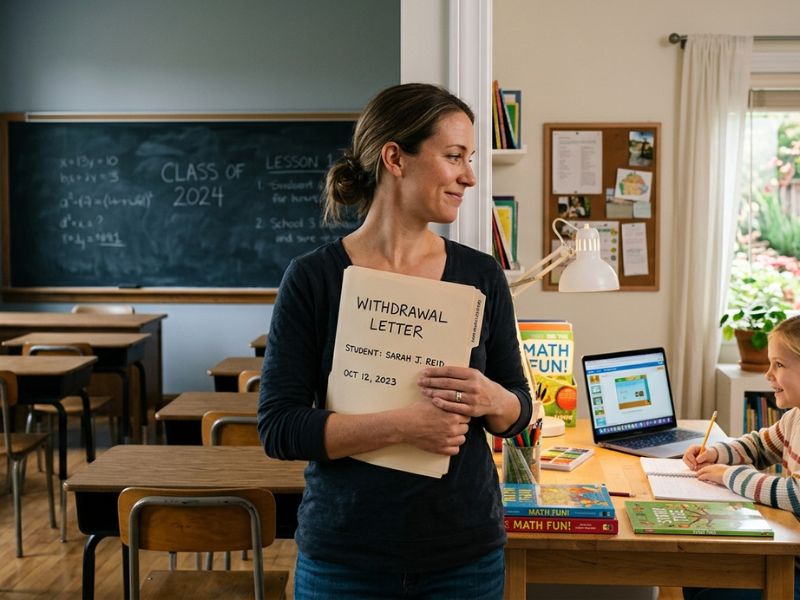
Many parents reach a point where school no longer feels right for their child. It may be ongoing stress, lack of progress, or a feeling that something needs to change, but the next step is often unclear.
From examining homeschool requirements and real family choices, one issue appears often. Parents hesitate because they are unsure about the correct steps. Once you clearly understand how to withdraw a child from school to homeschool, the path becomes much easier to follow.
- What Parents Should Know First
- How to Withdraw Your Child from Public School to Homeschool
- Withdrawal Letter vs Notice of Intent (Important Difference)
- How to Withdraw Mid-Year Without Problems
- Transitioning from Public School to Homeschool
- Give Yourself Time to Adjust
- Focus on Your Relationship with Your Child
- Rediscover Your Child’s Love of Learning
- Ease Into Academics
- Create a Flexible Routine
- Common Mistakes to Avoid
- What If the School Pushes Back?
- Quick State Law Differences (Simplified)
- What Happens After You Withdraw Your Child?
- Before You Withdraw: Quick Checklist
- Frequently Asked Questions
- Conclusion
What Parents Should Know First
To withdraw your child from school in the US, follow these steps:
- Check your state homeschool laws
- Write a withdrawal letter
- Notify the school officially
- Request your child’s records
- Begin homeschooling in line with your state rules
Each step matters. Let’s go through them one by one.
Key Takeaways: Withdrawing a Child to Homeschool
- You do not usually need school permission, but state rules apply
- Always notify the school in writing before stopping attendance
- A withdrawal letter and notice of intent may be different
- Keep proof of communication to avoid attendance issues
- Start homeschooling according to your state requirements
How to Withdraw Your Child from Public School to Homeschool
What If Your Child Attends a Private School?
If your child attends a private school, the withdrawal process is usually similar. Notify the school in writing, confirm your child’s last day of attendance, and request copies of important academic records. Some private schools may have their own withdrawal procedures, but you must still follow your state’s homeschool laws before beginning home education.
Step 1: Check Your State Homeschool Laws
Before you do anything, learn your state rules.
Homeschool laws are different in every state.
- Some states are very simple
- Others require forms and reports
For example:
- Texas → Very low regulation
- New York → Higher regulation
This step helps you stay compliant and avoid problems.
Step 2: Write a Withdrawal Letter

Next, you need a withdrawal letter.
This letter tells the school that your child will no longer attend.
Keep it simple and clear.
What to include:
- Child’s full name
- School name
- Date of withdrawal
- Statement that you are starting homeschooling
Example:
I am writing to inform you that I am withdrawing my child, [Child’s Name], from [School Name] effective immediately. We will continue their education through homeschooling in compliance with state laws.
Keep it short and professional.
Simple Withdrawal Letter Template
Date: [Insert Date]

To: [School Name]

I am writing to formally withdraw my child, [Child’s Name], from your school effective [Date]. We will continue their education through homeschooling in accordance with state laws.

Sincerely,
[Parent Name]
Step 3: Notify the School
Send your withdrawal letter to the school.
You can:
- Email it
- Hand deliver it
- Send it by certified mail
Important tip:
Send it before your child stops attending school
This helps reduce the risk of attendance or truancy issues.
If you want additional legal guidance on notifying the school and withdrawing your child correctly, review the HSLDA homeschool withdrawal guidance before completing the process.
Step 4: Request Your Child’s Records

After notifying the school, request records.
These may include:
- Report cards
- Transcripts
- Attendance records
These documents help you track progress and plan your homeschool.
What Records Should You Request?
When you contact the school, ask for important documents.
Common records include:
- Report cards
- Transcripts
- Attendance history
- Test results
- Special education records (if applicable)
Keep these records safe. You may need them later.
If Your Child Has an IEP or 504 Plan
If your child has an Individualized Education Program (IEP) or a Section 504 Plan, request copies of these documents before withdrawing from school. They can help you understand your child’s educational needs and support future learning at home. Homeschool requirements for students with disabilities vary by state, so always review your state’s specific rules.
Step 5: Start Homeschooling
Once your child is withdrawn, you become responsible for their education.
At this point:
- You must follow your state homeschool requirements
- You may need to keep records or submit forms
Begin homeschooling in line with your state rules.
Withdrawal Letter vs Notice of Intent (Important Difference)
Many parents think these are the same. They are not always the same.
A withdrawal letter tells the school your child is leaving.
A notice of intent is a legal step required in some states to begin homeschooling.
Key Difference:
- Withdrawal letter → sent to the current school
- Notice of intent → sent to the state or district (if required)
Some states require both steps.
Always check your state law so you do not miss anything.
How to Withdraw Mid-Year Without Problems
You do not have to wait until the school year ends.
Many families switch during the year.
To do it safely:
- Notify the school before your child stops attending
- Send a written withdrawal letter
- Keep proof of your communication
- Follow your state homeschool rules
This helps prevent attendance or truancy problems.
Transitioning from Public School to Homeschool

Leaving school is not just a legal step. It is also a big emotional change for both you and your child. Routines shift, expectations change, and it takes time to adjust. Understanding this transition helps you create a smoother and more positive start to homeschooling.
Give Yourself Time to Adjust
You do not need to begin with a strict schedule right away. It is okay to slow down and take a short break after leaving school. Use this time to observe your child, understand their needs, and gradually move into a learning routine that feels comfortable and natural.
Focus on Your Relationship with Your Child
Spend time:
- Talking
- Listening
- Building trust
A strong relationship supports learning.
Rediscover Your Child’s Love of Learning
Some children feel burned out from school.
Let them enjoy learning again through:
- Reading
- Exploring interests
- Hands-on activities
Ease Into Academics
Start small.
- Short lessons
- Flexible timing
- Simple goals
Create a Flexible Routine
You do not need a strict school schedule.
Create a routine that works for your home.
Common Mistakes to Avoid
Avoid these common errors:
- Not checking state laws
- Delaying notification to school
- Giving only verbal notice
- Not keeping proof
- Starting homeschool without understanding requirements
These mistakes can cause problems.
What to Do vs What to Avoid
| Do | Don’t |
|---|---|
| Send written notice | Rely only on verbal communication |
| Keep proof of email or letter | Assume school will handle everything |
| Check state requirements | Skip legal steps |
| Start simple | Overcomplicate the process |
What If the School Pushes Back?
Sometimes, schools may question your decision.
Stay calm and follow the proper steps.
In most states, schools cannot refuse your decision to homeschool when you follow the applicable state laws. Their responsibility is generally to process your withdrawal and update enrollment records rather than approve or deny your choice.
What to do:
- Provide your written withdrawal letter
- Keep copies of all communication
- Follow your state homeschool laws
- Avoid verbal-only communication
In most cases, families can homeschool when they follow the law.
Quick State Law Differences (Simplified)
| State Type | General Requirements |
|---|---|
| Low Regulation | Fewer requirements, but rules still apply |
| Moderate Regulation | Notice and basic reporting |
| High Regulation | Notice, reports, and recordkeeping |
Always confirm your exact state requirements.
What Happens After You Withdraw Your Child?
Once you withdraw your child:
- You are responsible for their education
- You must follow homeschool laws
- You may need to keep records
Plan your next steps carefully.
Before vs After Withdrawing Your Child
| Before Withdrawal | After Withdrawal |
|---|---|
| School responsible for education | Parent becomes responsible |
| Attendance required | Homeschool rules apply |
| School controls curriculum | Parent chooses curriculum |
| School tracks records | Parent keeps records |
Before You Withdraw: Quick Checklist
Use this checklist to stay organized:
- Check your state homeschool laws
- Prepare your withdrawal letter
- Choose your homeschool start date
- Plan your first week
- Keep copies of all documents
This helps you avoid mistakes.
Frequently Asked Questions
Can I withdraw my child immediately?
In many cases, yes. But you should follow your state’s rules first so your child is not marked absent or truant.
Do I need permission from the school?
Usually, you do not need school approval. However, you may need to file required notices under your state law.
Can I withdraw mid-year?
Yes. Many families switch during the school year if they follow the correct steps.
What if the school refuses?
Stay calm. Provide written notice and follow your state laws.
Conclusion
After studying how different states handle homeschooling and how families complete this change, how to withdraw a child from school to homeschool becomes a clear process. When you follow the right steps and stay organized, most challenges can be avoided, allowing you to move forward with greater confidence and clarity.