 Skip to content
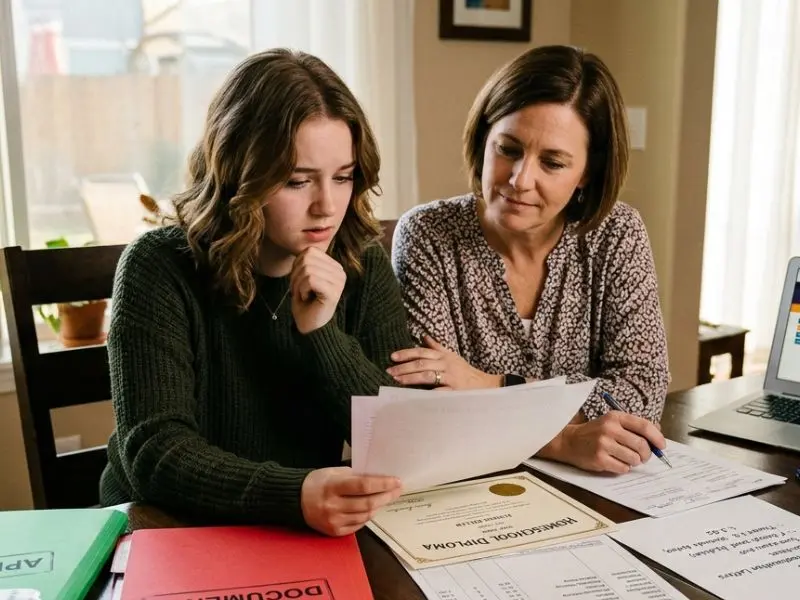
Graduation should be a proud moment, yet many homeschool families find themselves worrying about what comes next. A request to verify a diploma can raise unexpected questions about transcripts, records, and whether a parent-issued credential will be accepted by colleges or employers.
While examining homeschool graduation requirements and verification practices across the United States, I found that confidence comes from preparation, not guesswork. Understanding how to verify a homeschool diploma before you need it helps you respond quickly and avoid common documentation problems.
- Why This Guide Matters for Homeschool Families
- Quick Answer: How to Verify a Homeschool Diploma
- What Is a High School Diploma Background Check?
- Can a Standard Background Check Show Education Records?
- Why Do Employers Verify Homeschool Diplomas?
- How to Verify a Homeschool Diploma Step-by-Step
- Homeschool Diploma Verification vs. Accreditation
- What Goes Into a Homeschool Transcript?
- Making Your Homeschool Transcript Official
- Getting Your Homeschool Diploma
- Homeschool Diplomas and State Rules
- Verification Methods for Homeschool Credentials
- Who Can Confirm a Homeschool Diploma?
- Which Documents Do You Need for Verification?
- What a Diploma Verification Report Includes and Omits
- Making Sure Your Homeschool Diploma Is Accepted
- Homeschool Diploma Verification Checklist
- Common Challenges and Practical Solutions
- Legal and Privacy Considerations
- Cost and Turnaround Time for Education Background Checks
- How Colleges Review a Homeschool Diploma
- Military, Federal Jobs, and Licensed Careers
- Sample Homeschool Graduation Verification Letter
- Frequetly Asked Questions
- Final Advice Before You Submit Your Records
- Key Takeaways
- Conclusion
Why This Guide Matters for Homeschool Families
If you are searching for how to verify a homeschool diploma, you are probably preparing for an important milestone. Your child may be applying to college, entering the workforce, or pursuing another opportunity that requires proof of high school completion.
Many parents worry that years of homeschooling will be questioned simply because the process is different from traditional schools. In most cases, verification is straightforward when your diploma, transcript, and supporting records are complete and well organized.
Quick Answer: How to Verify a Homeschool Diploma
A homeschool diploma is usually verified by reviewing the diploma, homeschool transcript, graduation date, and supporting academic records. Depending on how the student was homeschooled, an employer or college may also contact the homeschool administrator, umbrella school, or online homeschool program for additional confirmation. Keeping accurate records makes the verification process much easier.
What Is a High School Diploma Background Check?
A high school diploma background check is a process used to confirm that a person completed high school. Employers, colleges, licensing agencies, and other organizations may request this information before making an admission or hiring decision.
For graduates of traditional schools, verification often comes directly from the school or school district. Homeschool graduates follow a different process because their education may have been managed by a parent, an umbrella school, or an online homeschool program.
This difference does not make a homeschool diploma less valuable. It simply means the organization reviewing the application may rely on additional documentation to confirm the student’s education.
What Information Is Usually Reviewed?
The documents requested vary by organization, but they commonly include:
- Homeschool diploma
- Homeschool transcript
- Graduation date
- Course history
- Credits earned
- Supporting academic records
Some organizations may request additional documentation if they need more information about the student’s educational background.
Can a Standard Background Check Show Education Records?
No. A standard background check does not automatically include education records.
Many background checks focus on information such as:
- Criminal history
- Employment history
- Identity verification
- Address history
Education verification is usually requested as a separate service. If an employer wants to verify homeschool education, they may ask the applicant to provide a diploma, transcript, or other supporting records.
For this reason, homeschool graduates should always keep copies of their important academic documents after graduation.
Why Do Employers Verify Homeschool Diplomas?
Employers verify education to confirm that applicants meet the qualifications listed on their job applications. The purpose is to verify educational information, not to question homeschooling itself.
Many companies use the same verification process for every applicant, regardless of where they completed high school.
Common Reasons Employers Verify Education
Employers may verify education to:
- Confirm graduation status
- Meet company hiring policies
- Complete employment background screening
- Verify minimum education requirements
- Reduce hiring fraud
In most situations, employers simply want clear and consistent documentation that supports the applicant’s education.
How Job Applicants Can Prepare Before Applying
Many verification delays happen because applicants wait until they receive a job offer before gathering their records.
Before submitting applications, make sure you have:
- A copy of your homeschool diploma
- A complete homeschool transcript
- Contact information for the homeschool administrator
- Dual enrollment transcripts, if applicable
- Any additional records requested by the employer
Having these documents ready allows you to respond quickly if verification is requested.

How to Verify a Homeschool Diploma Step-by-Step
If a college, employer, scholarship provider, or another organization asks you to verify a homeschool diploma, follow these steps to prepare accurate documentation.
Gather the Diploma and Transcript
Start by collecting the student’s homeschool diploma and transcript.
The diploma confirms graduation, while the transcript explains the student’s academic history. Together, these documents answer most verification requests.
A transcript should be easy to read, complete, and professionally organized.
Confirm the Student and Homeschool Information
Review every document carefully before sharing it.
Check That These Details Match
- Student’s full legal name
- Homeschool name
- Parent or homeschool administrator’s name
- Graduation date
- Contact information
- State where homeschooling took place
Even small differences between documents can delay verification.
Check the Courses, Credits, Grades, and GPA
Review the transcript to make sure all academic information is complete.
A Complete Transcript Should Include
- Course titles
- Credits earned
- Final grades
- Grade level
- Cumulative GPA, if your homeschool uses one
- Graduation date
The transcript should accurately reflect the graduation requirements established by the homeschool administrator and any requirements that apply under your state’s homeschool laws.
Confirm Who Issued the Diploma
The organization reviewing your records may want to know who issued the diploma.
A homeschool diploma may be issued by:
- A parent acting as the homeschool administrator
- An umbrella school
- A private homeschool program
- An accredited online homeschool academy
- A correspondence school
Knowing who issued the diploma helps the reviewing organization understand where supporting records may be available.
Contact the Issuer or Available Data Source
If additional confirmation is needed, the reviewing organization may contact the person or organization responsible for maintaining the student’s records.
Possible sources include:
- Parent or homeschool administrator
- Umbrella school
- Online homeschool academy
- Private homeschool program
- Community college for dual enrollment records
In some states, a state education agency or local school district may confirm that a required homeschool filing was submitted. However, these offices may not verify the student’s diploma, coursework, or graduation itself.
Responding promptly to requests for additional information helps keep the verification process moving.
Match the Records and Graduation Date
Before sending your documents, compare all important information.
Verify That These Details Are Consistent
- Student’s name
- Graduation date
- Course history
- Credits earned
- Diploma issue date
- Transcript information
Matching records help demonstrate that the diploma accurately reflects the student’s homeschool education.
Resolve Any Verification Discrepancies
Occasionally, an employer or college may ask questions about missing or inconsistent information.
Common examples include:
- Different graduation dates
- Name changes
- Missing transcripts
- Incorrect credit totals
- Lost academic records
If this happens, provide additional supporting documents such as updated transcripts, course descriptions, dual enrollment records, portfolios, or a signed graduation statement from the homeschool administrator.
Homeschool Diploma Verification vs. Accreditation
Many families assume that verification and accreditation mean the same thing, but they serve different purposes.
Verification confirms information about a student’s homeschool education by reviewing documents such as a diploma, transcript, and supporting records.
Accreditation refers to a school or educational program that has been evaluated by an accrediting organization.
A homeschool diploma does not automatically need to come from an accredited program to represent completed homeschool education. However, colleges, employers, licensing boards, scholarship providers, and other organizations may have their own documentation requirements.
Always review the admission or hiring requirements of the organization requesting your homeschool records before submitting your application.
Verification vs. Accreditation at a Glance
| Verification | Accreditation |
|---|---|
| Confirms graduation or educational records | Evaluates a school or educational program |
| Uses a diploma, transcript, and supporting documents | Uses a formal review of educational standards and practices |
| May be requested by employers, colleges, or licensing agencies | Applies to eligible schools, programs, or institutions |
| Does not automatically require an accredited program | Does not replace diploma or transcript verification |
| Shows that the reported educational information is supported | Shows that an accrediting organization has reviewed the provider |
What Goes Into a Homeschool Transcript?

A homeschool transcript is one of the most important documents used to verify a homeschool diploma. While the diploma confirms that a student graduated, the transcript explains the student’s academic journey and provides the details many colleges and employers need.
A complete transcript should be clear, accurate, and easy to understand. It should present the student’s education in a professional format that supports the homeschool diploma.
Basic Information
Every homeschool transcript should begin with the student’s identifying information.
Include These Details
- Student’s full legal name
- Homeschool name
- Parent or homeschool administrator’s name
- Home address
- Graduation date
- Contact information
Providing accurate information helps the reviewing organization match the transcript with the diploma.
Course Information
The transcript should list every high school course the student completed.
Each Course Should Include
- Course title
- Grade level
- School year
- Credits earned
- Final grade
Organizing courses by school year makes the transcript easier to review.
Dual Enrollment
Many homeschool students earn college credits while completing high school.
If your student participated in dual enrollment, include:
- College name
- Course title
- Semester completed
- Credits earned
- Final grade
Keep official college transcripts available because some colleges and employers may request them separately.
Extracurricular Activities
Although extracurricular activities are not usually required for diploma verification, they provide a broader picture of the student’s achievements.
Examples include:
- Volunteer service
- Sports
- Music
- Student leadership
- Robotics
- Debate
- Clubs
- Part-time employment
These activities can strengthen college applications, scholarship applications, and resumes.
Grades and GPA
If your homeschool uses grades, include both individual course grades and the cumulative GPA.
Your Transcript Should Clearly Show
- Grading scale
- Total credits earned
- Overall GPA, if calculated
- Graduation status
A consistent grading system helps colleges and employers understand the student’s academic performance.
Parent Signature
A parent-issued homeschool transcript should include the homeschool administrator’s signature.
The signature confirms that the information on the transcript is accurate.
Add These Details Below the Signature
- Printed name
- Title (Homeschool Administrator)
- Date signed
Make the Transcript Easy to Read
Presentation matters.
A professional transcript should:
- Use consistent formatting.
- Be free of spelling errors.
- Have clearly labeled sections.
- Be saved as a high-quality PDF for digital sharing.
A well-organized transcript makes verification easier and creates a positive first impression.
Making Your Homeschool Transcript Official
Many parents ask whether a homeschool transcript needs to be officially certified.
In most situations, the transcript is issued by the homeschool administrator or the organization responsible for the student’s education. Whether another organization considers it “official” often depends on how it is signed, dated, and submitted.
Always follow the instructions provided by the college, employer, or organization requesting your records.
Review Important Information
Before sending your transcript, verify that it includes all essential details.
Double-Check the Following
- Student’s full name
- Graduation date
- Course list
- Credits earned
- Final grades
- GPA, if used
- Signature of the homeschool administrator
Checking these details in advance helps prevent unnecessary delays.
Sending the Transcript
Different organizations may have different submission requirements.
They may ask for:
- A printed transcript
- A signed PDF
- A transcript sent directly by the homeschool administrator
- A transcript from an umbrella school
- An official transcript from the college that awarded dual enrollment credit
Always follow the submission instructions provided by the receiving organization.
Getting Your Homeschool Diploma
A homeschool diploma recognizes that a student has successfully completed a homeschool high school program.
Depending on the homeschool program, the diploma may be issued by different people or organizations.
Who Issues the Diploma?
A homeschool diploma may be issued by:
- A parent acting as the homeschool administrator
- An umbrella school
- A private homeschool program
- An accredited online homeschool academy
- A correspondence school
The information on the diploma should match the student’s transcript whenever possible.
What Does a Homeschool Diploma Look Like?
There is no single required design for a homeschool diploma.
However, most include:
- Student’s full name
- Homeschool or program name
- Graduation statement
- Graduation date
- Signature of the homeschool administrator
- Optional decorative seal, if desired
A decorative seal may improve the appearance of the diploma, but it does not make the diploma more legally valid or accredited.
What Can You Do with a Homeschool Diploma?
A homeschool diploma can be used for many educational and career opportunities.
Graduates may use it to:
- Apply to colleges and universities
- Apply for jobs
- Enroll in trade schools
- Begin apprenticeships
- Apply for scholarships
- Continue higher education
Most organizations review the diploma together with the homeschool transcript and any additional records they request.
Homeschool Diplomas and State Rules
Homeschool laws differ across the United States. These differences can affect recordkeeping requirements and the documents families maintain during high school.
Understanding your state’s homeschool laws helps you prepare accurate graduation records.
Different State Rules
Some states require more documentation than others.
Depending on where you homeschool, you may need to:
- File a notice of intent
- Maintain attendance records
- Keep a student portfolio
- Complete annual evaluations
- Follow other state-specific homeschool requirements
Knowing your state’s rules can help you create complete graduation records.
State Regulations and Documentation Variations
The documents used during verification may differ from one homeschool family to another.
For example, one student may have only a parent-issued diploma and transcript, while another may also have evaluation reports, umbrella school records, or dual enrollment transcripts.
Keeping all important documents together helps simplify future verification.
Interstate Verification Challenges
Some homeschool families move to another state before graduation.
This may result in records from more than one homeschool program.
If this applies to your family, keep documentation from each homeschool program so you can explain the student’s complete educational history if questions arise.
Verification Methods for Homeschool Credentials
There is no single verification process used for every homeschool graduate.
Instead, organizations review the available records to confirm that the student completed a homeschool high school education.
The exact process depends on who is requesting the information.
Verification from Other Schools
Some homeschool students complete coursework through other educational providers.
Supporting records may come from:
- Community colleges
- Dual enrollment programs
- Private schools
- Online academies
- Accredited homeschool programs
These records provide additional evidence of academic achievement.
Standardized Tests
Standardized test scores do not verify a homeschool diploma by themselves.
However, they may provide additional evidence of academic preparation when requested by a college, scholarship provider, or another organization.
Examples include:
- SAT
- ACT
- AP Exams
- CLEP
- CLT, where accepted
Digital Verification Platforms
Some employers use education verification companies as part of their hiring process.
If a diploma was issued through an online academy or umbrella school, that organization may respond directly to verification requests.
For parent-issued diplomas, the reviewing organization usually relies on the records provided by the applicant because there is no single national database for all homeschool diplomas.
Third-Party Assessment Services
Some homeschool families use independent organizations to review transcripts or organize academic records.
These services may improve the presentation of documents, but they do not automatically make a homeschool diploma more legally valid.
The credibility of a homeschool diploma depends on accurate records and compliance with applicable homeschool laws, not simply on whether a third party reviewed the documents.
Who Can Confirm a Homeschool Diploma?

The person or organization that can confirm a homeschool diploma depends on how the student’s homeschool education was managed.
Parent-Directed Homeschool
If a parent directed the homeschool program, the parent or homeschool administrator is usually responsible for confirming graduation records and providing supporting documentation. This approach is consistent with guidance from the North Carolina Division of Non-Public Education’s Home School Records Retention & Diplomas FAQs, which explains that homeschool administrators maintain student records and provide graduation verification when requested.
Umbrella School
If the student graduated through an umbrella school, that school may confirm enrollment, transcripts, or graduation information based on its records.
Online Homeschool Program
Many online homeschool programs maintain student records and may respond to verification requests if they issued the diploma.
Dual Enrollment College
A college can verify only the courses and credits earned through its own programs. It cannot verify the student’s complete homeschool education.
State Education Agency or School District
Some states require homeschool families to submit notices or other documents to a local school district or state education agency.
These offices may confirm that required filings were received when applicable, but they may not verify the student’s diploma, transcript, coursework, or graduation.
Which Documents Do You Need for Verification?
The documents you need depend on where you are submitting your homeschool diploma. Use this table as a quick guide, but always check the receiving organization’s exact requirements.
| Situation | Documents Commonly Requested |
|---|---|
| College admission | Homeschool diploma, transcript, course descriptions, grading scale, and separate dual enrollment transcripts when applicable |
| Job application | Homeschool diploma, transcript, and graduation verification letter when requested |
| Scholarship application | Diploma, transcript, test scores when required, and records of activities or achievements |
| Trade school or apprenticeship | Diploma, transcript, and any program-specific entrance documents |
| Military application | Diploma, transcript, and any additional records requested by the recruiting branch |
| Government employment | Diploma, transcript, and any agency-specific proof of education |
What a Diploma Verification Report Includes and Omits
When an employer or background screening company verifies education, the final report usually confirms only the information needed for the hiring process.
It does not include every detail from the student’s homeschool records.
Information That May Be Included
A verification report may confirm:
- Student’s name
- Graduation status
- Graduation date
- Issuing homeschool or organization
- Credential verified
For parent-issued homeschool diplomas, the reviewing organization may request additional documents if it cannot independently confirm the information through the usual verification process.
Information Usually Not Included
Most verification reports do not include:
- Individual course grades
- Complete transcript
- GPA
- Attendance records
- Student portfolio
- Discipline records
- Class rank
If an organization needs these details, it will usually request the student’s transcript or other supporting records separately.
Making Sure Your Homeschool Diploma Is Accepted
A well-prepared homeschool diploma is supported by accurate records. In many cases, colleges, employers, and other organizations review both the diploma and the transcript before making a decision.
Preparing your records before they are requested can save time and reduce unnecessary stress.
Proof of Learning
A diploma confirms graduation, but supporting documents help explain the student’s education.
Helpful Supporting Records Include
- Homeschool transcript
- Course descriptions
- Reading lists
- Student portfolio
- Writing samples
- Science lab records
- Standardized test scores, when requested
- Dual enrollment transcripts
Not every organization will ask for all of these documents, but keeping them available can make verification easier.
Sending Documents
Always provide the documents requested by the organization reviewing your application.
They may ask for:
- Homeschool diploma
- Homeschool transcript
- Graduation statement
- Official dual enrollment transcript
- Standardized test scores
- Other supporting academic records
Read the instructions carefully before submitting your records to avoid delays.
Important Things to Remember
Before sending your documents:
- Make sure the diploma and transcript match.
- Check that graduation dates are correct.
- Verify course credits and grades.
- Confirm signatures are included where needed.
- Save digital backup copies of every important document.
Prepare Your Records Before You Need Them
One of the easiest ways to avoid future problems is to organize your records before graduation.
Create a permanent file that includes your diploma, transcript, graduation documents, course descriptions, and digital backup copies.
Many graduates do not need these documents until years later. Having everything organized makes future verification much easier.
Homeschool Diploma Verification Checklist
Before applying for college, a job, or another educational program, gather your important records.
Essential Documents to Keep
- Homeschool diploma
- Signed homeschool transcript
- Student’s legal name
- Graduation date
- Course list
- Credits earned
- Final grades
- Grading scale, if used
- Total credits completed
- Parent or homeschool administrator’s signature
- Contact information for the homeschool administrator
- Dual enrollment transcripts, if applicable
- Standardized test scores, when requested
- Digital backup copies of all records
Preparing these documents ahead of time can make the verification process much smoother.
Common Challenges and Practical Solutions

Most homeschool diploma verifications are completed without major problems. However, some situations require additional explanation or supporting documents.
Knowing these challenges ahead of time can help families prepare.
Not in the Database
Many homeschool parents are surprised to learn that a parent-issued homeschool diploma may not appear in a national education database.
This is normal.
Unlike many traditional schools, parent-directed homeschools generally do not report graduation records to a single nationwide system. Verification usually depends on the documents maintained by the homeschool family or the organization that issued the diploma.
If an employer cannot locate your homeschool in a database, it does not automatically mean your education is invalid. It usually means they need additional documentation.
What if My State Doesn’t Accept Homeschool Diplomas?
Homeschool laws differ from state to state.
If your homeschool program followed the requirements of your state’s homeschool law, your diploma can serve as evidence of high school completion. However, colleges, employers, licensing boards, and other organizations may still request a transcript or additional supporting records.
Providing complete documentation is often more important than the diploma alone.
What Happens if Verification Is Impossible?
Occasionally, an organization may not be able to immediately verify a homeschool diploma.
This may happen because:
- Records were misplaced.
- Contact information has changed.
- The homeschool program closed.
- The organization is unfamiliar with homeschool education.
When this happens, provide additional supporting documents whenever possible.
Examples include:
- Updated transcript
- Graduation statement
- Course descriptions
- Student portfolio
- Dual enrollment transcript
- Standardized test scores
What if the Graduate’s Name Has Changed?
Sometimes the name on a homeschool diploma is different from the name used on a college or job application.
This may happen because of:
- Marriage
- Divorce
- Legal name change
- Court order
If the names do not match, the reviewing organization may request documentation explaining the change.
What Happens if Records Are Missing?
Losing homeschool records can make verification more difficult, but it does not always prevent it.
If important documents are missing, try rebuilding your records using:
- Curriculum guides
- Lesson plans
- Student work samples
- Reading logs
- Digital files
- College transcripts
- Standardized testing records
Creating replacement records now can help with future verification requests.
What if the Homeschool Administrator Is Unavailable?
Sometimes the homeschool administrator cannot respond to future verification requests.
If that happens, collect as many supporting records as possible.
Helpful Documents Include
- Original homeschool diploma
- Homeschool transcript
- Graduation statement
- Course descriptions
- Student portfolio
- Standardized test scores
- Dual enrollment transcripts
- State homeschool records, if available
Keeping permanent copies of these documents before graduation helps prevent future problems.
Legal and Privacy Considerations
Some employers use third-party background screening companies to verify education.
When this happens, applicants are often asked to provide permission before the background check begins.
If incorrect information appears in a verification report, applicants may have an opportunity to review the report and request corrections.
Because privacy and employment laws can vary, always review the policies of the organization requesting your records. If you need legal advice about your situation, consult a qualified legal professional.
Cost and Turnaround Time for Education Background Checks
There is no standard timeline for homeschool diploma verification.
Some requests are completed within a few days, while others take longer if additional records are needed.
Several factors may affect processing time, including:
- Missing documents
- Name changes
- Incomplete transcripts
- Multiple homeschool programs
- Requests for additional information
Keeping complete and organized records is the best way to reduce delays.
How Colleges Review a Homeschool Diploma

Colleges often evaluate homeschool applicants differently from employers.
Instead of relying only on a background check, admissions offices usually review the student’s complete academic record.
Documents Colleges May Request
- Homeschool transcript
- Graduation date
- Course descriptions
- Grading scale
- Parent or homeschool administrator’s signature
- Dual enrollment transcripts
- Standardized test scores, when required
Every college sets its own admissions requirements. Reviewing those requirements before applying helps families prepare the correct documents.
Applying to College with Confidence
Before submitting your application, visit the college’s homeschool admissions page and review its requirements.
Preparing every required document in advance helps admissions officers review your application more efficiently and reduces last-minute stress.
Military, Federal Jobs, and Licensed Careers
Some military branches, federal employers, licensing boards, and regulated professions may request additional documentation when reviewing homeschool education.
Records They May Request
- Homeschool diploma
- Homeschool transcript
- Dual enrollment records
- Standardized test scores
- Additional academic documentation
Requirements vary by organization and may change over time. Always review the current requirements before submitting your application.
Returning to School or Changing Careers
Some homeschool graduates need to verify their education many years after graduation.
This commonly happens when:
- Returning to college
- Changing careers
- Applying for professional licenses
- Seeking government employment
- Enrolling in workforce training
Keeping permanent copies of your homeschool records can make these transitions much easier.
Sample Homeschool Graduation Verification Letter
Some employers or colleges may request written confirmation of graduation in addition to the diploma and transcript.
A Verification Letter Should Include
- Student’s full legal name
- Homeschool name
- Dates of attendance
- Graduation date
- Statement confirming successful completion of the homeschool high school program
- Homeschool administrator’s name
- Contact information
- Signature
- Date
This letter supports your homeschool records but does not replace a transcript or diploma when those documents are requested.
Frequetly Asked Questions
Can a homeschool diploma be verified online?
There is no single national online database for homeschool diplomas, so verification usually relies on the records kept by the homeschool administrator or issuing program.
Do homeschool graduates need an official transcript?
Yes, most colleges and employers ask for a homeschool transcript because it provides detailed information about the student’s coursework and graduation.
Should I keep homeschool records after graduation?
Yes, keeping permanent copies of your diploma, transcript, and other academic records can help with future education, employment, or licensing requests.
Can a homeschool diploma be used for scholarships?
Yes, many scholarship providers accept homeschool diplomas, but they may also request transcripts, test scores, or other supporting academic documents.
Final Advice Before You Submit Your Records
Before sending your homeschool records, take a few minutes to review every document.
Ask yourself:
- Does the diploma match the transcript?
- Are graduation dates consistent?
- Are all credits listed correctly?
- Has the transcript been signed?
- Are digital backup copies safely stored?
Checking these details before submitting your records can help prevent delays during the verification process.
Key Takeaways
- A homeschool diploma is commonly reviewed together with a transcript and supporting academic records.
- The diploma and transcript should contain matching names, dates, and graduation information.
- Verification and accreditation are different and should not be treated as the same process.
- Colleges, employers, military branches, and government agencies may request different documents.
- A parent-issued diploma may not appear in a traditional education database.
- Permanent printed and digital records can prevent problems years after graduation.
Conclusion
Researching homeschool verification shows that success rarely depends on one document alone. Clear transcripts, accurate graduation records, and well-kept supporting evidence make the process much smoother. Investing a little time in organizing these records today can protect future educational and career opportunities.