 Skip to content
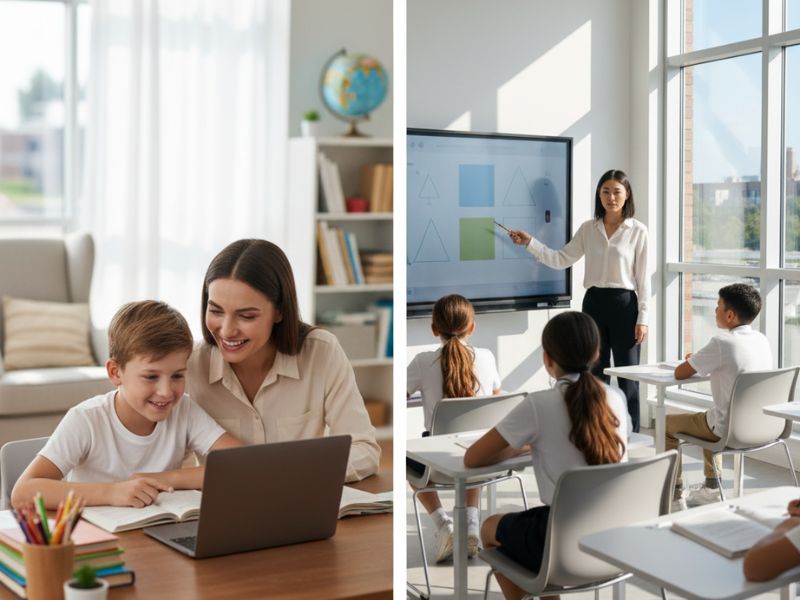
Many parents begin comparing homeschool vs private School after small warning signs appear. A child who once enjoyed learning may become quiet, anxious, or easily frustrated with schoolwork. From reviewing real family stories, this search rarely starts out of curiosity. It usually begins when parents feel their child’s needs are not being fully met.
In years of studying education decisions and parent experiences, one pattern stands out clearly. Families are not only choosing a school type. They are trying to protect their child’s confidence, emotional safety, and long-term growth. Understanding the true differences between these options helps parents move from worry to a confident decision.
If you want a complete overview of Homeschooling Explained: How Homeschooling Works & Who It’s For, you can explore our full homeschooling guide before comparing both options.
- Quick Answer:
- What Is Homeschooling?
- What Is Private School Education?
- Key Differences Between Homeschool and Private School
- Pros and Cons of Homeschool vs Private School
- Homeschool vs Private School Cost Comparison
- Academic Results and College Outcomes
- Homeschool vs Private School Statistics
- Social Development Differences
- Which Option Is Best for Different Types of Children?
- Emotional and Family Lifestyle Impact
- Long-Term Outcomes and Life Skills
- Hybrid Options You Should Know About
- Legal Responsibilities: Homeschool vs Private School
- How to Decide: Simple Parent Checklist
- Simple Decision Guide
- Frequently Asked Questions
- Conclusion
Quick Answer:
Homeschooling is not always better than private school, and private school is not always better than homeschooling. The right choice depends on your child’s learning style, personality, academic needs, and your family’s lifestyle.
Homeschooling offers personalized learning, flexible schedules, and greater parent involvement. Private school provides professional teachers, structured academics, extracurricular activities, and daily social interaction.
Children who need flexibility or individualized support may thrive in homeschooling, while those who prefer routine, classroom learning, and peer interaction may do better in private school.
For most families, the best option is the one that helps their child learn confidently, feel supported, and continue growing academically and socially.
What Is Homeschooling?
Homeschooling means parents teach their child at home.
Parents choose:
- What to teach
- When to teach
- How to teach
Some families use online programs. Others join homeschool co-ops. Some hire tutors for difficult subjects like math or science.
Homeschooling allows flexible learning. Children can move faster in strong subjects and slow down where they struggle.
Parents must follow homeschool laws set by their state. Rules vary across the United States.
If you want to understand further about What is Homeschooling?, you can read our detailed guide before moving further.
What Is Private School Education?
Private schools are independent schools. They are not funded by the government. Parents pay tuition.
Private schools usually offer:
- Smaller class sizes
- Structured curriculum
- Professional teachers
- Organized activities
Most private schools follow a fixed daily schedule with in-person classes.
Key Differences Between Homeschool and Private School
Here is a simple comparison:
| Factor | Homeschool | Private School |
|---|---|---|
| Learning Style | Personalized | Structured |
| Schedule | Flexible | Fixed |
| Cost | Lower overall | Tuition required |
| Social Life | Parent-arranged | Built-in peer groups |
| Teacher | Parent or tutor | Certified teachers |
| Class Size | One-on-one | Small groups |
This table highlights the main differences. Homeschool offers flexibility. Private school offers structure.
Understanding the differences between homeschooling vs private education helps parents match the learning environment to their child’s needs and personality.
Pros and Cons of Homeschool vs Private School
Pros of Homeschooling
- Flexible schedule
- Personalized learning
- Strong parent-child connection
- Safe learning environment
- Less peer pressure
Cons of Homeschooling
- Requires parent time
- Possible burnout
- Fewer daily social interactions
- Parents manage academic records
If you want to explore the pros and cons of homeschooling in detail, including real-life benefits and challenges, you can read our full guide before comparing both options here.
Pros of Private School
- Professional teaching
- Daily peer interaction
- Organized activities
- Structured academic system
- College preparation support
Cons of Private School
- High tuition cost
- Less flexibility
- Fixed curriculum
- Possible academic pressure
Homeschool vs Private School Cost Comparison
Cost is a major factor for many families, which is why the homeschool vs private school cost comparison is often one of the first things parents evaluate.
Homeschool Costs
Typical homeschool expenses include:
- Curriculum materials
- Online programs
- Supplies
- Field trips
Average yearly cost ranges from about $500 to $3,000 per child.
Private School Costs
Private school tuition typically ranges from:
- $5,000 to $30,000 per year
Additional costs may include uniforms, activities, and transportation.
Academic Results and College Outcomes
Homeschool vs private school academic performance is one of the most researched areas when families compare education options. Research shows that homeschool students often perform well on standardized tests. Parents who want to compare broader education trends can review data published by the National Center for Education Statistics (NCES). Many homeschool students score above national averages.
Private school students also show strong academic success. Small class sizes and structured instruction can support learning.
Colleges accept applicants from both education paths. Student motivation and family support play a major role in long-term success.
Homeschool vs Private School Statistics
Reviewing private school vs homeschool statistics can help parents look beyond opinions and make a more informed decision. Looking at real data can help parents understand the bigger picture.
Studies show homeschool students often score between the 65th and 80th percentile on standardized tests.
Private schools frequently report graduation rates above 90 percent. Many provide strong college preparation programs.
Both options can lead to positive academic outcomes.
Social Development Differences

Socialization is a common concern. When discussing homeschool vs private school socialization, many parents worry about whether children will have enough opportunities to build friendships and communication skills.
Private school students interact with peers daily in classrooms and activities.
Homeschooled students socialize through:
- Community groups
- Sports teams
- Co-ops
- Volunteer activities
Social development depends on parental involvement in homeschool settings.
Which Option Is Best for Different Types of Children?
Homeschool May Be Better If:
- Your child needs flexible pacing
- Your child struggles with peer pressure
- Your child has special learning needs
- You want strong family involvement
Private School May Be Better If:
- Your child prefers structure
- You work full-time
- Your child enjoys group learning
- You want professional instruction
Emotional and Family Lifestyle Impact

Education affects more than academics. It also shapes family life.
Homeschooling often strengthens family bonds. Parents and children spend more time together. However, it may increase stress if parents feel overwhelmed.
Private school reduces teaching pressure on parents. Students benefit from routine but may experience academic competition.
Families should consider emotional balance when making decisions.
Long-Term Outcomes and Life Skills
Both education paths can prepare students for the future.
Homeschool students often develop independence, time management, and self-motivation.
Private school students gain teamwork experience and communication skills through group learning and activities.
Success depends on personal effort, support systems, and opportunities.
Hybrid Options You Should Know About
Families who are not fully satisfied with either option often explore private school alternatives that combine flexibility with structured learning. Modern education offers flexible alternatives such as:
- Part-time private school
- Online academies
- Microschools
- Hybrid homeschool programs
These options combine flexibility with structured learning.
Legal Responsibilities: Homeschool vs Private School
Legal responsibilities differ significantly.
Homeschool parents are legally responsible for education. They must follow state requirements such as record-keeping and evaluations.
Private schools manage curriculum standards, teacher qualifications, and academic reporting.
Understanding these differences helps families choose based on time and responsibility.
How to Decide: Simple Parent Checklist

If you are still unsure whether to choose homeschool or private school, asking a few honest questions can help clarify which option fits your family best.
Ask yourself:
- Do I have time to teach daily?
- Can I afford private school tuition?
- Does my child need structure or flexibility?
- How important is peer interaction?
Honest answers can guide your decision.
Simple Decision Guide
Use these quick rules to narrow down your choice.
- If your child needs flexibility, homeschooling may be better.
- If your child needs routine, private school may be better.
- If you have limited teaching time, private school may suit your family.
- If you want full involvement in learning, homeschooling may fit best.
Frequently Asked Questions
Is homeschooling cheaper than private school?
In most cases, homeschooling costs less financially but requires more parental time.
Do homeschool students get into college?
Yes. Many colleges accept homeschool applicants.
Which option provides better socialization?
Private school offers daily peer interaction, while homeschool students socialize through community activities.
Conclusion
When comparing Homeschool vs Private School, remember that the goal is not to find the perfect system. The goal is to find the best fit for your child.
Homeschooling provides flexibility and personal attention. Private school offers structure and professional instruction. Both can support academic success.
Take time to evaluate your child’s personality, your family schedule, and your long-term goals. With careful planning, either option can help your child grow confidently and succeed in the future.