 Skip to content
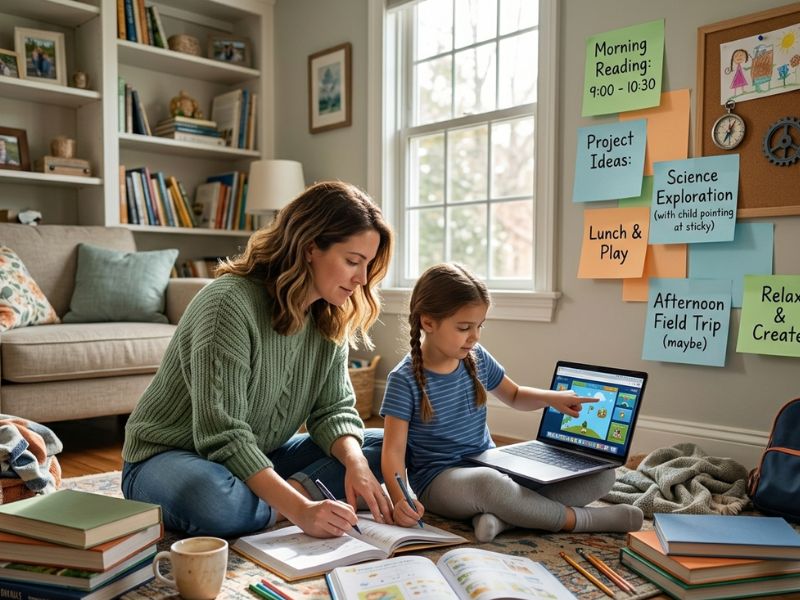
Trying to follow a fixed homeschool routine used to drain our energy. The clock controlled everything, but real life never matched it. Lessons got delayed, breaks stretched too long, and by evening, it felt like we had done a lot but achieved very little.
Switching to Flexible Homeschool Schedules changed how our days worked. Instead of chasing time slots, I focused on flow and priorities. From my experience, this approach keeps learning steady while allowing space for real-life interruptions without losing direction.
- What is a Flexible Homeschool Plan?
- Do You Need a Homeschool Schedule?
- Homeschool Schedule vs Routine vs Rhythm
- Benefits of Flexible Homeschool Schedules
- Flexible vs Strict Homeschool Schedule
- Types of Homeschool Schedules
- Why Flexible Schedules Work for Kids
- Reality Check
- Factors That Affect Your Homeschool Schedule
- Who Flexible Homeschool Schedules Work Best For
- Tips for Creating a Flexible Homeschool Plan
- How to Create a Homeschool Schedule
- Common Mistakes in Flexible Homeschooling
- What to Do When Your Homeschool Schedule Falls Apart
- Tools to Help You Stay Organized
- Sample Homeschool Schedules
- How Flexible Homeschool Schedules Change by Age
- Frequently Asked Questions
- Conclusion
What is a Flexible Homeschool Plan?
A flexible homeschool plan is a simple way to organize learning without fixed time pressure. You focus on what needs to be done, not exactly when it must be done.
For example, instead of saying “Math at 9:00 AM,” you may say “Math in the morning.” This gives you freedom while still keeping structure.
Flexible does not mean no plan. It simply means your routine can adjust when life changes.
Do You Need a Homeschool Schedule?
Yes, but not a strict one.
Without a schedule, your day can feel confusing. You may waste time deciding what to do next. Kids may also feel unsure.
A flexible schedule gives direction without stress. It helps your day flow better while keeping things simple.
Homeschool Schedule vs Routine vs Rhythm
A schedule, routine, and rhythm can all organize your homeschool day, but they give you different levels of flexibility.
| Approach | How It Works | Flexibility |
|---|---|---|
| Schedule | Lessons happen at specific times | Low |
| Routine | Activities follow a general order | Medium |
| Rhythm | Learning follows your family’s natural daily flow | High |
For example, a schedule may say math at 9:00 AM, while a routine simply puts math after breakfast. A rhythm is even more flexible and may change based on energy levels, appointments, or family needs.
For many families, a simple routine with flexible time blocks offers the best balance between structure and freedom.
Benefits of Flexible Homeschool Schedules
- Less stress during the day
- More freedom to adjust plans
- Better focus for kids
- Easy to handle unexpected events
- More family time
In my experience, flexibility removes pressure. When there is less pressure, learning improves naturally.
You also stop feeling like you are falling behind. Instead, you focus on steady progress.
Flexible vs Strict Homeschool Schedule

Not all schedules work the same way. Here is a simple comparison:
| Type | Flexibility | Structure | Result |
|---|---|---|---|
| Strict Schedule | Low | High | Can feel stressful and rigid |
| Flexible Schedule | Medium | Balanced | Best for most homeschool families |
| No Schedule | High | None | Can become disorganized |
A flexible schedule gives you the balance most families need.
Types of Homeschool Schedules
Now that you understand the basics, let’s look at different ways you can structure your flexible schedule.
Loop Schedule
You rotate subjects in a loop. If you miss one subject, you continue from there the next day.
You can explore this method further in our guide on Loop Scheduling for Homeschool.
Block Schedule
You divide the day into blocks like morning learning and afternoon activities.
Relaxed Routine
You follow a simple order of subjects without fixed times.
Each method gives you structure without making your day feel rigid.
Four-Day Homeschool Week
A four-day schedule keeps most structured lessons within four days and leaves one day open for field trips, co-ops, appointments, projects, or catch-up work.
This can work well for families who want consistent learning without filling every weekday with formal lessons.
Subject Rotation
Instead of teaching every subject every day, keep core subjects such as math and reading consistent while rotating science, history, art, and other subjects throughout the week.
This keeps the workload manageable while still giving each subject regular attention.
Why Flexible Schedules Work for Kids
Flexible learning works better for many children because it matches how they naturally learn.
- Kids focus better in short sessions
- Less pressure helps them enjoy learning
- Freedom increases motivation
- Children learn at their own pace
This is why many families see better results after switching to a flexible routine.
Flexibility still needs a basic structure to stay effective.
Reality Check
Flexible does not mean easy every day. Some homeschool days will still feel off. What matters is staying consistent over time, not having a perfect routine daily.
Factors That Affect Your Homeschool Schedule
Every family is different. Your schedule depends on your lifestyle.
- Number of children
- Age of your kids
- Work schedule
- Energy levels during the day
- Outside activities
A good schedule fits your life, not someone else’s. What works for one family may not work for another. Common Sense Press also recommends considering your family’s unique needs when creating a homeschool schedule, including work routines, learning preferences, and the ages of your children.
Who Flexible Homeschool Schedules Work Best For
This approach can be a good fit if your current routine feels too strict, stressful, or hard to follow.
- Parents who feel overwhelmed by strict schedules
- Families with multiple children
- Parents who work from home or part-time
- Families who prefer a calm and flexible learning environment
Tips for Creating a Flexible Homeschool Plan
- Start with 2–3 core subjects daily
- Keep lessons short and focused
- Add breaks between subjects
- Leave space for unexpected changes
- Review your plan every week
Use Daily Anchor Points
Instead of assigning an exact time to every subject, build your day around a few things that usually stay consistent.
For example:
Breakfast → Morning Learning → Lunch → Quiet Time → Afternoon Activities
Lessons can move within these larger parts of the day. This gives children a predictable routine without making your family follow the clock all day.
Start small and build gradually. Avoid overloading your plan in the beginning.
You do not need a complicated system to make homeschooling work.
How to Create a Homeschool Schedule
Step 1: Plan Your Day
Choose a simple order like reading, math, then science.
Step 2: Focus on Priorities
Always include core subjects first.
Step 3: Use Time Blocks
Divide your day into morning and afternoon learning.
Step 4: Add Flexibility
Leave extra time for delays or changes.
Step 5: Adjust Weekly
Check what works and improve it.
This simple system helps you stay consistent without feeling restricted.
Common Mistakes in Flexible Homeschooling

Flexible schedules are helpful, but small mistakes can make them less effective.
- Too much flexibility can lead to no progress
- Skipping core subjects like math or reading
- Having no daily routine at all
- Comparing your schedule with others
These mistakes are common, especially in the beginning. The goal is not perfection, but steady improvement.
What to Do When Your Homeschool Schedule Falls Apart
Even a good flexible schedule will not work perfectly every day. Appointments run late, children get tired, lessons take longer, or unexpected family needs come up.
When that happens, avoid trying to squeeze everything back into the day.
- Finish the most important subject or task first.
- Move unfinished lessons to another day.
- Skip optional activities when necessary.
- Avoid doubling the workload tomorrow.
- Return to your normal routine the next day.
One difficult day does not mean your schedule has failed. Flexibility means you can adjust the plan without losing your overall direction.
Tools to Help You Stay Organized

- Notebook or planner
- Printable schedule sheets
- Google Calendar
- Trello boards
Use what feels easy for you. Do not overcomplicate it.
Sample Homeschool Schedules
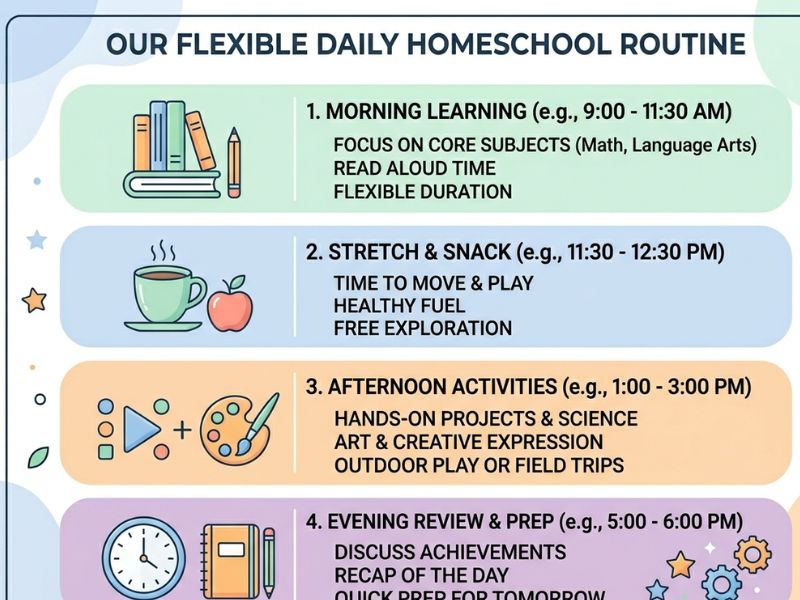
Example of a Flexible Weekly Homeschool Schedule
Your homeschool week does not have to look exactly the same every day. Core subjects can stay consistent while other subjects rotate throughout the week.
| Day | Core Learning | Flexible Subjects |
|---|---|---|
| Monday | Math + Reading | Science |
| Tuesday | Math + Reading | History + Art |
| Wednesday | Math + Writing | Science |
| Thursday | Math + Reading | History + Projects |
| Friday | Review | Field trip, life skills, or catch-up |
If something gets missed, move it to the next open block instead of trying to squeeze extra work into an already busy day.
This approach keeps important subjects consistent while giving your week room to change when real life gets in the way.
Example for Elementary Student (Flexible Morning Routine)
9:00 – Reading
10:00 – Math
11:00 – Break
11:30 – Science
12:30 – History
Total: Around 3–4 hours
Example for Working Parent
7:00 – Reading
8:00 – Math
Afternoon – Independent learning
Evening – Review
Total: Flexible learning across the day
Example for Multiple Kids
9:00 – Group learning
10:00 – Independent work
11:00 – Break
11:30 – One-on-one time
Total: Balanced shared and individual learning
How Flexible Homeschool Schedules Change by Age
The right amount of flexibility changes as children grow. Younger children usually need shorter lessons and more breaks, while older students can handle longer blocks and more independent work.
| Level | Flexible Approach | Main Focus |
|---|---|---|
| Preschool–Kindergarten | Short lessons with plenty of play | Routine and exploration |
| Elementary | Short core lessons with flexible breaks | Reading, writing, and math |
| Middle School | Longer blocks with independent work | Organization and responsibility |
| High School | Subject blocks and independent study | Coursework, credits, and deadlines |
The goal is not simply to make schedules stricter as children get older. Instead, gradually give students more responsibility for managing their learning and completing their work.
Frequently Asked Questions
What is a flexible homeschool schedule?
A flexible homeschool schedule allows learning without fixed times while following a simple routine.
How many hours should a flexible homeschool day be?
Most families spend around 2 to 4 hours on focused learning.
Can you homeschool without a schedule?
Yes, but some structure is still needed for consistency.
Conclusion
What finally worked for us was letting go of perfect timing and focusing on what truly matters. From my experience, Flexible Homeschool Schedules give you control without pressure. When your routine fits your life, learning becomes consistent, easier to manage, and something your family can actually sustain.