 Skip to content
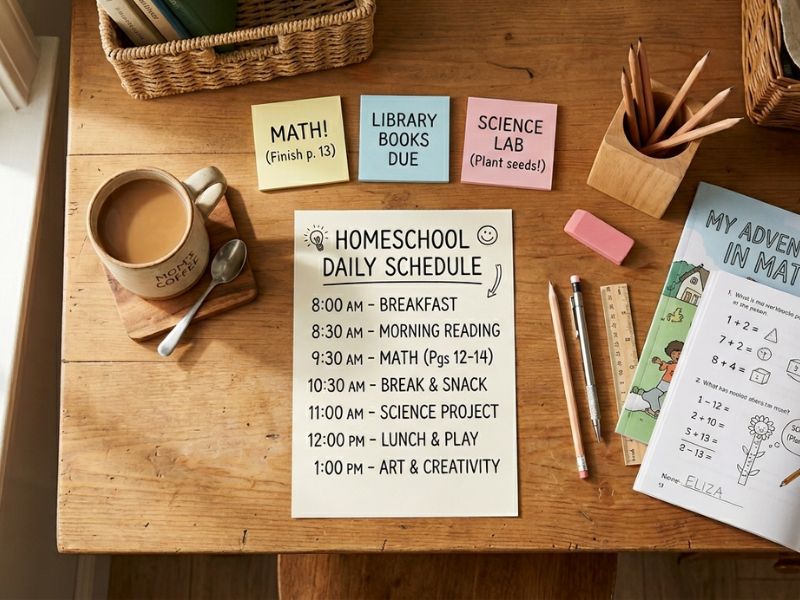
The hardest part of homeschooling is not teaching. It is figuring out how the day should actually run. I remember sitting with a plan in front of me, but nothing flowed. We jumped between subjects, lost time, and ended the day feeling behind and frustrated.
A Homeschool Schedule & Daily Routine Guide helped me rebuild our days from scratch. I stopped copying school systems and created a simple routine that matched our pace. That small shift brought structure, reduced stress, and made learning feel natural again.
- What Is a Homeschool Schedule?
- Why You Need a Homeschool Schedule
- Different Types of Homeschool Schedules
- How Many Hours a Day Do You Homeschool?
- What Does a Typical Homeschool Day Look Like?
- Homeschool Schedule for Different Situations
- How to Create a Homeschool Schedule
- How to Choose the Right Homeschool Schedule
- Tips for Homeschool Scheduling
- Common Homeschool Schedule Problems
- Why Your Homeschool Schedule Is Not Working
- How to Avoid Homeschool Burnout
- Sample Homeschool Schedule
- More Sample Homeschool Schedules
- Homeschool Schedule by Grade Level
- Our Daily Homeschool Schedule
- FAQs
- Conclusion
What Is a Homeschool Schedule?
A homeschool schedule is a plan for your day. It shows what subjects you will teach and when. Some parents follow a strict timetable like traditional school. Others prefer a loose routine.
A routine focuses more on flow than exact timing. For example, you may always start with reading and then move to math without requiring each subject to begin at a fixed hour. HSLDA also explains the difference between a homeschool schedule and routine, which can help families decide how much structure works best for them.
What matters most is having enough consistency that your child knows what usually comes next without making the day unnecessarily rigid.
Why You Need a Homeschool Schedule
A schedule makes your day easier. It reduces stress and confusion. You do not waste time deciding what to do next.
It also helps children feel secure. They know what to expect. This builds better focus and learning habits. Many parents notice that even a simple routine brings more calm to the day.
Now that you understand why it matters, let’s look at how to approach it. Homeschool scheduling is not about copying school. It is about creating a system that works for your family.
Every home is different. Some parents work from home. Some have multiple kids. Your schedule should fit your real life, not someone else’s routine.
Different Types of Homeschool Schedules

Traditional Scheduling
Traditional scheduling assigns subjects to specific times. For example, you might plan math at 9:00 AM, reading at 10:00 AM, and science after lunch.
This approach works well for families who like predictability and clear start and finish times. However, it can feel stressful when lessons run longer than expected. Leave some open time between subjects so one delay does not disrupt the entire day.
Loop Scheduling
Subjects rotate in a loop. If you miss one, you continue next time. This removes pressure.
Block Scheduling
You focus on one or two subjects for longer periods. This helps with deep learning.
Relaxed Homeschooling
This is flexible. You follow your child’s pace and interest. It works well for low-stress learning.
Flexible or Rhythm-Based Scheduling
A flexible schedule follows the same general order without assigning an exact time to every lesson. You might start with reading, move to math, take a break, and then continue with science whenever you are ready.
This works well when your days change because of work, appointments, younger children, or activities. You still have a routine, but you have room to adjust when real life gets in the way.
How Many Hours a Day Do You Homeschool?
Many parents worry about time. The truth is simple. Homeschool usually takes less time than school.
Many families spend around 2 to 5 hours daily, depending on age and learning style. Younger kids need less time. Older students may need more. These are general examples, not required daily hours. Homeschool requirements can also differ by state, so check your state’s rules when deciding how to structure your school year and instructional time.
Sometimes you feel like you are not doing enough, remember this: learning matters more than hours.
If you want a deeper breakdown by age and grade level, you can also read our guide on how many hours a day is homeschool to understand realistic homeschool learning times.
What Does a Typical Homeschool Day Look Like?
A homeschool day can look simple:
- Morning: Reading and math
- Midday: Writing or science
- Afternoon: Activities or free learning
A real day may also include breakfast, chores, movement breaks, lunch, independent reading, outdoor time, and activities outside the home. You do not have to turn every part of the day into a lesson.
Try placing subjects that require the most concentration during your child’s strongest learning time. Save lighter work, projects, reading, or creative activities for periods when energy begins to drop.
This flow keeps the day balanced. It also prevents burnout and keeps children engaged.
Homeschool Schedule for Different Situations
Every family has a different routine. Your schedule should match your daily life.
For Working Parents
If you work while homeschooling, build lessons around the hours when you can give your child the most attention. Core subjects such as math, reading, and writing can happen before work, during a longer break, or later in the day.
Save independent reading, educational activities, and assignments your child can complete alone for your busiest work periods. Instead of trying to recreate a traditional school day, protect a few reliable learning blocks that fit your work schedule.
For Multiple Kids
For Multiple Kids
Homeschooling several children becomes easier when you do not try to teach every subject separately. Subjects such as read-alouds, science, history, art, or nature study can sometimes be done together and adjusted for different ages.
While one child works independently, spend focused time with another child who needs help. Then rotate. Older children may also complete more work independently while younger children receive shorter, hands-on lessons.
For Beginners
Start with a simple routine. Do not try to make it perfect. Add more structure slowly over time.
How to Create a Homeschool Schedule
Start small. Do not try to plan everything at once.
Pick a simple routine. Test it for a week. Then improve it slowly.
If something feels stressful, change it. A good schedule should support you, not pressure you.
Step 1: Set Goals
Start with clear goals. Ask yourself what your child needs to learn.
Keep goals simple. Focus on progress, not perfection. Small steps lead to big results.
Step 2: Choose a Planner
Pick a planner that suits you. It can be digital or paper.
A planner helps you track lessons and stay consistent without overthinking.
Step 3: Create a Weekly Schedule
Plan your week in advance. Decide which subjects to teach each day.
Leave space for breaks and changes. A flexible plan works better than a strict one.
Step 4: Plan Your Day
Break your day into small parts.
Do harder subjects when your child has more energy. Keep easier tasks for later. This makes learning smoother.
Step 5: Evaluate and Adjust
No schedule is perfect. Some days will not go as planned.
Review your schedule weekly. Adjust it based on what works for your child and your routine.
How to Choose the Right Homeschool Schedule
There is no one perfect schedule. The right choice depends on your family.
- Consider your child’s learning style
- Think about your daily routine
- Choose a pace that feels comfortable
- Start simple and adjust later
A schedule that fits your life is easier to follow and maintain.
Tips for Homeschool Scheduling
A few practical habits can make your homeschool routine much easier to maintain:
- Teach difficult subjects when your child usually has the most energy.
- Alternate demanding lessons with lighter activities.
- Include breaks for snacks, movement, and outdoor time.
- Avoid scheduling every minute of the day.
- Keep some open time for lessons that run longer than expected.
- Use a visible planner or checklist so everyone knows what comes next.
- Notice which subjects regularly take longer than planned.
- Adjust the schedule when something repeatedly causes stress.
Consistency matters, but flexibility keeps a difficult morning from ruining the entire day. A useful schedule should guide your family without controlling every minute.
A homeschool schedule does not need to be perfect. Start simple, stay flexible, and adjust based on your child’s needs. Consistency matters more than strict timing.
Common Homeschool Schedule Problems
Many parents face problems while following a homeschool schedule. This is normal, especially in the beginning.
- Child loses focus quickly
- Day feels unorganized
- Subjects take longer than planned
- No consistency in routine
These problems do not mean you are failing. They simply show that your schedule needs adjustment.
Why Your Homeschool Schedule Is Not Working
If your schedule feels stressful, there may be simple reasons behind it.
- The schedule is too strict
- You planned too many subjects
- There is no flexibility
- Your child’s energy level is ignored
Most of the time, the problem is not you. It is the system. Fix the system, and things improve.
Before rebuilding the entire schedule, watch what happens for a few days. Notice where your routine regularly slows down. Math may need more time, the first break may come too late, or you may simply be trying to fit too many subjects into one day.
Change one problem first and test the adjustment for about a week. Small changes make it easier to discover what actually improves your homeschool routine.
Common Mistakes to Avoid
- Trying to copy a full school-day schedule.
- Planning too many subjects in one day.
- Ignoring your child’s natural pace.
- Forgetting to add breaks.
- Changing the routine too often.
How to Avoid Homeschool Burnout

Burnout can happen when your schedule is too heavy. It can affect both parents and children.
- Keep your schedule realistic
- Take regular breaks
- Do not compare with others
- Focus on progress, not perfection
A balanced routine helps you stay consistent without stress.
Sample Homeschool Schedule
Here is one example of how a homeschool day could flow. Use the times as a starting point rather than rules.
| Time | Activity |
|---|---|
| 8:30 AM | Breakfast, chores, and getting ready |
| 9:00 AM | Reading or language arts |
| 9:45 AM | Math |
| 10:30 AM | Snack and movement break |
| 11:00 AM | Writing |
| 11:30 AM | Science or history |
| 12:15 PM | Lunch and free time |
| 1:00 PM | Independent reading, projects, or electives |
| 2:00 PM onward | Outdoor time, hobbies, sports, errands, or activities |
Your own schedule may start earlier, later, or use shorter lessons. The purpose of a sample schedule is to give your day a workable rhythm, not to make every homeschool family follow the same clock.
More Sample Homeschool Schedules
Beginner Schedule
- Reading
- Math
- Break
- Writing
Flexible Schedule
- Morning: Core subjects
- Afternoon: Activities
- Evening: Reading
Multi-Child Schedule
- Group learning time
- Independent work
- Rotation between children
Homeschool Schedule by Grade Level

As children grow, their schedule needs change. Younger kids need shorter lessons, while older students can handle more structured time.
A simple way to adjust your routine is to increase lesson length and independence gradually as your child grows.
| Stage | Schedule Approach | Main Focus |
|---|---|---|
| Preschool & Kindergarten | Very short learning periods with frequent play | Reading aloud, early skills, play, and exploration |
| Elementary | Short focused lessons with regular breaks | Reading, writing, math, and hands-on learning |
| Middle School | Longer blocks with growing independence | Core subjects, projects, and independent assignments |
| High School | More structured and independent planning | Coursework, electives, projects, and long-term assignments |
These are general patterns rather than fixed rules. A child’s attention span, curriculum, learning needs, and family routine should ultimately shape the schedule.
Our Daily Homeschool Schedule
In my early days of homeschooling, I tried strict plans. They did not work. It made our days stressful.
Now we follow a simpler rhythm. We usually begin with reading and math while focus is strongest. After a short break, we move into writing or another core subject. I keep the afternoon lighter for reading, projects, outdoor learning, or anything we did not finish earlier.
When a lesson takes longer than expected, I do not try to force everything back into the original plan. I adjust the rest of the day and continue from there.
What works is not a perfect plan. It is consistency.
If your child is learning and improving, you are already on the right path.
FAQs
Do you need a strict homeschool schedule?
No, most families succeed with a flexible routine.
What time should homeschool start?
Morning is often best, but it depends on your routine.
Can homeschool be done in the evening?
Yes, many families choose evening learning.
How many hours should homeschool take daily?
It usually takes 2 to 5 hours depending on age.
Conclusion
Over time, I learned that a Homeschool Schedule & Daily Routine Guide is not about strict timing. It is about creating a rhythm that supports your child and your daily life. The best routines are the ones you can actually follow without feeling overwhelmed.