 Skip to content
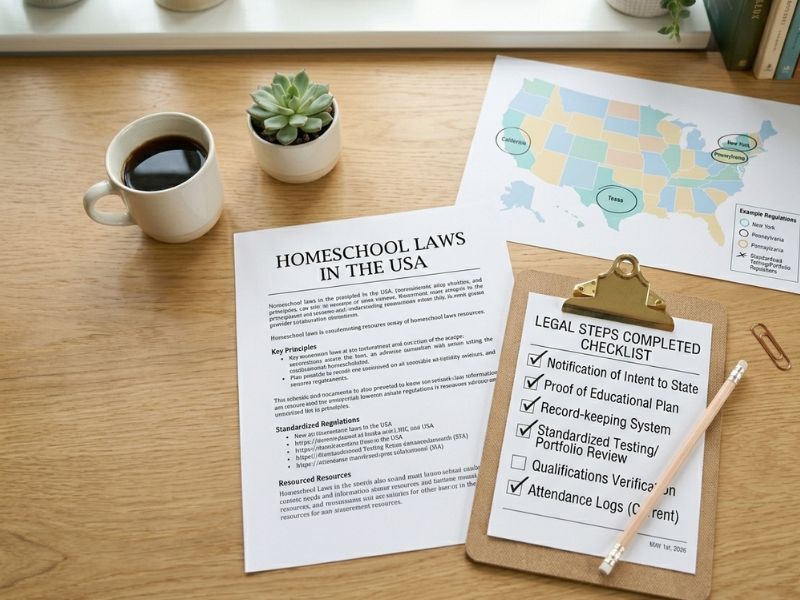
Yes, homeschooling is legal in all 50 U.S. states. However, each state has its own rules for things like notification, attendance, testing, and record-keeping.
When I first looked into homeschooling, these differences felt confusing. Once I understood that the rules depend on where you live, the process became much clearer. This guide explains what parents need to know to homeschool legally.
Quick Answer: Yes, homeschooling is legal in all 50 U.S. states and Washington, D.C. However, there is no single set of homeschool requirements for every family. Each state sets its own rules for things like notification, required subjects, attendance, records, testing, and evaluations.
- What is Homeschooling?
- Legality and prevalence
- Is Homeschooling Legal in All 50 States?
- Who Makes Homeschool Laws: Federal or State Government?
- Homeschool Laws By State
- Homeschool Law Types (Simple Breakdown)
- Do You Need Permission to Homeschool?
- Can Parents Legally Teach Their Own Children?
- How to Check Homeschool Laws in Your State
- What Are the Legal Requirements for Homeschooling?
- Compulsory School Age and Homeschooling
- Do Homeschoolers Have to Follow Attendance or Instruction Rules?
- Why Homeschool Requirements Differ by State
- What Happens If You Don’t Follow Homeschool Laws?
- Do You Have to Withdraw Your Child Before Homeschooling?
- Get Started on Your Homeschool Journey
- How to Verify Your State’s Current Homeschool Law
- Simple Legal Checklist to Start Homeschooling
- Quick Summary
- Homeschooling FAQs
- Conclusion
What is Homeschooling?
Homeschooling is a form of education where children learn primarily at home instead of attending a traditional public or private school. Parents usually take responsibility for planning, teaching, choosing curriculum, and tracking their child’s progress.
Families may use textbooks, online courses, hands-on activities, tutors, co-ops, or a mix of different methods. Homeschooling does not mean learning without rules. Parents still need to follow the education requirements set by their state.
The exact process varies across the United States. Some states require notification, records, testing, or specific subjects, while others have fewer requirements. If you are new to the concept, our guide to what is homeschooling explains how homeschooling works in more detail.
Legality and prevalence
Homeschooling is legal in all 50 states in the United States. This means parents have the right to educate their children at home.
However, rules are not the same everywhere. Some states require approval or strict reporting, while others have very few requirements. This is why checking your state law is important before you begin.
Is Homeschooling Legal in All 50 States?
Yes, homeschooling is legal in all 50 states in the United States. However, each state has its own rules and requirements. Some states are very flexible, while others have stricter guidelines that parents must follow.
This means you are allowed to homeschool, but you must follow your state’s process to stay fully legal.
Who Makes Homeschool Laws: Federal or State Government?
Homeschool requirements are mainly determined at the state level, which is why the rules can look very different across the country. A family in Texas may follow a much simpler process than a family in New York or Pennsylvania.
Depending on the state, parents may need to file a notice, teach certain subjects, keep records, or complete testing or evaluations. Always check the current requirements for the state where your child is being homeschooled.
Homeschool Laws By State
Homeschool laws vary across the United States, so the requirements that apply to one family may not apply to another. Rules can differ for notification, testing, required subjects, parent qualifications, and other legal steps.
Before you begin, check the requirements for your own state. HSLDA’s homeschool laws by state resource provides an interactive map where you can select your state and review the main requirements for homeschooling legally.
Homeschool Law Types (Simple Breakdown)

Homeschool laws are not the same in every state. For a simple comparison, states are often informally grouped by the amount of homeschool oversight families may face. These categories are not official government classifications, but they can help beginners understand why requirements vary so much.
In low regulation states like Texas and Idaho, homeschooling is very flexible. Parents usually do not need to submit reports or follow strict rules. This makes it easier to start and manage homeschooling.
In moderate regulation states such as Florida and Washington, parents may need to notify the state and provide basic progress updates. These rules are still manageable but require some planning.
In strict regulation states like New York and Pennsylvania, homeschooling comes with more detailed requirements. Parents may need to submit reports, follow approved subjects, and complete regular evaluations or testing.
Understanding which category your state falls into helps you follow the right steps and homeschool with confidence.
Do You Need Permission to Homeschool?

In most states, you do not need formal permission to homeschool. You usually only need to notify the school or local authority. However, a few states may require approval or additional steps before you begin.
If you are worried about getting in trouble, following your state rules is enough to stay safe and legal.
Can Parents Legally Teach Their Own Children?
In most states, parents can homeschool their own children without being licensed teachers. However, parent qualification rules can vary by state and by the legal homeschool option a family uses.
Before starting, check whether your state has any education, qualification, or filing requirements for the parent providing instruction.
How to Check Homeschool Laws in Your State
Once you know homeschooling is legal, the next step is checking the exact requirements for your state. Rules may cover notification, required subjects, attendance, testing, evaluations, or record-keeping depending on where you live.
Start with your state’s official education agency or other government source responsible for compulsory education. You can also use established homeschool law resources to understand the rules, but always confirm current requirements before you begin.
What Are the Legal Requirements for Homeschooling?

Homeschool requirements depend on your state, but most include a few common steps. These rules help ensure that children receive proper education.
- Submitting a notice of intent (in some states)
- Keeping attendance records
- Teaching required subjects
- Completing evaluations or testing (in certain states)
Once you follow these steps, you are legally protected in most situations.
Compulsory School Age and Homeschooling
Every state has compulsory education rules that determine when children must receive an education. The starting and ending ages are not the same in every state.
Homeschooling can satisfy compulsory education requirements when families follow the homeschool option allowed under their state law. Parents should check the rules for their child’s age because notification, attendance, or other requirements may depend on it.
Do Homeschoolers Have to Follow Attendance or Instruction Rules?
It depends on the state. Some states set requirements related to instructional days, hours, attendance, or other records, while others give parents much more flexibility.
Even when attendance records are not submitted to an authority, keeping a simple homeschool record can still be useful. Check your state’s current rules to see exactly what you need to track.
Why Homeschool Requirements Differ by State
The steps required to homeschool can look very different depending on where you live. One state may require little or no notification, while another may require paperwork, specific subjects, attendance records, testing, or evaluations.
This is why you should not follow another family’s homeschool process without checking your own state. Use our homeschooling laws by state guide to find the requirements that apply where you live.
What Happens If You Don’t Follow Homeschool Laws?
If parents do not follow homeschool laws, it can lead to serious issues. The child may be marked as truant, which means missing required education.
This can result in warnings, legal notices, or even fines in some cases.
The good news is that these problems are easy to avoid when you understand and follow your state rules from the beginning.
Do You Have to Withdraw Your Child Before Homeschooling?
If your child currently attends school, you may need to formally withdraw them before beginning homeschool. Do not simply stop sending your child to school without checking the required process.
Withdrawal and homeschool notification are not always the same step. Depending on your state, you may need to withdraw your child and then complete a separate notice, declaration, registration, or other homeschool requirement.
Get Started on Your Homeschool Journey

To begin homeschooling legally, parents should:
- Check state laws
- Withdraw the child from school properly
- File required notices (if needed)
- Choose a curriculum
- Keep basic records
Taking these steps removes confusion and helps you start with confidence.
How to Verify Your State’s Current Homeschool Law
Homeschool requirements can change, so avoid relying only on old articles, social media posts, or another family’s experience. Before starting, verify the current requirements that apply in your state.
Start with your state’s official education agency or other government source responsible for compulsory education. You can also use established homeschool law resources to understand the rules, but check official state information when available.
Simple Legal Checklist to Start Homeschooling
Use this quick checklist before you begin. It can help you stay organized and avoid missing important legal steps.
- Check your state homeschool law
- Withdraw your child from school properly
- Submit a notice of intent if your state requires it
- Choose a curriculum or learning plan
- Keep basic records, such as attendance and work samples
- Review testing or evaluation rules in your state
Quick Summary
- Homeschooling is legal in all 50 states
- Laws vary by state
- Some states require paperwork
- Others have very few rules
- Parents must follow local laws
Homeschooling FAQs
How much time does homeschooling take?
Younger children may need 2 to 4 hours per day, while older students may need more time depending on their level.
Is homeschooling legal in my state?
Yes, homeschooling is legal in every state, but rules are different in each one.
Do I need a teaching degree to homeschool?
No, most states do not require parents to have a teaching degree.
Can I homeschool without notifying the school?
In some states yes, but in others you must submit a notice of intent.
Is homeschooling recognized by colleges?
Yes, homeschooled students are accepted by colleges if they meet admission requirements.
Conclusion
In my experience, the hardest part is not the law, it’s the uncertainty at the beginning. Once I clearly understood the rules and followed the right steps, everything felt manageable. Now that you know is homeschooling legal, you can move ahead with confidence and focus on creating a stable learning path for your child.