 Skip to content
Many parents start a preschool homeschool curriculum with excitement, but soon feel unsure about what to teach or how to plan each day. The lack of clear direction often leads to confusion, especially when every resource suggests something different.
In my experience, the biggest mistake is trying to follow too many ideas at once. A preschool curriculum works best when it is simple, focused, and easy to follow. Once you remove the noise, teaching your child becomes much more clear and manageable.
- Quick Takeaway
- What is a Preschool Homeschool Curriculum?
- Do You Need a Preschool Curriculum?
- Should You Use a Formal Curriculum?
- What Should You Teach in Preschool?
- Preschool Skills Overview
- What Should a 3-Year-Old Learn?
- Preschool Homeschool Curriculum by Age
- How Much Time Should Preschool Take?
- A Sample Preschool Homeschool Schedule
- Daily Preschool Routine (Example)
- Simple Weekly Preschool Plan
- How to Create a Preschool Homeschool Curriculum
- Step-by-Step Preschool Homeschool System
- How to Track Preschool Homeschool Progress
- Best Preschool Homeschool Curriculum Options
- Free Homeschool Curriculum for 3-Year-Olds
- Free Curriculum Options
- Free vs Paid Preschool Curriculum
- Choose Curriculum Based on Your Child’s Learning Style
- Tips for Homeschooling Preschoolers
- Tips for Homeschooling a 3-Year-Old
- Common Preschool Homeschool Mistakes
- Frequently Asked Questions
- Start Today
- Conclusion
Quick Takeaway
- Preschool learning should be simple and play-based.
- You only need 30 to 90 minutes of focused learning each day.
- Focus on basic skills like letters, numbers, motor skills, and social growth.
- A simple routine works better than a strict plan.
- Consistency matters more than perfection.
What is a Preschool Homeschool Curriculum?
A preschool homeschool curriculum is a simple plan that helps you teach basic skills at home during early childhood.
If you feel confused about where to start, you are not alone. Many parents feel this way in the beginning.
It usually includes:
- Basic reading skills
- Simple math
- Play-based learning
- Social and emotional growth
At this stage, learning should feel active and enjoyable rather than like formal school. The National Association for the Education of Young Children (NAEYC) explains that play and learning work together, helping young children build skills such as curiosity, problem-solving, attention, and persistence.
Do You Need a Preschool Curriculum?
No, you do not always need a formal curriculum.
Many parents worry if they are doing enough. The truth is, simple daily learning is already enough at this stage.
Many families choose a relaxed approach. They teach through play, daily life, and simple activities.
However, a curriculum can help if:
- You want structure
- You feel unsure where to start
- You like clear goals
The best choice depends on your family. You are not behind if you keep things simple.
Should You Use a Formal Curriculum?
A formal curriculum can be helpful, but it is not required.
Some children enjoy structured learning. Others learn better through play.
You can:
- Use a full curriculum
- Mix different resources
- Or create your own plan
Do not try to do everything at once. Pick one approach and keep it simple.
Preschool is about building curiosity, not pressure.
What Should You Teach in Preschool?
Preschool learning focuses on basics. It helps children prepare for future learning.
You do not need to teach many subjects. A few simple skills are enough.
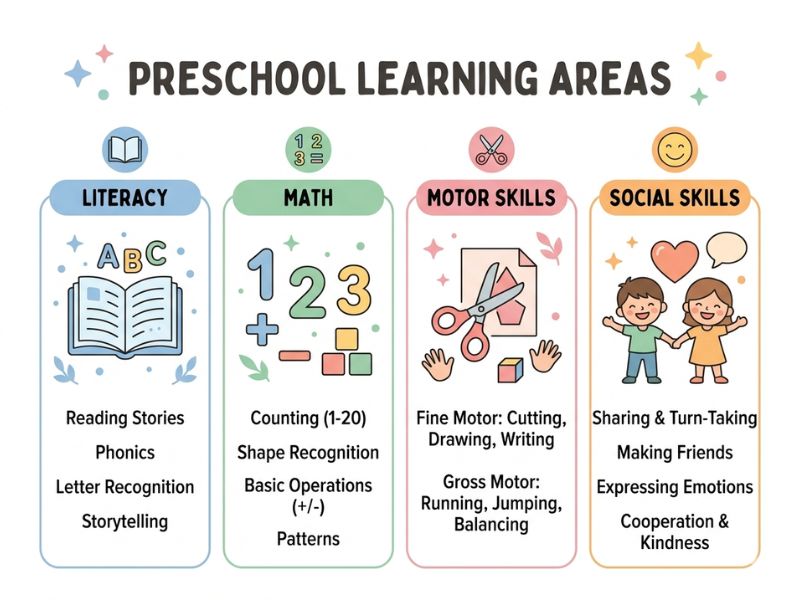
Preschool Skills Overview
| Area | What to Teach |
|---|---|
| Literacy | Letters, sounds, vocabulary, and stories |
| Math | Counting, numbers, shapes, sorting, and patterns |
| Science | Nature, weather, animals, and simple observations |
| Fine Motor Skills | Drawing, cutting, tracing, and building |
| Gross Motor Skills | Running, jumping, balancing, and throwing |
| Social-Emotional Skills | Sharing, emotions, communication, and routines |
| Practical Life Skills | Dressing, cleaning up, hygiene, and independence |
This table gives you a quick and clear view so you don’t feel overwhelmed.
Literacy Skills
Start with simple language skills.
Focus on:
- Letter recognition
- Sounds (phonics)
- Listening skills
Read books daily. Talk about stories.
Reading
At this stage, reading should be gentle.
You can:
- Read aloud every day
- Point to words while reading
- Let your child explore books
Do not rush reading skills. Every child learns at their own pace.
Writing
Writing starts with small steps.
Focus on:
- Holding a pencil
- Drawing shapes
- Tracing lines
Writing skills improve slowly with practice, especially through drawing and tracing.
Math Skills
Math should be fun and simple.
Teach through:
- Counting objects
- Recognizing numbers
- Sorting shapes
You can use toys, snacks, or daily items. Learning happens everywhere.
Motor Skills
Motor skills are very important.
Activities include:
- Coloring
- Cutting paper
- Building blocks
These help with hand control and coordination.
Science and Nature
Preschool science starts with observing the world.
Try simple activities such as:
- Watching plants grow
- Talking about weather
- Exploring leaves, rocks, and flowers
- Learning about common animals
- Mixing and comparing safe household materials
You do not need formal science lessons. Questions, observation, and hands-on exploration are enough at this age.
Gross Motor Skills
Preschoolers also need activities that develop whole-body movement.
Encourage:
- Running and jumping
- Throwing and catching
- Balancing
- Climbing safely
- Dancing and movement games
Outdoor play can naturally develop many of these skills without turning them into formal lessons.
Practical Life Skills
Everyday tasks are also part of preschool learning.
Children can practice:
- Washing their hands
- Putting toys away
- Dressing with less help
- Helping with simple food preparation
- Organizing their belongings
- Following basic daily routines
These small responsibilities build independence, coordination, and confidence.
Social and Emotional Skills
Children also learn how to interact.
Teach them to:
- Share
- Express feelings
- Follow simple rules
This builds confidence and emotional strength.
What Should a 3-Year-Old Learn?
A 3-year-old learns best through play.
Focus on:
- Basic counting (1–10)
- Recognizing colors and shapes
- Speaking simple sentences
- Playing with others
Keep lessons short. Keep them fun. You are doing enough even with small steps. If you want a clearer understanding of how learning changes as your child grows, it helps to explore Homeschooling by Grade Level for a structured view of each stage.
Preschool Homeschool Curriculum by Age
Preschool learning changes as children grow. Instead of expecting every child to reach the same skills at the same time, use age ranges as a simple guide.
| Age | Main Learning Focus |
|---|---|
| 2–3 years | Language, sensory play, movement, colors, and simple routines |
| 3–4 years | Letters, counting, shapes, fine motor skills, and social development |
| 4–5 years | Letter sounds, number concepts, patterns, writing readiness, and independence |
| Around 5 years | Early reading, basic math, problem-solving, and kindergarten readiness |
Development is not a race. If your child learns a skill earlier or later, adjust the curriculum instead of adding pressure.
How Much Time Should Preschool Take?
Preschool learning does not need many hours because young children learn best in short sessions.
Most families spend:
- 30 minutes to 1.5 hours daily
Some days may be longer. Some days may be shorter.
That is normal. Learning also happens outside planned time.
A Sample Preschool Homeschool Schedule
Here is a simple daily routine you can start today:
- 10 minutes: Reading time
- 15 minutes: Letters or numbers
- 20 minutes: Play-based activity
- 15 minutes: Art or craft
- Outdoor play: Anytime
You do not need to follow this perfectly. Use it as a guide.
Daily Preschool Routine (Example)
| Time | Activity |
|---|---|
| 10 minutes | Reading |
| 15 minutes | Letters or Numbers |
| 20 minutes | Play-based Learning |
| 15 minutes | Art or Craft |
| Flexible | Outdoor Play |
Simple Weekly Preschool Plan

A weekly plan makes things easier. You do not have to think every day.
Here is an example you can try this week:
- Monday: Letters and sounds
- Tuesday: Numbers and counting
- Wednesday: Art and creativity
- Thursday: Nature and outdoor learning
- Friday: Review and fun activities
You can adjust this plan based on your child.
How to Create a Preschool Homeschool Curriculum
You can build your own simple plan.
Follow these steps:
- Choose your goals
- Pick basic subjects (reading, math, play)
- Plan short daily activities
- Keep learning fun
- Adjust as needed
Start small. You can improve your plan over time.
Step-by-Step Preschool Homeschool System
If you feel confused, follow this simple system. It gives you a clear path.
- Choose your approach
Decide if you want play-based or structured learning - Set a daily routine
Keep it short and simple - Pick 2–3 focus skills each week
This helps you stay focused - Use simple activities
Use books, toys, and daily life - Track progress weekly
Notice what works and adjust
Start with this system. You do not need anything complicated.
How to Track Preschool Homeschool Progress
Preschool progress does not require grades or frequent tests. Simple observation can tell you whether your child is developing new skills.
Look for gradual changes such as:
- Recognizing more letters and sounds
- Counting familiar objects
- Using crayons, pencils, and scissors with better control
- Following simple directions
- Participating in stories and conversations
- Expressing feelings and needs more clearly
- Completing simple tasks with less help
- Remembering skills from previous activities
Keep a few drawings, worksheets, or activity samples throughout the year. You can also make short monthly notes about new skills you notice.
The goal is to see growth over time, not to compare your child with other preschoolers.
Best Preschool Homeschool Curriculum Options
You do not have to create every preschool lesson yourself. Several ready-made curriculum options can give you more structure while still allowing plenty of play and flexibility.
Here are some options parents can compare:
| Curriculum | Best For | Approach |
|---|---|---|
| Playing Preschool | Families wanting simple hands-on activities | Play-based |
| Blossom and Root | Families who enjoy nature and literature | Nature and literature-based |
| Five in a Row | Children who enjoy books and stories | Literature-based |
| Timberdoodle Preschool | Parents wanting a more complete package | Hands-on and structured |
Playing Preschool
Playing Preschool uses short, hands-on activities built around early literacy, math, science, art, and play. It can work well for parents who want guidance without recreating a traditional classroom at home.
Blossom and Root
Blossom and Root combines literature, nature, art, music, and hands-on activities. Its relaxed approach may suit families who prefer exploration over worksheets and formal lessons.
Five in a Row
Five in a Row uses children’s books as the starting point for learning. Families explore different ideas and skills through stories, discussion, and related activities.
Timberdoodle Preschool
Timberdoodle offers preschool curriculum kits that combine resources for different learning areas. It may suit parents who prefer having many of their materials selected and organized for them.
There is no single best preschool homeschool curriculum for every family. Consider your child’s age, attention span, interests, learning style, your budget, and how much lesson preparation you want to do.
Free Homeschool Curriculum for 3-Year-Olds
There are many free options online.
You can use:
- Printable worksheets
- Free lesson plans
- Educational videos
You can also find free resources like printable worksheets, simple lesson plans, and activity ideas online. You can use everyday items like toys, books, and household objects to create your own learning activities at no cost.
You do not need to spend money to start homeschooling.
Free Curriculum Options
Free resources can work very well.
They help you:
- Save money
- Try different methods
- Stay flexible
Start with free options and add more later if needed.
Free vs Paid Preschool Curriculum
| Type | Best For |
|---|---|
| Free | Budget-friendly families who want flexibility and simple resources |
| Paid | Parents who want structure, guided lessons, and ready-made plans |
Choose Curriculum Based on Your Child’s Learning Style
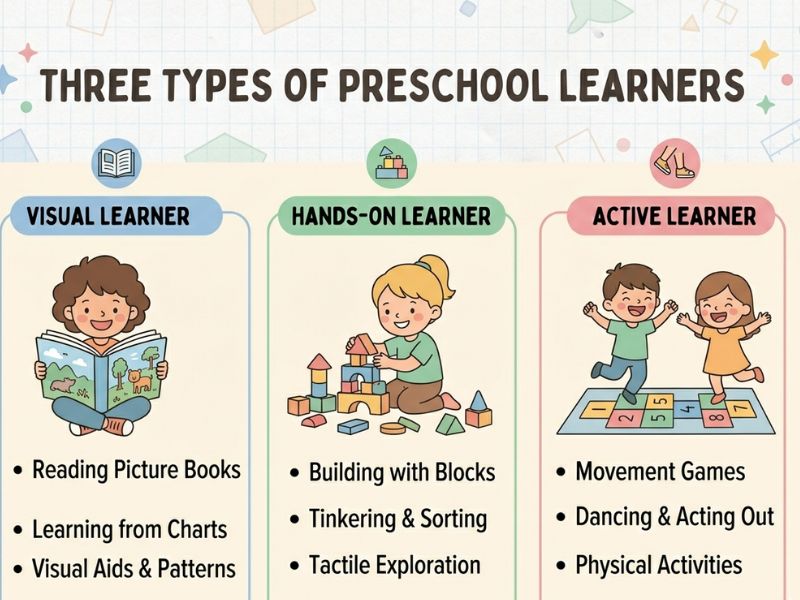
Every child learns in a different way.
- Visual learners → books, pictures
- Hands-on learners → activities, crafts
- Active learners → movement, games
When you match your child’s style, learning becomes easier and more enjoyable.
Tips for Homeschooling Preschoolers
Here are some simple tips:
- Keep lessons short
- Use play as learning
- Follow your child’s interest
- Do not compare with others
- Be patient
Many parents feel unsure in the beginning. That is normal.
Tips for Homeschooling a 3-Year-Old
Teaching a 3-year-old is different.
- Focus on play, not pressure
- Repeat activities often
- Allow free exploration
Learning should feel natural and relaxed.
Common Preschool Homeschool Mistakes
Many parents make small mistakes in the beginning.
Avoid these:
- Teaching too much too early
- Expecting quick results
- Ignoring play-based learning
- Comparing your child with others
You do not need to be perfect. Progress matters more.
Frequently Asked Questions
How many hours should preschool homeschool take?
Most families spend 30 to 90 minutes daily. Short sessions work best.
Can I homeschool preschool without a curriculum?
Yes, you can. Many parents use play-based learning instead of a formal curriculum.
What is the best preschool homeschool curriculum?
The best curriculum is the one that fits your child. Keep it simple and flexible.
Start Today
You do not need a perfect plan to begin. Try this simple one-day plan:
- Read one short book together
- Practice counting with toys or snacks
- Do one fun activity like drawing, coloring, or building
That is enough for one day.
Conclusion
Over time, one lesson stands out, children learn best when the process stays simple and consistent. You don’t need a perfect routine or expensive tools. What matters is steady effort and a calm learning environment.
Trust your approach and give it time. Small daily actions build strong skills. When you stay consistent and flexible, your preschool homeschool curriculum becomes effective, manageable, and rewarding for both you and your child.