 Skip to content
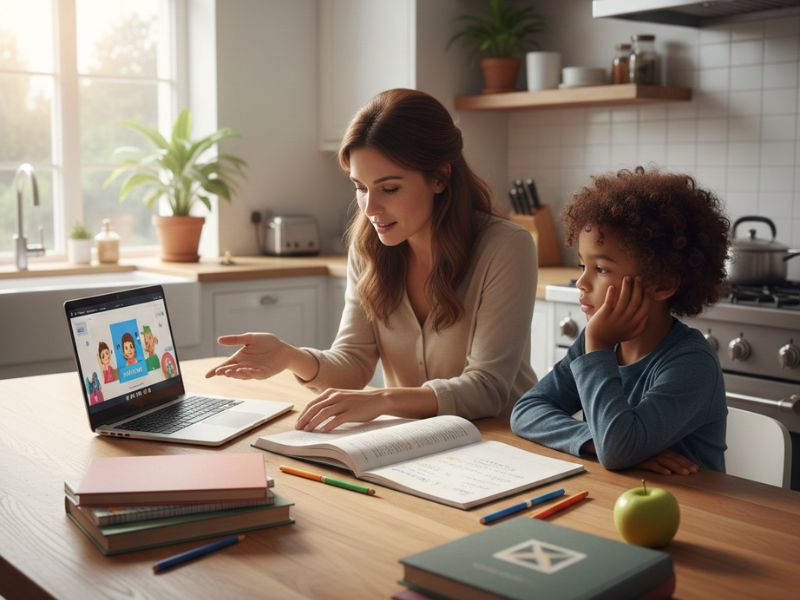
For many families, the idea of homeschooling begins after repeated signs that something is not right. A child may seem unhappy, overwhelmed, or disconnected from learning. Before taking any step, parents usually search for Florida homeschool laws to make sure they understand the legal process clearly.
From carefully studying state education rules and reviewing real parent experiences, one concern appears again and again. Families are not worried about teaching at home. They are worried about legal compliance. Questions about paperwork, deadlines, and requirements often create the biggest uncertainty in the beginning.
Florida homeschool laws are governed by Florida Statute §1002.41, which outlines the legal requirements, parent responsibilities, and evaluation rules for home education programs in the state.
- What Are Florida Homeschool Laws? (Quick Answer)
- Key Takeaways: Florida Homeschool Laws
- Quick Summary of Florida Homeschool Laws
- What Is Considered Homeschooling in Florida?
- Three Legal Ways to Homeschool in Florida
- How to Start Homeschooling in Florida (Step-by-Step)
- Florida Homeschool Timeline at a Glance
- Annual Evaluation Requirements
- Ending a Homeschool Program
- Can a Homeschooled Student Return to Public School?
- Florida Homeschool Graduation Requirements
- Can Homeschool Students Qualify for Bright Futures?
- Parent Rights Under Florida Homeschool Laws
- Can Homeschool Students Participate in Public School Activities?
- Can Florida Homeschool Students Take College Classes?
- Common Mistakes Parents Should Avoid
- Is Florida a Good State for Homeschooling?
- Frequently Asked Questions
- Conclusion
What Are Florida Homeschool Laws? (Quick Answer)
Florida homeschool laws allow parents to legally educate their children at home by filing a Notice of Intent, keeping a portfolio of work, and submitting a yearly evaluation. No teaching degree or approved curriculum is required.
Key Takeaways: Florida Homeschool Laws
- Homeschooling is legal in Florida.
- Parents must file a Notice of Intent within 30 days.
- A yearly evaluation is required.
- Families must keep a learning portfolio.
- No teaching degree or state-approved curriculum is required.
- Portfolios can be reviewed with 15 days written notice.
Florida Homeschool Compliance Checklist
Use this simple checklist to make sure you meet all Florida homeschool law requirements:
- File a Notice of Intent within 30 days of starting
- Maintain a homeschool portfolio with learning logs
- Keep samples of student work
- Complete a yearly educational evaluation
- Submit a termination notice if homeschooling ends
Quick Summary of Florida Homeschool Laws
| Requirement | Details |
|---|---|
| Legal Status | Homeschooling is legal |
| Governing Law | Florida Statute §1002.41 |
| Notice of Intent | Required within 30 days |
| Parent Qualification | No degree required |
| Curriculum Rules | Parents choose freely |
| Record Keeping | Portfolio required |
| Annual Evaluation | Mandatory |
| Compulsory Age | 6–16 years |
What Is Considered Homeschooling in Florida?
In Florida, homeschooling is called a Home Education Program.
This means parents take full responsibility for their child’s education at home instead of sending them to a traditional school.
Parents decide:
- What subjects to teach
- How lessons are delivered
- When learning happens
Florida’s compulsory attendance law requires children between ages 6 and 16 to be enrolled in an educational program, including a registered homeschool program.
If you want to understand how homeschool regulations vary across the country, you can read our complete guide on homeschooling laws by state to see how requirements differ from Florida.
Three Legal Ways to Homeschool in Florida
| Homeschool Option | Description |
|---|---|
| Home Education Program | Parents file notice, keep records, and handle evaluations independently |
| Umbrella School | Child is enrolled in a private school that manages reporting requirements |
| Private Tutor Option | A certified Florida teacher provides instruction at home |
Option 1: Home Education Program
This is the most common method. Parents manage everything directly with the school district.
Option 2: Umbrella School
Parents enroll the child in a private school that allows home-based instruction. The school handles legal reporting.
Option 3: Private Tutor Option
A certified Florida teacher provides instruction at home. The tutor must hold a valid Florida certificate.
How to Start Homeschooling in Florida (Step-by-Step)
Step 1: File a Notice of Intent
Parents must submit a Notice of Intent within 30 days of starting.
The notice includes:
- Child’s name
- Birthdate
- Address
- Parent signature
The Notice of Intent must be sent to the local school district superintendent. Parents can usually submit it by mail or hand delivery, depending on district guidelines.
What Happens After You File the Notice of Intent?
After the school district receives your Notice of Intent, your Home Education Program is officially established under Florida law. Parents do not need to wait for formal approval before beginning instruction. From that point forward, the main legal responsibilities are maintaining a homeschool portfolio and completing the required annual evaluation.
Step 2: Begin Teaching
Parents may begin teaching immediately after filing.
Florida law does NOT require:
- Approved curriculum
- Specific subjects
- Fixed school hours
Step 3: Maintain a Homeschool Portfolio

A typical homeschool portfolio may contain a reading log, completed worksheets, writing samples, project photos, and notes showing the child’s learning progress throughout the year.
Parents must keep a portfolio that includes:
- A log of educational activities
- Samples of student work
Records must be kept for two years.
School districts may request to review the homeschool portfolio, but they must provide at least 15 days written notice before inspection.
Florida Homeschool Timeline at a Glance
Understanding the yearly timeline helps families stay compliant.
Typical Yearly Process:
- Day 1–30: File Notice of Intent
- Throughout the year: Maintain learning portfolio
- End of school year: Submit annual evaluation
- If homeschooling ends: File termination notice within 30 days
Annual Evaluation Requirements
Florida requires one evaluation each year.
Parents may choose:
- Evaluation by a certified teacher
- Standardized test results
- State student assessment tests
- Psychological evaluation
- Other valid assessment methods approved by the superintendent
Most families choose teacher evaluation because it is simple and flexible.
Ending a Homeschool Program
If homeschooling ends, parents must submit a written termination notice to the local school district within 30 days. This officially closes the Home Education Program and updates the student’s enrollment status. Keeping copies of the termination notice and homeschool records is recommended in case they are needed for future school enrollment or documentation.
Can a Homeschooled Student Return to Public School?
Yes. A homeschooled student may return to public school at any time. Grade placement and credit decisions are made by the receiving school district based on its policies and the student’s educational records. Keeping an organized homeschool portfolio can make the transition much smoother.
Florida Homeschool Graduation Requirements
Homeschool students graduate through a parent-issued diploma.
Parents must sign a formal affidavit of completion, stating the student has completed high school requirements.
This diploma is legally valid for college and employment.
Can Homeschool Students Qualify for Bright Futures?
Yes. Florida homeschool graduates may qualify for the Bright Futures Scholarship if they meet the program’s academic and eligibility requirements. Families should review the current scholarship criteria during high school to ensure all required documentation is completed on time.
Parent Rights Under Florida Homeschool Laws
Florida gives parents strong flexibility.
Parents:
- Do NOT need a teaching degree
- Choose their own curriculum
- Set their own schedule
- Select evaluation method
This flexibility makes Florida one of the most homeschool-friendly states.
Can Homeschool Students Participate in Public School Activities?
Florida homeschool students may qualify to participate in certain public school extracurricular activities, including sports, music programs, clubs, and career education opportunities. Eligibility requirements are determined by the local school district, so parents should contact their district for current participation rules.
Can Florida Homeschool Students Take College Classes?
Yes. Many homeschool students participate in dual enrollment through eligible Florida colleges. This allows qualified high school students to earn college credit while completing their homeschool education. Parents remain responsible for operating the Home Education Program during dual enrollment.
Common Mistakes Parents Should Avoid
Avoid these errors:
- Filing Notice of Intent late
- Forgetting annual evaluation
- Poor record keeping
- Losing portfolio samples
- Missing termination notice
Following the timeline prevents legal problems.
Is Florida a Good State for Homeschooling?

Yes. Florida is considered homeschool-friendly because:
- Laws are flexible
- Reporting is minimal
- Parents control curriculum
- No teaching license is required
Families who follow the legal steps rarely face issues. If you want to see how Florida compares with other homeschool-friendly states, read our detailed guide on Best States For Homeschooling to understand which states offer the most flexibility.
Florida Homeschooling Snapshot
| Factor | Florida Level |
|---|---|
| Legal Complexity | Low to Moderate |
| Reporting Requirements | Minimal |
| Parent Freedom | High |
| Curriculum Restrictions | None |
| Evaluation Requirement | Annual |
Frequently Asked Questions
Do parents need a teaching degree?
No. Parents do not need any teaching qualification.
How often are evaluations required?
One evaluation is required every year.
Can homeschoolers play sports in Florida?
Yes. Many districts allow homeschool students to participate in public school sports under specific rules.
Do homeschoolers get funding in Florida?
Traditional home education programs do not receive state funding, but umbrella or scholarship programs may offer options.
Conclusion
From studying homeschool systems across multiple states and reviewing how Florida families apply these rules, it becomes clear that Florida’s approach is structured but flexible. The law sets basic requirements, yet it gives parents strong control over their child’s education.
Once families understand Florida homeschool laws and follow the simple legal steps, most of the fear disappears. With clarity and preparation, parents can focus less on compliance worries and more on building a stable, supportive learning environment at home.