 Skip to content

For many families, the idea of homeschooling begins after repeated school struggles. A child may lose interest in learning, feel overwhelmed, or come home frustrated each day. At this point, parents often start searching for North Carolina homeschool laws because legal questions quickly become their biggest concern.
From examining state education rules and real parent experiences, one pattern appears often: families are not afraid of teaching at home. They are worried about missing legal steps. Understanding North Carolina homeschool laws and the main North Carolina homeschool requirements early helps parents move forward with confidence and avoid unnecessary stress.
- Quick Summary
- What Is Considered a Homeschool in North Carolina?
- How to Start Homeschooling in North Carolina
- Timeline to Start Homeschooling in North Carolina
- Compulsory School Attendance Age in North Carolina
- Homeschool Teacher Qualifications in North Carolina
- Required Subjects for Homeschooling in North Carolina
- North Carolina Homeschool Attendance Requirements
- North Carolina Homeschool Record-Keeping Requirements
- North Carolina Homeschool Testing Requirements
- North Carolina Homeschool Graduation Requirements
- North Carolina Homeschool Funding Rules
- Is North Carolina a Homeschool-Friendly State?
- Common Mistakes Parents Should Avoid
- Frequently Asked Questions
- Conclusion
Key Takeaways: North Carolina Homeschool Laws
- Parents must file a Notice of Intent once the child turns 7.
- Homeschools must operate for at least 9 months each year.
- Annual standardized testing is legally required.
- Parents must keep attendance, immunization, and test records.
- No teaching license is required to homeschool in North Carolina.
Quick Summary
North Carolina allows parents to homeschool legally with simple requirements. Families must file a Notice of Intent, teach for at least nine months each year, keep attendance and test records, and conduct annual standardized testing. Parents must also have at least a high school diploma to operate a homeschool.
If you are also comparing homeschool laws across the country, you can read our guide on Best States For Homeschooling to discover which states offer the most flexible requirements.
| Requirement | Required? | Details |
|---|---|---|
| Notice of Intent | Yes | Must be filed when child turns 7 |
| Parent Diploma | Yes | Administrator must have high school diploma |
| Annual Testing | Yes | Nationally standardized test required yearly |
| Attendance Records | Yes | Minimum 9 months instruction |
| Curriculum Approval | No | Parents choose freely |
| State Funding | No | Families cover expenses |
What Is Considered a Homeschool in North Carolina?
In North Carolina, a homeschool is legally treated as a nonpublic school run by a parent or guardian. The parent becomes the school administrator and teacher.
This means families must follow state rules for attendance, testing, and record keeping.
How to Start Homeschooling in North Carolina

If you are wondering how to homeschool in North Carolina, the process is straightforward and can be completed in a few simple steps.
Step 1: File a Notice of Intent
Parents must submit a Notice of Intent to the Division of Non-Public Education (DNPE).
You need to provide:
- School name
- Parent administrator name
- Proof of high school diploma
Once the Notice of Intent is filed and acknowledged by DNPE, the homeschool becomes legally recognized. This is the most important part of the North Carolina homeschool registration process.
Parents can only file the Notice of Intent once their child reaches the compulsory school age of 7 years old. The state does not allow homeschool registration before this age. Families can teach informally earlier but must register at age seven.
Step 2: Choose a School Name
North Carolina law requires every homeschool to have a unique school name. This name will appear in official records and testing documents.
Step 3: Begin Teaching
After filing the Notice of Intent, parents can begin teaching immediately. There is no waiting period.
Timeline to Start Homeschooling in North Carolina
Understanding the process timeline helps families plan smoothly.
Before Age 7: Parents may teach at home informally without registering.
At Age 7: File Notice of Intent with DNPE.
Within Weeks: DNPE acknowledges the homeschool.
First School Year: Begin teaching and maintain attendance records.
Each Year: Conduct annual standardized testing and keep records.
Homeschool Timeline at a Glance
- Before Age 7: Informal teaching allowed at home.
- Age 7: File Notice of Intent with DNPE.
- First Year: Begin teaching and track attendance.
- Every Year: Conduct standardized testing and keep records.
- Age 16: Compulsory attendance requirement ends.
Compulsory School Attendance Age in North Carolina
Children must attend school between ages 7 and 16. This rule applies to both public school and homeschool students.
Homeschool Teacher Qualifications in North Carolina
The homeschool administrator must have at least a high school diploma or equivalent. No teaching license or college degree is required.
Required Subjects for Homeschooling in North Carolina
North Carolina does not mandate a strict subject list. However, parents must provide regular instruction in core academic areas.
Most families teach:
- Reading
- Writing
- Math
- Science
- Social Studies
Parents can choose any curriculum that fits their child’s needs.
North Carolina Homeschool Attendance Requirements
Homeschool students must receive instruction for at least nine months each year. Parents must keep regular attendance records.
North Carolina Homeschool Record-Keeping Requirements
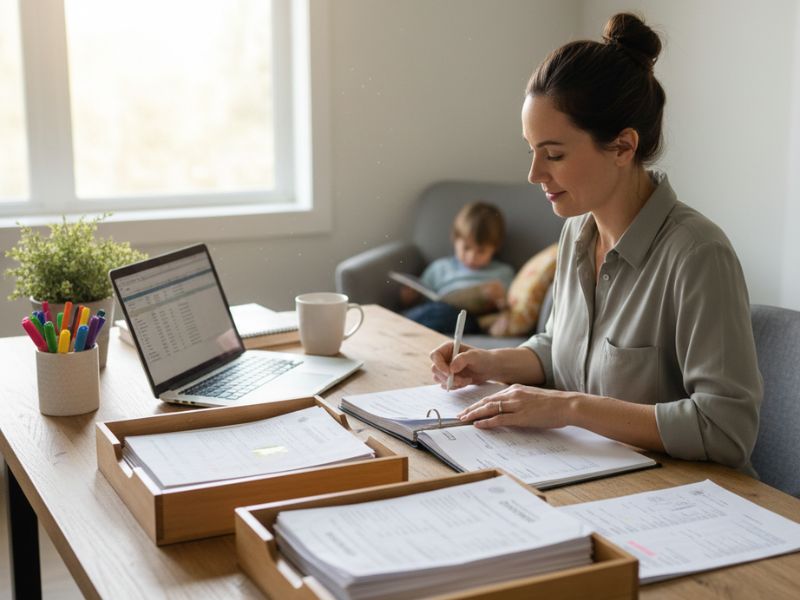
Parents must maintain important records, including:
- Attendance logs
- Immunization records
- Annual test scores
The Division of Non-Public Education (DNPE) has the authority to request homeschool records for inspection. Parents must be prepared to show attendance logs, test scores, and immunization records if requested.
North Carolina Homeschool Testing Requirements
As part of the North Carolina homeschool testing requirements, homeschooled students must take a nationally standardized test every year. The test must cover English grammar, reading, and math.
Parents must keep the test results for at least one year. These records must be available if the state requests them.
North Carolina Homeschool Graduation Requirements
The state does not regulate homeschool graduation. Parents can set their own graduation requirements and issue diplomas.
Many families follow public school credit guidelines to prepare students for college admission.
North Carolina Homeschool Funding Rules
North Carolina does not provide funding for homeschooling families. Parents must pay for curriculum, testing, and educational supplies.
If a family decides to stop homeschooling, they must notify the Division of Non-Public Education that the homeschool has closed.
Is North Carolina a Homeschool-Friendly State?

Yes. North Carolina is considered homeschool friendly because:
- Simple legal requirements
- Flexible curriculum choices
- No teacher certification required
- Minimal government oversight
If you want to understand how North Carolina compares with other states, you can explore our detailed guide on Homeschooling Laws by State to see how homeschool requirements vary across the United States.
Common Mistakes Parents Should Avoid
New homeschool families often make small compliance mistakes.
The most common include:
- Forgetting to file Notice of Intent
- Not keeping attendance records
- Missing yearly testing deadlines
Avoiding these mistakes helps families stay compliant.
Frequently Asked Questions
Do parents need a teaching degree to homeschool in North Carolina?
No. Parents only need a high school diploma.
Can homeschool students return to public school?
Yes. Placement depends on school policies and record review.
Can homeschool students attend college?
Yes. Colleges accept homeschool diplomas when proper records are provided.
Conclusion
After studying regulations and observing real homeschooling journeys, it becomes clear that NC homeschool laws are designed to be simple and flexible. Parents who understand the rules early and keep basic records rarely face compliance issues.
Consistent planning matters more than perfection. Families who follow testing requirements, track attendance, and stay organized can homeschool confidently while providing a stable and supportive learning environment.