 Skip to content
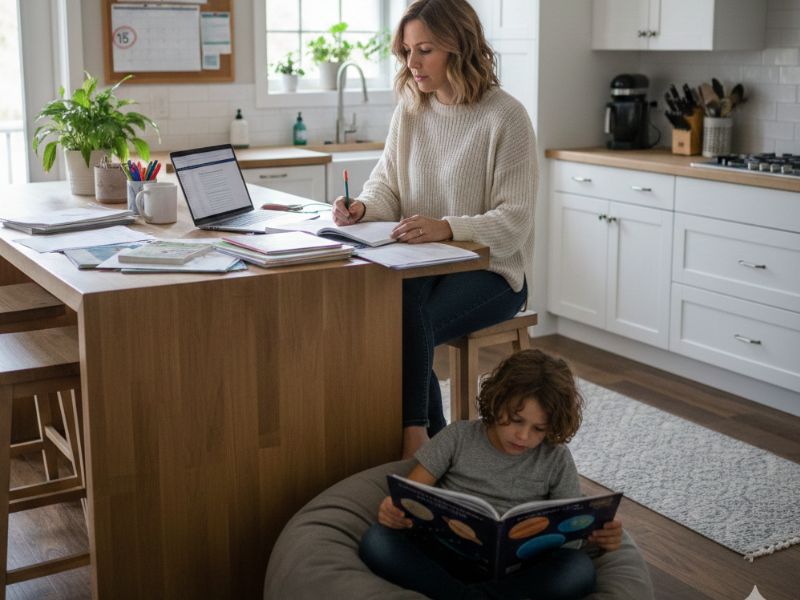
The decision to homeschool in Oregon often begins during a stressful season. A child may feel lost in a crowded classroom. Homework turns into daily tension. You start researching late at night, trying to understand whether you can legally teach at home. That search usually leads to one urgent question about Oregon homeschool laws.
After reviewing state guidelines and observing how families transition from public school to home education, one truth stands out. Parents are not confused about teaching. They are confused about compliance. Deadlines, testing rules, and paperwork feel overwhelming at first. But once the legal steps are clear, homeschooling becomes less intimidating and much more manageable.
- Key Takeaways: Oregon Homeschool Laws
- Is Homeschooling Legal in Oregon?
- Oregon Department of Education – Official Overview
- Oregon Homeschool Laws at a Glance
- Notice of Intent (NOI) Requirements
- Parent Qualifications
- Homeschool Curriculum in Oregon
- Testing Requirements Under Oregon Homeschool Laws
- What If Test Scores Are Low?
- Annual Testing for Sports Participation
- Record Keeping Recommendations
- Immunization Requirements for Homeschoolers
- Homeschooling a Child With Disabilities
- Homeschool vs Public Charter or Online School
- Can Homeschool Students Take Public School Classes?
- Independent Homeschool vs Public Charter School in Oregon
- Graduation and Transcripts
- Returning to Public School
- What Happens If You Do Not Comply?
- Local Support and Resources
- Oregon Homeschool Laws Compliance Checklist
- Before You Start Homeschooling in Oregon
- Frequently Asked Questions
- Conclusion
Key Takeaways: Oregon Homeschool Laws
- Homeschooling is legal in Oregon.
- Parents must file a Notice of Intent within 10 days.
- Testing is required in grades 3, 5, 8, and 10.
- Testing must be completed by August 15.
- Parents do not need a teaching license.
- Keeping organized records protects your family.
Is Homeschooling Legal in Oregon?
Yes, homeschooling is legal in Oregon.
Parents are allowed to educate their children at home as long as they file a Notice of Intent and follow required testing rules. The state does not require a teaching license or approved curriculum, but families must meet reporting and deadline requirements.
Oregon Department of Education – Official Overview
The Oregon Department of Education (ODE) oversees homeschool reporting rules in the state.
Under Oregon homeschool laws:
- Compulsory school age: 6 to 18
- Parents must notify their local Education Service District (ESD)
- Testing is required at certain grade levels
- Parents do not need a teaching license
ODE provides official homeschool guidance and maintains tester qualification lists. It provides official homeschool guidance and maintains tester qualification lists. Parents can also review the official Oregon Department of Education homeschool guidance for the latest requirements, testing information, and Notice of Intent procedures.
Oregon Homeschool Laws at a Glance
Here is a quick summary:
- Notice of Intent required: Yes
- File within 10 days of starting homeschool
- Testing required: Grades 3, 5, 8, 10
- Testing deadline: August 15
- Parent certification required: No
- Required subjects listed by law: No
Oregon homeschool laws are structured but manageable. Some parents also compare flexibility across the country before making a final decision. If you are curious how Oregon ranks nationally, you can explore our guide on the Best States For Homeschooling to find best homeschooling states.
Notice of Intent (NOI) Requirements

Under Oregon homeschool laws, you must notify your local Education Service District (ESD).
When to File
You must file Notice of Intent:
- Within 10 days of starting homeschool
- Within 10 days of withdrawing from public school
- Within 10 days of moving to a new ESD
- If your child is 6 years old by September 1
In most situations, you only need to file one Notice of Intent. You do not need to submit a new notice every school year unless you move into a different Education Service District (ESD) or begin homeschooling another child who reaches Oregon’s compulsory school age.
What to Include
Your Notice of Intent should include:
- Child’s full name
- Date of birth
- Address
- Parent or guardian name
Keep a copy for your records.
How to Withdraw Your Child From Public School
If your child is currently enrolled in public school, notify the school that you are withdrawing your child to begin homeschooling. After withdrawal, submit your Notice of Intent to your local Education Service District within the required timeframe. Keeping copies of both documents helps prevent enrollment or attendance issues later.
Parent Qualifications
Oregon homeschool laws do not require:
- A teaching degree
- State certification
- Curriculum approval
Parents are fully responsible for instruction.
Homeschool Curriculum in Oregon
Oregon does not require specific subjects.
Families may choose:
- Online curriculum
- Printed programs
- Unit studies
- Unschooling
- Custom learning plans
There is no state approval process for curriculum.
Testing Requirements Under Oregon Homeschool Laws

Testing is required at the end of:
- Grade 3
- Grade 5
- Grade 8
- Grade 10
Tests must be completed by August 15.
The 18-Month Rule
If your child withdraws from public school, testing happens after 18 months of homeschooling. After that, normal grade testing applies.
Short-Term Homeschool Exception
If a child is homeschooled for less than one academic year, testing is not required during that period.
Who Can Administer the Test?
The test must be given by a neutral qualified person.
This person must:
- Not be related by blood or marriage
- Meet Oregon Administrative Rule (OAR 581-021-0026) qualifications
Parents cannot administer the test.
You submit scores only if your ESD requests them.
Which Standardized Tests Can Be Used?
Oregon requires nationally standardized achievement tests administered by qualified neutral testers. Commonly accepted assessments include the TerraNova, Iowa Tests of Basic Skills (ITBS), and Stanford Achievement Test. Your Education Service District can provide guidance if you are unsure which test meets Oregon requirements.
What If Test Scores Are Low?
If a student scores below the 15th percentile:
- The child must retest the following year.
If low scores continue for three consecutive testing periods:
- The superintendent may require additional supervision or certified instruction.
Keep testing records organized.
Annual Testing for Sports Participation
Homeschooled students who join public school interscholastic sports must show academic progress.
Families must provide either:
- Annual standardized test results (by August 15), or
- A portfolio or work sample showing academic progress
Students must also meet any academic eligibility requirements established by their local school district and the Oregon School Activities Association (OSAA) before participating in interscholastic sports.
Check with your local school district for procedures.
Record Keeping Recommendations

Oregon homeschool laws do not require daily logs. However, keeping records protects your family.
Recommended records:
- Copy of Notice of Intent
- Test score reports
- Attendance record
- Work samples
- Reading lists
Organized documentation prevents problems.
Immunization Requirements for Homeschoolers
Independent homeschool students usually do not submit immunization records to the state.
However, immunization records may be required if:
- The student joins public school classes
- The student plays school sports
- The student attends school-based programs
Contact your local district for updated rules.
Homeschooling a Child With Disabilities
Oregon families may homeschool children with disabilities while following the same homeschool notification requirements. If a child previously received special education services, parents can contact their local school district to discuss available evaluations, support services, or a Privately Developed Plan (PDP) when applicable. Eligibility for services is determined under state and federal education rules.
Homeschool vs Public Charter or Online School

Independent homeschool means:
- Parents control curriculum
- Parents handle testing compliance
- No public funding is provided
Public charter or online schools:
- Operate under public school rules
- Provide curriculum
- Follow public school regulations
These are different legal paths.
Can Homeschool Students Take Public School Classes?
Some Oregon school districts allow homeschooled students to enroll in individual public school classes or participate in selected educational programs through shared-time enrollment. Availability depends on local district policies, so parents should contact their district directly to learn about enrollment options and eligibility requirements.
Independent Homeschool vs Public Charter School in Oregon
| Topic | Independent Homeschool | Public Charter School |
|---|---|---|
| Curriculum | Parent chosen | School provided |
| Funding | No direct state funding | Public funded |
| Testing Rules | Homeschool testing requirements | Public school assessment rules |
| Oversight | Parent responsibility | District supervision |
Graduation and Transcripts
Oregon does not issue homeschool diplomas.
Parents may:
- Create a homeschool transcript
- Issue a parent-signed diploma
Some colleges accept homeschool transcripts. Some programs may require a GED, which is widely recognized.
Returning to Public School
If returning to public school:
- The school decides grade placement
- Credits may not fully transfer
Keep detailed documentation for smoother transitions.
What Happens If You Do Not Comply?
Oregon homeschool laws require:
- Notice of Intent
- Required testing
- Compliance with timelines
If a family does not comply, the superintendent may:
- Request documentation
- Require testing
- Enforce compulsory attendance laws
Compliance prevents legal issues.
Local Support and Resources
Many Oregon families join:
- Homeschool co-ops
- Online communities
- Library enrichment programs
- ESD resource groups
Community support helps families stay informed about Oregon homeschool laws.
Oregon Homeschool Laws Compliance Checklist
Use this quick checklist:
- Filed Notice of Intent within 10 days
- Confirmed child is 6 by September 1
- Marked required testing grade levels
- Scheduled test before August 15
- Verified neutral qualified tester
- Stored test score reports
- Organized academic records
This checklist keeps your homeschool legally secure.
Before You Start Homeschooling in Oregon
Before you begin, make sure you:
- Understand compulsory school age requirements (6–18).
- Know your local Education Service District (ESD).
- Mark the August 15 testing deadline.
- Prepare required details for your Notice of Intent.
- Plan your curriculum approach.
Frequently Asked Questions
Do I need state approval?
No formal approval is required beyond filing Notice of Intent.
Do I need to follow Oregon academic standards?
No. Parents choose curriculum.
Can I unschool in Oregon?
Yes. Teaching style is flexible under Oregon homeschool laws.
Do homeschoolers get paid in Oregon?
No. Independent homeschool families do not receive direct state funding.
Conclusion
From reviewing state regulations and observing real families, one thing is clear. Oregon homeschool laws are structured, but they are not meant to create fear. They provide a clear framework for families who choose home education.
When parents understand deadlines, testing rules, and reporting steps, confidence replaces anxiety. Staying organized and informed makes the process smoother. With preparation and consistency, homeschooling in Oregon can be both legally secure and personally rewarding.