 Skip to content
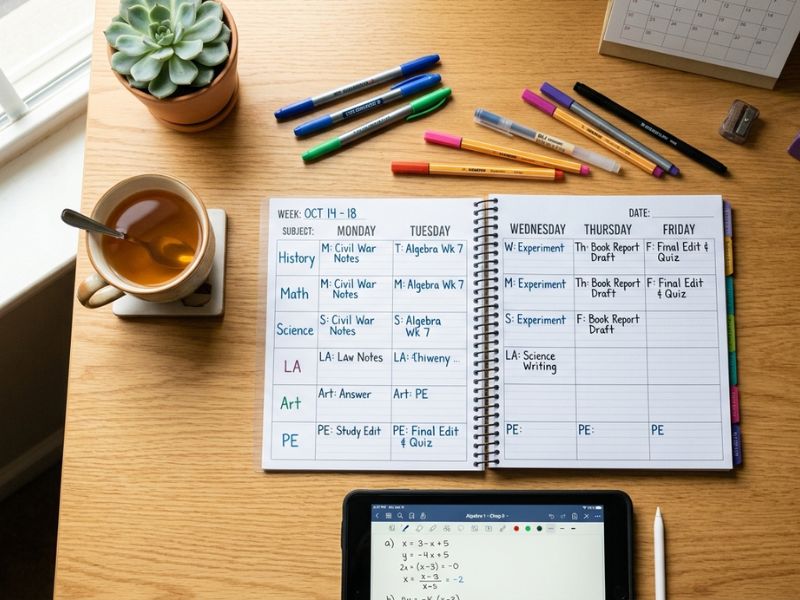
When I first reached middle school with my child, I felt stuck. The early years were simple, but this stage felt different. The lessons became deeper, and I was not sure what to teach or how much was enough. Some days felt smooth, but other days felt confusing and unplanned.
That is when I realized that a clear middle school homeschool curriculum is not about doing more. It is about knowing what truly matters. With the right structure and a flexible approach, this stage can become one of the most rewarding parts of your homeschool journey.
- What Is Middle School Homeschool Curriculum?
- What Is Taught in Middle School?
- Subjects Included in Middle School Homeschool Curriculum
- Grades 6–8 Overview
- Curriculum Approach
- What to Look for in a Middle School Curriculum
- How to Choose the Right Middle School Homeschool Curriculum (Step-by-Step)
- How to Know Your Child Is Ready for a Middle School Curriculum
- Top Middle School Homeschool Curriculum Choices
- Free vs Paid Middle School Homeschool Curriculum
- Middle School Courses Overview
- What a Middle School Homeschool Week Can Look Like
- Benefits of Middle School Homeschool Curriculum
- Daily Schedule Example
- Flexible Schedule Options for Middle School
- Curriculum Choices
- Online vs Offline Middle School Homeschool Curriculum
- Middle School Homeschool Curriculum Comparison Table
- Tips for Parents
- Common Middle School Homeschool Mistakes
- A Simple Reminder for Parents
- How Middle School Prepares Your Child for High School
- Learning Outcomes
- Frequently Asked Questions
- Conclusion
What Is Middle School Homeschool Curriculum?
Middle school usually includes grades 6 to 8, though some programs may also include grade 5.
A homeschool curriculum for middle school is a plan that includes:
- Core subjects
- Skill development
- Flexible learning methods
It is not about copying school at home. It is about guiding your child at the right pace in a way that works for your family.
What Is Taught in Middle School?
Middle school learning focuses on understanding, not memorizing.
Students begin to:
- Think more deeply
- Ask better questions
- Work more independently
This is also the stage where learning habits are built. What your child learns here will support them later in high school.
Subjects Included in Middle School Homeschool Curriculum
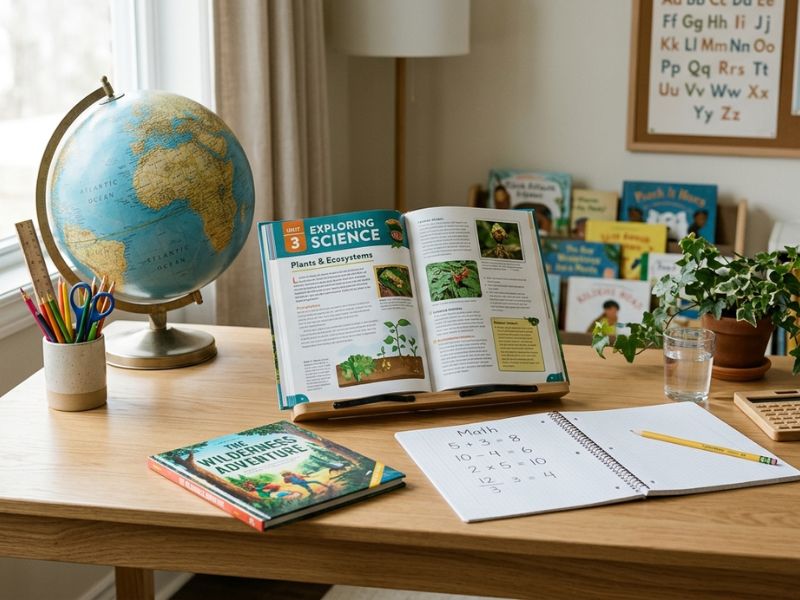
Core Subjects
Most homeschool plans include:
- Math (pre-algebra, problem solving)
- Language Arts (reading, writing, grammar)
- Science (life, earth, physical science)
- Social Studies (history, geography, civics)
Electives
You can also add:
- Art
- Coding
- Foreign language
- Life skills
You don’t need to add everything at once. Start simple and build slowly.
Grades 6–8 Overview
Each grade builds on the last.
6th Grade
- Focus on basics and structure
- Build reading and math confidence
7th Grade
- Introduce more complex topics
- Improve writing and analysis
8th Grade
- Prepare for high school
- Focus on independence and deeper thinking
Curriculum Approach
There is no single “perfect” way. Every child learns differently.
Common approaches:
- Structured curriculum (step-by-step lessons)
- Flexible learning (child-led pace)
- Mix of both
Choose what works for your child. You can always adjust later.
What to Look for in a Middle School Curriculum
Before choosing, think about:
- Your child’s learning style
- Your daily schedule
- Budget
- Online vs offline learning
You don’t need the best curriculum. You need one that you can follow consistently.
How to Choose the Right Middle School Homeschool Curriculum (Step-by-Step)
Choosing a curriculum can feel overwhelming. This simple process will help you start with confidence.
Step 1: Identify Your Child’s Level
Look at strengths and weak areas. This helps you avoid frustration.
Step 2: Understand Learning Style
Books, videos, or hands-on—choose what keeps your child engaged.
Step 3: Decide Your Budget
You can start with free resources and upgrade later if needed.
Step 4: Pick Core Subjects First
Focus on math, language arts, science, and social studies. That is enough to begin.
Step 5: Test and Adjust
If something is not working, change it. This is normal in homeschooling.
How to Know Your Child Is Ready for a Middle School Curriculum
Many parents worry about moving into a middle school homeschool curriculum too early or too late. Instead of focusing only on grade level, look at whether your child is ready for more independent learning.
Your child is likely ready if they can:
- Read independently for 20–30 minutes.
- Write clear paragraphs with proper organization.
- Complete assignments with less parent support.
- Understand basic pre-algebra concepts.
- Follow a weekly learning routine.
- Ask thoughtful questions and explain their ideas.
- Manage simple projects or research tasks.
Every child develops at a different pace. If one or two skills still need work, you can strengthen those areas while gradually introducing middle school subjects.
Top Middle School Homeschool Curriculum Choices
Many families use a mix of resources.
Popular options include:
- Easy Grammar
- Math-U-See
- Apologia Science
- Story of the World
You don’t need multiple programs at once. Start with one or two and grow from there. If you want to supplement math, science, or other core subjects with free lessons, Khan Academy offers high-quality learning resources that work well alongside many homeschool curricula.
Free vs Paid Middle School Homeschool Curriculum
Many parents worry about cost. The good news is that both options can work well.
| Option | Benefits | Limitations |
|---|---|---|
| Free Curriculum | Budget-friendly, easy to start | Less structure |
| Paid Curriculum | Organized and complete | Higher cost |
| Mixed Approach | Flexible and balanced | Needs planning |
You can begin with free options and slowly add paid resources if needed.
Middle School Courses Overview
A simple weekly plan may include:
- 4–5 days of core subjects
- 1–2 days for revision or projects
- Time for reading and creative work
This is enough for a complete learning week. Keep it simple and manageable.
What a Middle School Homeschool Week Can Look Like
This sample plan keeps learning simple and balanced.
| Day | Focus Subjects |
|---|---|
| Monday | Math and Language Arts |
| Tuesday | Science and Reading |
| Wednesday | Math and Social Studies |
| Thursday | Language Arts and Projects |
| Friday | Review and Creative Work |
This is only a sample. You can adjust it based on your child’s needs.
Benefits of Middle School Homeschool Curriculum
Homeschooling at this stage offers:
- Flexible learning pace
- Personal attention
- Strong family connection
- Better understanding of concepts
It also creates a calm space where your child can learn without pressure.
Daily Schedule Example

A simple 3–4 hour plan:
- Math – 45 minutes
- Language Arts – 45 minutes
- Science or Social Studies – 45 minutes
- Reading / Projects – 30–45 minutes
This is enough for a full homeschool day. You can always adjust based on your child’s energy.
Flexible Schedule Options for Middle School
Not every child follows the same routine.
Flexible Daily Schedule
- Short lessons with breaks
- Rotate subjects during the week
Block Schedule
- Focus on fewer subjects per day
- Spend more time deeply
Light Day Option
- Reduce workload when needed
- Focus on one main subject
Adjust your schedule based on your child’s pace.
Curriculum Choices
You can choose from:
- Online programs
- Printed workbooks
- DIY curriculum
Most families use a mix. You don’t have to choose just one method.
Online vs Offline Middle School Homeschool Curriculum
| Type | Best For | Example Use |
|---|---|---|
| Online | Independent learners | Video lessons |
| Offline | Hands-on learners | Workbooks |
| Hybrid | Balanced learning | Mix of both |
A balanced approach often gives the best results.
Middle School Homeschool Curriculum Comparison Table
| Curriculum | Type | Best For | Cost Level |
|---|---|---|---|
| Easy Grammar | Offline | Writing skills | Low |
| Math-U-See | Offline | Math understanding | Medium |
| Apologia Science | Mixed | Science learning | Medium |
| Online Programs | Online | Independent learners | Medium–High |
Tips for Parents
- Keep lessons short
- Stay consistent
- Allow flexibility
- Encourage questions
You don’t need to do everything perfectly. Small daily progress matters most.
Common Middle School Homeschool Mistakes
Many parents face these challenges:
- Trying to copy traditional school at home
- Overloading the daily schedule
- Ignoring your child’s pace
- Changing curriculum too often
- Focusing only on subjects, not skills
These are common mistakes. You are not alone if you experience them.
A Simple Reminder for Parents
Some days will not go as planned. That is normal.
Your child does not need a perfect schedule. They need consistency, patience, and support. Small progress each day can lead to long-term growth.
How Middle School Prepares Your Child for High School

This stage builds the foundation for high school success.
Your child learns to:
- Manage time
- Study independently
- Handle more advanced subjects
- Build confidence
Focus on skills, not just subjects. That makes the biggest difference.
Middle school is also the ideal time to develop study habits before high school begins. Encourage your child to organize assignments, meet simple deadlines, take notes, and manage more work independently. These habits often make the transition to high school much smoother.
Learning Outcomes
By the end of middle school, your child should:
- Read and write clearly
- Solve pre-algebra and basic algebra problems
- Take notes and organize information
- Write structured paragraphs
- Research and understand new topics
- Think independently
Middle School Skills Checklist
By the end of middle school, students are often able to:
- Read independently and understand more complex texts.
- Write well-organized paragraphs and short essays.
- Solve pre-algebra and basic algebra problems.
- Find and use reliable information for assignments.
- Take notes and keep their work organized.
- Complete schoolwork with less day-to-day guidance.
- Carry out simple science investigations using the scientific method.
- Follow a regular study routine and manage their time more effectively.
These skills usually develop over time, and every child progresses at their own pace. Use this checklist as a general guide, not as a fixed standard.
Frequently Asked Questions
What is the best middle school homeschool curriculum?
The best middle school homeschool curriculum depends on your child’s learning style, schedule, and budget.
How many hours should a middle schooler homeschool each day?
Most middle schoolers learn effectively in about 3 to 4 hours per day.
Can I homeschool middle school without a curriculum?
Yes, but a simple plan helps maintain consistency and steady progress.
Is online or offline homeschool curriculum better for middle school?
Both work well, and many families use a mix of online and offline learning.
What subjects are required in a middle school homeschool curriculum?
Core subjects include math, language arts, science, and social studies.
Should my middle school homeschool curriculum follow state standards?
Not necessarily. Many homeschool families use state standards as a general guide while choosing a curriculum that matches their child’s learning style and goals. However, you should always review your state’s homeschool requirements to ensure you meet any required subjects or record-keeping rules.
Conclusion
Middle school is a turning point in your child’s learning journey. It is not just about subjects. It is about building confidence, independence, and strong habits.
With the right middle school homeschool curriculum, you can guide your child in a calm and simple way. You don’t need to have everything figured out. Start small, stay consistent, and trust the process.