 Skip to content
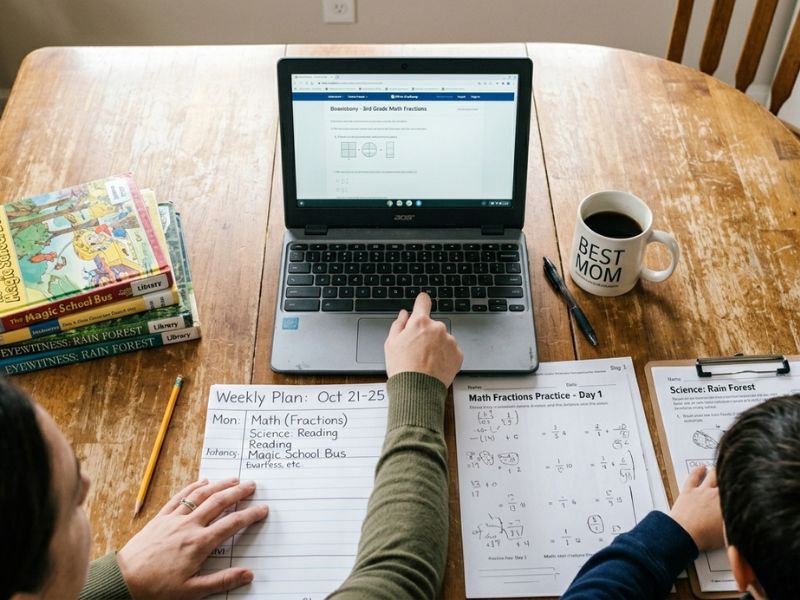
A free homeschool curriculum can provide a complete K–12 education without requiring a large budget. Trusted programs, printable resources, and online lessons make it possible for many families to homeschool successfully at little or no cost.
Choosing the right curriculum matters more than collecting dozens of free resources. This guide compares the best free homeschool curriculum options, explains their strengths, and shows you how to build a simple, organized learning plan for your child.
- Quick Answer: Best Free Homeschool Curriculum
- Key Takeaways
- What Is a Homeschool Curriculum?
- Can You Homeschool for Free?
- Benefits of Free Homeschool Curriculum
- Types of Homeschool Programs
- Free Homeschool Curriculum by Subject
- Free Homeschool Curriculum by Grade Level
- Free Homeschooling Programs
- Comparison of Popular Free Homeschool Curriculum Options
- Choosing the Right Homeschool Program
- Secular vs Religious Free Homeschool Curriculum
- Tips for Choosing the Right Curriculum
- How to Get Started with Free Homeschool Curriculum
- How to Build a Complete Free Homeschool Curriculum (Step-by-Step)
- Is Free Homeschool Curriculum Enough?
- Pros and Cons of Easy Homeschool Programs
- Common Mistakes When Using Free Homeschool Curriculum
- Tips for Homeschooling on a Budget
- FAQs
- Conclusion
Quick Answer: Best Free Homeschool Curriculum
- Best Overall: Easy Peasy All-in-One Homeschool
- Best for Beginners: Easy Peasy All-in-One Homeschool
- Best Secular Option: Khan Academy
- Best Structured Learning: Core Knowledge
- Best for Science: CK-12 Foundation
Free homeschool curriculum can work effectively if you combine the right resources and follow a simple plan.
Key Takeaways
- Free homeschool curriculum can fully cover K–12 education
- Using one resource per subject keeps learning simple
- Structure and consistency matter more than tools
- Both secular and religious options are available
- Free curriculum works best when combined into a clear plan
What Is a Homeschool Curriculum?
A homeschool curriculum is the plan you use to teach your child at home. It includes subjects, lessons, and learning goals. Some programs are structured, while others are flexible.
In simple terms, it tells you what to teach and how to teach it.
Many parents believe they need expensive programs to homeschool. That is not true. A well-planned free homeschool curriculum can provide the same learning outcomes when used correctly.
If you are new, it helps to first understand what homeschooling really means before choosing a curriculum.
Can You Homeschool for Free?
Yes, you can homeschool for free.
Many families in the US use free resources every day. These include online platforms, printable worksheets, and library programs.
However, free does not mean random. Without a plan, it can quickly become overwhelming. The key is to choose the right resources and organize them into a clear system.
Benefits of Free Homeschool Curriculum
Free homeschool curriculum offers several advantages.
- It saves money
- It gives flexibility
- It allows you to customize learning
- It works well for beginners
It also allows families to test homeschooling before committing to paid programs.
Types of Homeschool Programs
All-in-One Homeschool Programs
These programs cover all subjects in one place. Easy Peasy All-in-One Homeschool is a popular example. They are simple to follow and ideal for beginners. If you want a more guided approach, you can explore a complete easy homeschool curriculum to see how structured learning can simplify your daily routine.
Online Homeschool Programs
Programs like Khan Academy and CK-12 offer structured digital learning with lessons, quizzes, and progress tracking. If you’re planning to use Khan Academy as part of your homeschool, its official guide explains how parents can organize lessons, create student accounts, and build a homeschool routine. Khan Academy’s homeschool guide
Traditional Curriculum Options
Printable worksheets and structured content, such as Core Knowledge, provide a more school-like experience at home.
Free Homeschool Curriculum by Subject

Math
Math is one of the easiest subjects to teach for free because platforms like Khan Academy provide structured lessons, practice exercises, and progress tracking.
Science
Science can be taught using resources like CK-12, along with simple experiments at home.
Language Arts
Reading, writing, and grammar can be developed through free reading programs, writing prompts, and phonics tools.
Social Studies
History and geography can be taught through documentaries, books, timelines, and maps.
Electives and Other Resources
Subjects like art, music, coding, and life skills can be learned through free online platforms and community activities.
Free Homeschool Curriculum by Grade Level
Elementary School
Focus on reading, basic math, and simple science using interactive and visual resources.
Middle School
Introduce structured subjects like grammar, advanced math, and more detailed science concepts.
High School
Focus on academic subjects, electives, and skill-based learning using structured online programs.
Free Homeschooling Programs
Online Learning Platforms
These platforms provide structured lessons with built-in progress tracking.
Educational Websites
These sites offer subject-based materials that can be combined into a full curriculum.
Public Library Resources
Libraries provide free books, research materials, and educational programs.
Community Resources
Homeschool groups, co-ops, and local workshops help with social learning.
Hands-On Learning Opportunities
DIY projects, outdoor learning, and real-life experiences help children develop practical skills.
Comparison of Popular Free Homeschool Curriculum Options
- Easy Peasy All-in-One: All-in-one, K–12, religious, best for beginners
- Khan Academy: Online, K–12, secular, best for self-paced learners
- Core Knowledge: Structured, K–8, secular, best for academic learning
- CK-12: Online, middle to high school, secular, best for science-focused students
Choosing the Right Homeschool Program
Consider Your Child’s Learning Style
Some children learn best through videos, while others prefer hands-on activities.
Consider Your Teaching Style
Choose between structured programs or flexible learning based on your daily routine.
Consider Your Budget
Even free programs may require small investments like books or supplies.
Best Free Homeschool Curriculum by Family Situation
Choosing a curriculum is often easier when you think about your family’s needs rather than just comparing features.
- Best for beginners: Easy Peasy All-in-One Homeschool provides daily lessons in one place, making it simple to follow.
- Best for secular families: Khan Academy and Core Knowledge focus on academic subjects without religious instruction.
- Best for independent learners: CK-12 works well for older students who can study at their own pace.
- Best for mixed-age families: Combining Core Knowledge with library resources lets you teach multiple children while adapting activities for different grade levels.
Secular vs Religious Free Homeschool Curriculum
Free homeschool curriculum can be either secular or religious.
- Secular curriculum focuses only on academic subjects (Khan Academy, CK-12)
- Religious curriculum includes faith-based content (Easy Peasy)
Choosing the right type depends on your family’s values and goals.
Tips for Choosing the Right Curriculum
- Start with fewer resources
- Focus on core subjects
- Test different options
- Adjust based on your child’s progress
How to Get Started with Free Homeschool Curriculum
- Choose core subjects
- Pick one resource for each subject
- Create a simple weekly schedule
- Track progress regularly
How to Build a Complete Free Homeschool Curriculum (Step-by-Step)

Start by selecting core subjects like math, reading, science, and social studies.
Assign one resource per subject. For example, use Khan Academy for math, Core Knowledge for reading, and CK-12 for science.
Create a weekly routine:
- Math – 30 minutes daily
- Reading – 30 minutes daily
- Science – 3 times per week
- Social Studies – 2–3 times per week
Track progress using a notebook or checklist to stay consistent.
| Subject | Free Resource | Time Per Day |
|---|---|---|
| Math | Khan Academy | 30 minutes |
| Reading | Core Knowledge | 30 minutes |
| Science | CK-12 | 20–30 minutes |
| Social Studies | Videos / Books | 20 minutes |
This simple structure helps you avoid confusion and stay consistent without using too many resources.
Can You Mix Different Free Homeschool Curriculums?
Yes. Many homeschool families use more than one free curriculum instead of relying on a single program. For example, you might use Khan Academy for math, CK-12 for science, Core Knowledge for language arts, and library books for social studies. Using one trusted resource for each subject helps create a balanced curriculum without becoming overwhelmed.
Is Free Homeschool Curriculum Enough?
Free homeschool curriculum is enough for many families, especially in the early years.
However, some parents choose to add paid resources for advanced topics or additional structure. The decision depends on your goals and teaching style.
Best for:
- Beginner homeschooling parents
- Families on a tight budget
- Parents who prefer flexible learning
May not be ideal for:
- Families needing strict daily structure
- Parents who want fully guided teaching
- Advanced academic tracking needs
Pros and Cons of Easy Homeschool Programs
Pros
- Affordable
- Flexible
- Easy to access
Cons
- Less structure
- Requires planning
- Limited support
You can also explore the broader pros and cons of homeschooling to understand this better.
Common Mistakes When Using Free Homeschool Curriculum
- Using too many resources at once
- Not following a clear schedule
- Ignoring progress tracking
- Switching curriculum too often
Tips for Homeschooling on a Budget
- Focus on quality over quantity
- Stay consistent with your plan
- Use libraries and community resources
For legal clarity, review homeschooling laws by state to stay compliant.
Basic Supplies You’ll Need
Even with a free homeschool curriculum, you may need a few basic supplies to support daily learning.
- Notebook or binder
- Pencils and erasers
- Printer (optional for worksheets)
- Internet connection for online lessons
- Library card for free books
- Basic art supplies for creative activities
Most families already own many of these items, making free homeschooling much more affordable than buying a complete boxed curriculum.
FAQs
What is the best free homeschool curriculum?
Easy Peasy and Khan Academy are among the most popular options.
Can I homeschool my child completely for free?
Yes, many families successfully homeschool using only free resources.
Is free homeschool curriculum effective?
Yes, if used with structure and consistency.
What is the easiest free homeschool program?
All-in-one programs like Easy Peasy are easiest for beginners.
Do I need to follow state laws when using free curriculum?
Yes, homeschooling laws apply regardless of curriculum choice.
- Choose one resource per subject
- Create a simple weekly schedule
- Track your child’s progress regularly
- Avoid switching curriculum too often
- Stay consistent with your routine
Start simple. You can always improve your system over time.

Conclusion
Free homeschool curriculum can be a powerful option for families who want flexibility without extra cost. Many parents start this journey feeling unsure, but once they understand how to organize resources into a clear plan, the process becomes much easier.
The real success of homeschooling does not depend on how much money you spend. It depends on how consistently you teach and how well your child engages with learning. With the right structure and approach, free homeschool curriculum can provide a complete and effective education.