 Skip to content
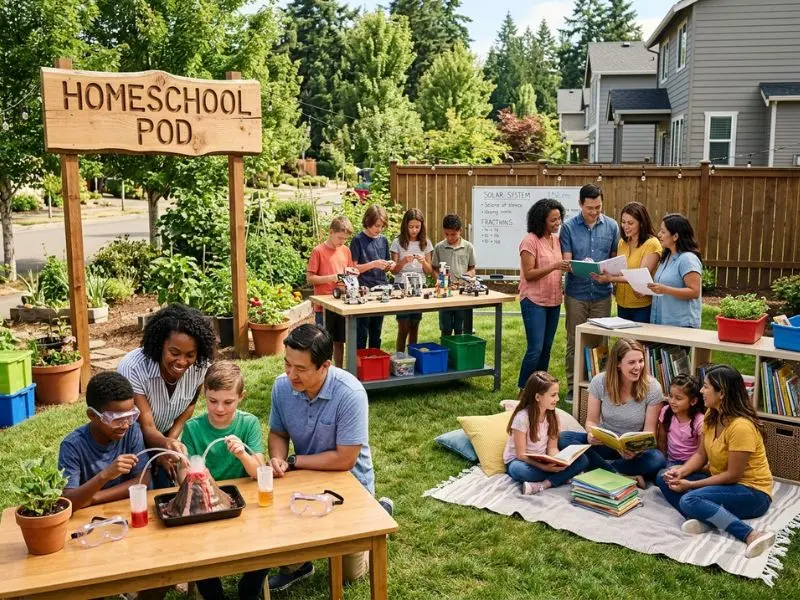
Homeschooling often starts with excitement but quickly raises difficult questions. Can one parent manage every subject? Will a child have enough friends? Is there a way to share the workload without giving up the freedom of homeschooling? If you’re searching for Homeschool Pods Explained, you’re likely looking for answers to these same questions.
By examining how homeschool pods operate across different communities and learning from the experiences shared by homeschooling families, one lesson appears repeatedly: successful pods grow through cooperation, realistic planning, and trust. This guide explains homeschool pods in simple terms so you can decide whether they fit your family’s educational journey.
- Quick Answer: What Is a Homeschool Pod?
- What Is the Main Purpose of a Homeschool Pod?
- Key Takeaways
- What Is a Homeschool Pod?
- How Did Homeschool Pods Become Popular?
- What Makes a Homeschool Pod Different?
- Types of Homeschool Pods
- Why Families Choose Homeschool Pods
- Who Benefits Most from a Homeschool Pod?
- Are Homeschool Pods Considered Homeschooling?
- How Homeschool Pods Work Day to Day
- Homeschool Pods vs. Other Learning Options
- Homeschool Pod vs. Homeschool Co-op
- Homeschool Pod vs. Microschool
- Homeschool Pod vs. Traditional School
- Homeschool Pod vs. Learning Pod
- Is a Homeschool Pod Right for Your Family?
- Should You Consider a Homeschool Pod?
- Learning Pod vs. Traditional Schooling: What's the Difference?
- Pros and Cons of Homeschool Pods
- Are Homeschool Pods Legal? What Parents Need to Know
- The Key Legal Principle
- When Homeschool Pods Are Generally Allowed
- When Legal Questions Can Arise
- Hiring a Guide or Teacher
- Why Laws Vary by State
- How Much Does a Homeschool Pod Cost?
- Typical Cost Ranges
- What Costs Usually Cover
- Ways Families Can Reduce Homeschool Pod Costs
- Teaching or Instructor Fees
- Curriculum and Learning Resources
- Supplies and Materials
- How Curriculum Choices Impact the Success of a Homeschool Pod
- How to Start a Homeschool Pod
- How to Find a Homeschool Pod
- Join Local Homeschool Groups
- Search Local Facebook Communities
- Contact Your State Homeschool Association
- Visit Libraries and Community Centers
- Explore Churches and Faith Communities
- What to Consider Before Joining a Homeschool Pod
- Establish a Shared Vision
- Choose Families with Similar Expectations
- Questions to Ask Before Joining a Homeschool Pod
- Understand Roles and Responsibilities
- Evaluate the Curriculum and Schedule
- Assess Socialization and Community
- Common Challenges in Homeschool Pods
- Common Mistakes New Homeschool Pods Make
- When a Homeschool Pod May Not Be the Best Choice
- Frequently Asked Questions About Homeschool Pods
- Final Checklist Before Joining or Starting a Homeschool Pod
- Conclusion
Quick Answer: What Is a Homeschool Pod?
A homeschool pod is a small group of homeschooling families who regularly learn together. Parents may share teaching responsibilities or hire a tutor or certified teacher to teach certain subjects. Homeschool pods help children learn in smaller groups while giving families flexibility, social interaction, and shared educational support.
What Is the Main Purpose of a Homeschool Pod?
The main purpose of a homeschool pod is to allow homeschooling families to share teaching, learning resources, and educational experiences in a small group. Homeschool pods combine the flexibility of homeschooling with regular collaboration, giving children more opportunities for social interaction, small-group instruction, and personalized learning.
Key Takeaways
- A homeschool pod is a small group of homeschooling families learning together.
- Pods may be parent-led, tutor-led, or teacher-led.
- Every family remains responsible for following its state’s homeschool laws.
- Homeschool pods can reduce teaching workload by sharing responsibilities.
- Costs vary depending on whether families teach themselves or hire instructors.
- Homeschool pods are different from microschools, homeschool co-ops, and traditional schools.
- Planning, communication, and shared goals are key to a successful pod.
What Is a Homeschool Pod?

A homeschool pod is a small learning group made up of several homeschooling families who meet regularly to educate their children together. Instead of every parent teaching every subject alone, families often divide responsibilities based on their strengths or hire someone with teaching experience to help.
Most homeschool pods include between 3 and 10 families, although some remain even smaller to provide more personalized instruction. Children may study core subjects together, complete hands-on learning projects, participate in science experiments, enjoy student-led discussions, or go on educational field trips as a group.
Unlike traditional schools, homeschool pods allow parents to decide nearly every part of the learning experience. Families choose the curriculum, learning schedule, teaching style, and educational goals that best fit their children’s needs.
Some homeschool pods meet every weekday, while others gather only once or twice a week. The schedule depends entirely on the families involved.
Because class sizes are small, instructors can often adjust lessons to each child’s individual learning pace. This creates a more flexible education experience that supports both academic growth and confidence.
In simple terms: A homeschool pod combines the flexibility of homeschooling with the collaboration of learning alongside other families.
How Did Homeschool Pods Become Popular?
Although families have worked together while homeschooling for many years, the term “homeschool pod” became widely known during the COVID-19 pandemic.
When many schools temporarily closed, parents looked for safe ways to continue their children’s education. Small learning groups became a practical solution because they allowed children to study with only a few classmates instead of attending large classrooms.
Since then, homeschool pods have continued to grow because many parents discovered benefits that extend far beyond emergency learning. Today, families choose homeschool pods for academic support, parent collaboration, social interaction, flexible schedules, and shared teaching responsibilities.
What Makes a Homeschool Pod Different?
Many people think homeschool pods are simply another name for homeschooling. In reality, they add a collaborative element that traditional homeschooling may not always provide.
Instead of one parent managing every lesson, several families work together. Children also interact with the same small group of learners regularly, making friendships easier to build.
Some pods focus mainly on academic subjects, while others include outdoor education, music, foreign languages, art, coding, STEM activities, project-based learning, or other enrichment opportunities.
Because every pod is independently organized, no two homeschool pods look exactly alike.
Types of Homeschool Pods

Not every homeschool pod operates the same way. Families organize pods based on their children’s needs, available resources, and educational goals. Understanding the different types can help you choose the option that best fits your family.
Parent-Led Pods
In a parent-led pod, parents share teaching responsibilities. One parent might teach math, while another leads science or language arts. This option keeps costs low and allows families to use their own strengths.
Tutor-Led Pods
Some families hire a private tutor to teach one or more subjects. This is a good choice for parents who want extra academic support without enrolling in a full-time school.
Teacher-Led Pods
These pods hire a certified or experienced teacher to provide regular instruction. Parents remain responsible for their children’s homeschooling, but students benefit from professional teaching.
Faith-Based Pods
Faith-based homeschool pods combine academic learning with religious education. Families often choose these pods because they want their children to learn in an environment that reflects their shared beliefs and values.
STEM or Enrichment Pods
Some homeschool pods focus on specific subjects instead of teaching every part of the curriculum. They may offer science experiments, robotics, coding, engineering projects, art, music, or foreign languages.
Outdoor or Nature-Based Pods
Outdoor pods spend much of the learning day outside. Lessons may include nature walks, gardening, environmental science, and hands-on activities that encourage exploration.
Hybrid Pods
Hybrid homeschool pods combine in-person meetings with online learning. Students may meet a few days each week while completing independent assignments at home.
Why Families Choose Homeschool Pods
Every homeschooling family has different reasons for joining a pod. Some parents want additional teaching support, while others hope their children can spend more time learning with peers.
For many families, homeschool pods solve a common problem. They provide educational support without giving up the flexibility and independence that homeschooling offers.
Here are some of the most common reasons families choose homeschool pods.
Shared Teaching Responsibilities
Teaching every subject can feel overwhelming, especially as children move into higher grade levels. A homeschool pod allows parents to divide subjects according to their knowledge and experience.
For example:
- One parent teaches math.
- Another leads science activities.
- Someone else focuses on language arts.
- Another organizes history or geography lessons.
This approach helps reduce stress while allowing children to learn from adults with different strengths.
More Social Interaction
One of the biggest questions parents ask about homeschooling is how children make friends.
Homeschool pods naturally create opportunities for regular social interaction. Children learn together, solve problems as a team, complete projects, and enjoy group activities throughout the week.
Unlike large classrooms, homeschool pods often encourage stronger friendships because children spend time in smaller, consistent groups.
Flexible Learning
Traditional schools usually follow fixed schedules and standardized lesson plans. Homeschool pods offer much greater flexibility.
Families can choose:
- Meeting days
- Learning hours
- Teaching methods
- Curriculum
- Break schedules
- Field trips
- Project-based learning
This flexibility allows education to fit each family’s lifestyle instead of requiring families to adjust to a school’s calendar.
Personalized Education
Children do not all learn the same way.
Some learn best through reading, while others prefer hands-on activities, discussions, videos, or experiments.
Because homeschool pods have fewer students, instructors can often adjust lessons to meet individual learning styles more easily than larger classrooms.
This personalized attention can help children stay engaged and build confidence.
Sharing Resources
Homeschooling can become expensive when every family purchases the same materials.
Many homeschool pods reduce costs by sharing:
- Books
- Science equipment
- Art supplies
- Educational games
- Online subscriptions
- Field trip expenses
Sharing resources allows families to access better learning materials without significantly increasing their budgets.
Parent Support
Homeschooling is rewarding, but it can also feel isolating at times.
Joining a homeschool pod connects parents with other families facing similar challenges. They can exchange teaching ideas, solve problems together, recommend resources, and encourage one another throughout the school year.
Many parents find this community-based learning and support just as valuable as the academic benefits for their children.
Many parents also say one of the biggest advantages of joining a homeschool pod is realizing they are not homeschooling alone. Sharing ideas, solving challenges together, and celebrating student progress can make the homeschooling journey feel more enjoyable and less stressful.
Who Benefits Most from a Homeschool Pod?
Homeschool pods can work for many families, but they are especially helpful for parents who want extra support while keeping the flexibility of homeschooling.
A homeschool pod may be a good fit if you:
- Want your child to learn with a small group of peers.
- Feel nervous about teaching every subject yourself.
- Need help with advanced subjects like math or science.
- Want to share teaching responsibilities with other parents.
- Prefer a flexible learning schedule instead of a traditional classroom.
- Value community support during your homeschooling journey.
While homeschool pods offer many benefits, they are not the best solution for every family. The right choice depends on your child’s learning style, your educational goals, and your state’s homeschool requirements.
Are Homeschool Pods Considered Homeschooling?
Yes. In most situations, homeschool pods are still considered a form of homeschooling because parents remain responsible for their children’s education.
Even if families hire a tutor or certified teacher, each parent must continue following their state’s homeschool requirements. These responsibilities may include:
- Filing homeschool paperwork when required.
- Keeping attendance records.
- Following assessment or testing rules.
- Maintaining student records.
- Meeting graduation requirements when applicable.
Joining a homeschool pod does not automatically change your child’s legal homeschool status.
However, homeschool laws vary from state to state. Depending on how a pod is organized, there may also be local considerations related to private school regulations, childcare rules, zoning, insurance, or business requirements. Before joining or creating a homeschool pod, review your state’s homeschool laws and any other local requirements that may apply to your situation.
Because homeschool laws vary across the United States, it’s important to review your state’s requirements before joining or starting a homeschool pod. The Home School Legal Defense Association (HSLDA) provides a helpful overview of state homeschool laws to help families understand the legal requirements where they live.
Do Homeschool Pods Have to Follow State Homeschool Laws?
Yes.
Every homeschooling family in the pod must follow the homeschool laws that apply in their state. A homeschool pod does not create a separate legal school unless it is organized as a private school or another legally recognized educational program.
For example:
- Some states require families to submit a notice of intent.
- Others require annual assessments or standardized testing.
- Some states have very few homeschool regulations.
Because laws vary across the United States, families should understand their own state’s legal requirements before participating in a homeschool pod.
How Homeschool Pods Work Day to Day
Every homeschool pod operates differently, but most follow a similar structure built around shared learning and flexible scheduling.
Some pods meet every weekday, while others gather only a few times each week. Families decide what works best based on their schedules, children’s ages, educational goals, and available teaching support.
Most homeschool pods include a combination of academic instruction, collaborative projects, independent learning at home, outdoor activities, and enrichment classes.
Typical Daily Structure
Although every homeschool pod creates its own schedule, a typical day might look like this:
| Time | Activity |
|---|---|
| 8:30 AM | Morning meeting and daily goals |
| 9:00 AM | Math lesson |
| 10:00 AM | Reading and language arts |
| 11:00 AM | Science experiment or project |
| 12:00 PM | Lunch and free play |
| 1:00 PM | History or social studies |
| 2:00 PM | Art, music, coding, or STEM activities |
| 3:00 PM | Wrap-up and independent assignments |
This schedule is only an example. Some homeschool pods focus on core subjects, while others dedicate more time to hands-on learning, outdoor education, or enrichment activities.
Example of a Homeschool Pod in Action
Imagine four homeschooling families meeting every Monday, Wednesday, and Friday.
One parent teaches math because they enjoy working with numbers. Another leads science experiments. A retired teacher from the community helps with writing once a week, while every family takes turns organizing field trips and outdoor activities.
Children learn together during pod meetings and complete independent assignments at home. This balance allows families to share responsibilities while keeping the flexibility that homeschooling provides.
Who Teaches in a Homeschool Pod?
One of the biggest advantages of homeschool pods is their flexibility. Families can decide who teaches based on their skills, available time, and budget.
Common teaching arrangements include:
| Teaching Model | How It Works |
|---|---|
| Parent-led | Parents divide subjects and teach the group. |
| Tutor-led | Families hire a private tutor for selected subjects. |
| Certified teacher-led | A licensed teacher provides regular instruction. |
| Mixed approach | Parents teach some lessons while outside instructors handle specialized subjects. |
Many pods combine these approaches to create a balanced learning experience.
Where Homeschool Pods Meet
Homeschool pods can meet almost anywhere that provides a safe and comfortable learning environment.
Popular locations include:
- A family’s home
- Community centers
- Churches
- Libraries
- Outdoor parks
- Learning studios
- Shared classroom spaces
Some homeschool pods rotate between different homes, while others use the same location throughout the school year.
Homeschool Pod Safety Checklist
A safe learning environment helps children stay focused and gives parents peace of mind. Whether your homeschool pod meets in a home, library, church, or community center, it’s a good idea to agree on basic safety procedures before classes begin.
Review the following checklist with every participating family:
- Keep updated emergency contact information for each child.
- Discuss food allergies, medical conditions, and any special health needs.
- Store medications securely when they are required during pod meetings.
- Establish clear drop-off and pick-up procedures.
- Make sure everyone knows the emergency exits and meeting location.
- Keep a well-stocked first-aid kit within easy reach.
- Check that learning areas are clean, organized, and free of potential hazards.
- If you hire a tutor or instructor, verify their qualifications and complete any appropriate background checks.

Scheduling and Frequency
There is no standard homeschool pod schedule.
Some groups meet:
- Five days a week
- Three days a week
- Two days a week
- Once a week for enrichment classes
Many families combine homeschool pod meetings with independent learning at home. This allows children to enjoy both collaborative instruction and one-on-one learning with their parents.
The best schedule depends on each family’s educational goals, work commitments, and state homeschool requirements.
Homeschool Pods vs. Other Learning Options

As you learn more about homeschool pods, you’ll probably come across terms like homeschool co-op, microschool, learning pod, and traditional school. They all involve children learning with others, but they are not the same.
Knowing the differences can help you choose the option that matches your child’s learning style, your family’s schedule, and the level of involvement you want as a parent.
Homeschool Pod vs. Homeschool Co-op
A homeschool pod and a homeschool co-op both bring homeschooling families together, but they have different goals.
A homeschool pod usually meets several times each week and focuses on regular academic instruction. Parents may teach, share responsibilities, or hire a tutor or teacher.
A homeschool co-op often meets once a week or a few times each month. Most co-ops provide enrichment classes rather than replacing daily homeschooling. Parents continue teaching most core subjects at home.
| Feature | Homeschool Pod | Homeschool Co-op |
|---|---|---|
| Main Purpose | Regular academic learning | Enrichment and shared activities |
| Meeting Schedule | Multiple days each week | Usually once a week |
| Teaching | Parents, tutors, or teachers | Parents or volunteer instructors |
| Curriculum | Often shared | Families usually use their own |
| Parent Involvement | High | High |
Best for: Families looking for regular academic support while continuing to homeschool.
Homeschool Pod vs. Microschool
Homeschool pods and microschools both offer small learning environments, but they operate differently.
A microschool is usually organized like a small private school. It often has professional staff, established policies, tuition, and a structured curriculum.
A homeschool pod is created by families who want to work together while remaining responsible for their own children’s education.
| Feature | Homeschool Pod | Microschool |
|---|---|---|
| Organized By | Parents | School or organization |
| Legal Responsibility | Parents | Depends on the school’s structure |
| Teachers | Parents, tutors, or hired instructors | Usually professional teachers |
| Curriculum | Chosen by participating families | Selected by the microschool |
| Flexibility | Very high | Moderate |
Best for: Families who want flexibility, shared teaching, and greater control over their child’s education.
Homeschool Pod vs. Traditional School
Traditional schools follow a fixed calendar, standardized curriculum, and larger class sizes. Parents usually have limited involvement in daily instruction.
Homeschool pods allow families to create a learning environment that reflects their own educational goals.
| Feature | Homeschool Pod | Traditional School |
|---|---|---|
| Class Size | Small | Larger classrooms |
| Learning Pace | Personalized | Standardized |
| Curriculum | Parent-selected | District-approved |
| Schedule | Flexible | Fixed |
| Parent Involvement | Very high | Limited |
Children in homeschool pods often receive more individual attention because instructors work with fewer students at one time.
Homeschool Pod vs. Learning Pod
The terms learning pod and homeschool pod are often used interchangeably.
The phrase learning pod became popular during the COVID-19 pandemic when families created small learning groups during school closures.
Today, many homeschooling families use the term homeschool pod because it better describes an ongoing homeschool arrangement rather than temporary remote learning.
Is a Homeschool Pod Right for Your Family?

A homeschool pod may be a good choice if your family wants:
- More social interaction than traditional homeschooling.
- Shared teaching responsibilities.
- Small-group instruction.
- Flexible scheduling.
- Personalized learning.
- Support from other homeschooling parents.
You may want to explore other options, such as a homeschool co-op or microschool, if you prefer a more structured program with less parent involvement or need full-time professional instruction.
There is no single “best” educational option. The right choice is the one that supports your child’s learning needs and fits your family’s lifestyle.
Should You Consider a Homeschool Pod?
| If You… | Is a Homeschool Pod a Good Fit? |
|---|---|
| Want help teaching difficult subjects | Yes, a pod can help share academic responsibilities. |
| Want more social interaction for your child | Yes, pods give children regular time with peers. |
| Prefer complete control over every lesson | Maybe not, because pods require shared decisions. |
| Want a flexible learning schedule | Yes, many pods allow families to build their own schedule. |
| Need full-time childcare | No, most homeschool pods are not designed as childcare. |
| Prefer an accredited school program | Maybe not; a microschool or private school may fit better. |
Learning Pod vs. Traditional Schooling: What’s the Difference?
Learning pods and traditional schools both educate children, but the learning experience is often very different.
Traditional schools teach larger groups of students using one curriculum and one schedule.
Learning pods focus on smaller groups where lessons can be adjusted more easily for each child’s interests, learning pace, and academic needs.
Learning Pods Often Offer
- Smaller student-to-teacher ratios
- Personalized instruction
- Flexible schedules
- Hands-on learning
- Project-based learning
- Parent collaboration
- Community-based learning
Traditional Schools Often Offer
- Sports teams
- Large extracurricular programs
- School transportation
- Cafeterias
- Full-time teaching staff
- Standardized academic pathways
Some families value the flexibility of homeschool pods, while others prefer the structure of traditional schools. The best choice depends on your child’s personality, learning style, and educational goals.
Pros and Cons of Homeschool Pods
Every educational option has strengths and challenges. Understanding both sides can help you make a confident decision.
Benefits of Homeschool Pods
Personalized Learning
Children learn at different speeds.
Because homeschool pods have fewer students, instructors can spend more time supporting each child’s individual learning pace. This often helps students stay engaged and build confidence.
More Social Interaction
Many parents worry that homeschooling may limit their child’s opportunities to make friends.
Homeschool pods create regular opportunities for children to learn, play, solve problems, and complete projects together. Small groups often encourage stronger friendships because students spend consistent time with one another.
Shared Teaching Responsibilities
Parents do not have to teach every subject by themselves.
Families can divide responsibilities based on their knowledge and interests or hire tutors for specialized subjects.
Flexible Learning
Unlike traditional schools, homeschool pods allow families to choose:
- Meeting days
- Class schedules
- Curriculum
- Teaching methods
- Field trips
- Educational projects
This flexibility makes it easier to build an education plan around family life.
Collaborative Learning
Working together helps children develop communication, teamwork, leadership, and problem-solving skills while learning alongside peers.
Parent Support
Homeschooling becomes easier when parents have a community to rely on.
Families often exchange lesson ideas, recommend resources, share teaching responsibilities, and encourage one another throughout the school year.
Many parents say this support becomes one of the most valuable parts of joining a homeschool pod.
Challenges of Homeschool Pods
Although homeschool pods provide many benefits, they also require planning and cooperation.
Scheduling Conflicts
Finding meeting times that work for several families can sometimes be difficult.
Work schedules, vacations, extracurricular activities, and appointments all need to be considered.
Different Teaching Styles
Every family has its own educational philosophy.
Some parents prefer structured lessons, while others encourage independent learning or project-based activities.
Talking about expectations before the pod begins helps reduce future conflicts.
Shared Decision-Making
Families must agree on topics such as:
- Curriculum
- Student behavior
- Attendance
- Homework
- Technology use
- Field trips
- Budget
Open communication helps the pod operate more smoothly.
Cost
Hiring tutors or certified teachers increases expenses.
Discussing financial expectations before the pod begins helps avoid misunderstandings later.
Limited Availability
Some communities have many homeschool pods.
Others may have none.
Families in those areas may need to create their own pod or connect with other homeschooling parents.
Are Homeschool Pods Legal? What Parents Need to Know
One of the first questions many parents ask is whether homeschool pods are legal.
In most cases, they are.
However, the answer depends on how the pod operates and whether participating families continue following their state’s homeschool laws.
The Key Legal Principle
A homeschool pod is generally a cooperative learning arrangement rather than a separate school.
Parents usually remain legally responsible for their own children’s education.
This means each family continues meeting the homeschool requirements established by their state.
When Homeschool Pods Are Generally Allowed
Homeschool pods commonly operate without legal issues when:
- Parents maintain their homeschool status.
- Families continue following state homeschool laws.
- Required records are kept.
- Any required homeschool paperwork is submitted.
- Parents remain responsible for educational decisions.
In these situations, the pod simply provides a shared learning environment.
When Legal Questions Can Arise
Legal questions may arise if a homeschool pod begins operating more like an unregistered private school or another regulated educational program.
For example:
- Enrolling large numbers of students.
- Advertising as a full-time school.
- Ignoring state homeschool requirements.
- Operating without meeting applicable local regulations.
Depending on your location, families may also need to consider issues related to insurance, zoning, business licensing, or childcare regulations.
Because every state has different homeschool laws, it is important to understand the rules where you live before starting or joining a homeschool pod.
Hiring a Guide or Teacher
Many homeschool pods hire tutors, retired teachers, or certified educators.
This can be an excellent option for families who want additional academic support or need help with advanced subjects.
In most situations, parents still remain legally responsible for their children’s education unless state law provides otherwise.
Hiring outside instructors simply allows families to share expertise while maintaining the flexibility of homeschooling.
Why Laws Vary by State
Homeschool regulations differ throughout the United States.
Some states require very little paperwork.
Others may require:
- A notice of intent.
- Attendance records.
- Annual assessments.
- Portfolio reviews.
- Standardized testing.
Because these requirements vary, every family should review the homeschool laws that apply in their own state before joining or creating a homeschool pod.
How Much Does a Homeschool Pod Cost?
The cost of a homeschool pod depends on how it is organized.
Some parent-led pods cost very little because families share teaching responsibilities.
Others hire professional instructors, rent learning spaces, or purchase specialized educational materials.
As a result, costs can vary significantly from one community to another.
Typical Cost Ranges
The following estimates represent common arrangements. Actual costs vary depending on your location, instructor qualifications, meeting frequency, and shared expenses.
| Type of Pod | Estimated Monthly Cost |
|---|---|
| Parent-led pod | $0–$100 |
| Tutor-led pod | $100–$400 |
| Teacher-led pod | $300–$1,000+ |
What Costs Usually Cover
Families may contribute toward:
- Tutor or teacher fees
- Curriculum
- Learning materials
- Science equipment
- Art supplies
- Technology subscriptions
- Classroom rental
- Insurance, when applicable
- Field trips
Some homeschool pods divide every expense equally, while others only share the costs of certain activities.
Ways Families Can Reduce Homeschool Pod Costs
Many homeschool pods keep expenses manageable by working together.
Families often reduce costs by:
- Sharing curriculum.
- Rotating teaching responsibilities.
- Meeting in homes or free community spaces.
- Purchasing supplies in bulk.
- Hiring tutors only for specialized subjects.
These strategies allow families to provide a richer educational experience without greatly increasing their homeschool budget.
Teaching or Instructor Fees
Hiring a professional instructor is often the largest expense.
The total cost depends on:
- Experience
- Teaching qualifications
- Number of students
- Hours taught each week
- Subjects being taught
Many homeschool pods hire instructors only for subjects that parents feel less confident teaching.
Curriculum and Learning Resources
Some homeschool pods follow one curriculum together.
Others allow each family to use its own curriculum while participating in shared learning experiences such as:
- Science labs
- Literature discussions
- Art classes
- STEM projects
- Field trips
Both approaches can be successful when families agree on clear educational goals.
Supplies and Materials
Every homeschool pod needs basic learning materials.
These may include:
- Notebooks
- Pencils
- Markers
- Art supplies
- Science experiment materials
- Craft supplies
- Printing costs
Buying supplies together often helps reduce expenses for everyone.
How Curriculum Choices Impact the Success of a Homeschool Pod
Choosing the right curriculum is one of the most important decisions a homeschool pod will make.
A shared curriculum can simplify lesson planning and help students move through subjects together.
However, some families prefer more flexibility. They teach core subjects independently at home while using pod meetings for collaborative learning, enrichment activities, and hands-on projects.
When selecting a curriculum, consider:
- Student ages
- Academic goals
- Learning styles
- Religious or secular preferences
- Budget
- Flexibility
- State homeschool requirements
The most successful homeschool pods choose a curriculum that supports collaboration while still giving children the flexibility to learn at a pace that works best for them.
How to Start a Homeschool Pod

Starting a homeschool pod may seem like a big task at first, but it becomes much easier when families take it one step at a time.
The most successful homeschool pods are not built around expensive curriculum or perfect lesson plans. They succeed because parents communicate clearly, share responsibilities, and work toward the same educational goals.
If you cannot find a homeschool pod in your area, creating your own may be easier than you think.
Step 1: Clarify the Purpose of Your Homeschool Pod
Before inviting other families, decide what you want your homeschool pod to achieve.
Ask yourself questions like:
- Will the pod teach core academic subjects?
- Is the goal to provide social interaction?
- Will students meet every day or only a few times each week?
- Will the pod focus on enrichment classes such as art, STEM, or music?
- Will children complete independent work at home?
Having a clear purpose makes it easier to find families with similar expectations.
Step 2: Confirm Your Legal Responsibilities
Every participating family should understand the homeschool laws in their state before the pod begins.
Although families learn together, each parent usually remains responsible for their own child’s education.
Depending on your state, you may need to:
- File a notice of intent.
- Keep attendance records.
- Maintain student portfolios.
- Complete annual assessments.
- Meet graduation requirements.
If your pod hires teachers, rents a learning space, or grows significantly, you may also need to consider local insurance, zoning, or business requirements.
Understanding these responsibilities early helps families avoid confusion later.
Step 3: Choose the Right Pod Size and Age Groups
The size of your homeschool pod influences both learning and social interaction.
Smaller groups often provide more individual attention, while slightly larger groups create more opportunities for teamwork and discussion.
| Pod Size | Best For |
|---|---|
| 3–4 families | Highly personalized learning |
| 5–7 families | Balanced academics and social interaction |
| 8–10 families | Larger collaborative projects and shared resources |
Some homeschool pods group children by grade level.
Others use mixed-age learning, allowing older students to mentor younger children through reading, science activities, and hands-on projects.
Both approaches can be successful when expectations are clear.
How Many Students Should Be in a Homeschool Pod?
There is no perfect number of students.
Many experienced homeschool families find that 5 to 8 students creates a good balance between personalized instruction and collaborative learning.
When deciding on pod size, think about:
- Available learning space
- Student age differences
- Parent availability
- Teaching support
- Noise level
- Individual learning needs
Starting with a smaller group often makes it easier to build routines before inviting additional families.
Step 4: Choose a Meeting Location
Your homeschool pod should meet in a place where children feel comfortable, safe, and ready to learn.
Popular meeting locations include:
- Family homes
- Community centers
- Churches
- Libraries
- Parks
- Learning studios
- Shared classroom spaces
Some pods rotate between homes to share hosting responsibilities, while others use one consistent location throughout the school year.
When choosing a location, consider:
- Parking availability
- Restrooms
- Internet access
- Outdoor space
- Safety
- Weather conditions
- Accessibility for every family
Step 5: Select a Curriculum That Fits Everyone
The curriculum should support the learning goals of the families in your pod.
Some homeschool pods use one curriculum together.
Others allow each family to teach core subjects independently while meeting for shared activities such as:
- Science labs
- Literature discussions
- STEM projects
- Art
- Music
- Field trips
The best curriculum is not always the most expensive one. It is the one that fits your children’s ages, learning styles, and educational goals.
Step 6: Set Costs and Divide Responsibilities
One reason homeschool pods work well is that families share responsibilities instead of expecting one person to do everything.
Before classes begin, discuss:
- Monthly contributions
- Curriculum purchases
- Supply costs
- Field trip expenses
- Tutor payments
- Snack responsibilities
- Cleaning duties
A simple responsibility chart helps everyone understand their role.
| Responsibility | Assigned To |
|---|---|
| Math lessons | Family A |
| Science activities | Family B |
| Art projects | Family C |
| Weekly snacks | Rotating families |
| Field trips | Shared planning |
Sharing responsibilities fairly helps prevent burnout and keeps the pod running smoothly.
Homeschool Pod Agreement: What Parents Should Decide First
Before regular meetings begin, every family should agree on a few basic expectations.
A written agreement does not need to be complicated, but it can prevent misunderstandings later.
Consider discussing:
- Meeting schedule
- Parent teaching responsibilities
- Monthly costs
- Attendance expectations
- Student behavior
- Homework
- Technology use
- Food allergies
- Communication between families
- How families can leave the pod if needed
Taking time to agree on these details helps create a positive learning environment from the beginning.
Step 7: Start Small and Review Regularly
Your homeschool pod does not need to be perfect on day one.
Many successful pods begin with one or two meetings each week before gradually expanding.
Meet with participating parents every few weeks to discuss:
- Student progress
- Scheduling changes
- Curriculum adjustments
- Budget
- Future activities
Small improvements made consistently often lead to long-term success.
How to Find a Homeschool Pod
If starting your own pod feels overwhelming, consider joining an existing one.
Many homeschool communities already have learning groups that welcome new families.
Join Local Homeschool Groups
Many cities have homeschool organizations that arrange:
- Park days
- Weekly meetups
- Educational workshops
- Field trips
- Parent support meetings
Attending these events is one of the easiest ways to meet families with similar educational goals.
Search Local Facebook Communities
Facebook remains one of the most common places where homeschool pods are organized.
Search for groups using terms such as:
- Homeschool families
- Homeschool support
- Homeschool pod
- Local homeschool network
Take time to participate in conversations before asking whether any pods are accepting new families.
Contact Your State Homeschool Association
Many state homeschool associations maintain directories of local support groups.
These organizations may also provide:
- Legal information
- Conferences
- Curriculum fairs
- Community events
- Parent resources
If you’re new to homeschooling, they can be an excellent place to start.
Visit Libraries and Community Centers
Libraries often organize educational activities for homeschool families.
Community centers may also host classes, clubs, and events where you can meet parents interested in collaborative learning.
Explore Churches and Faith Communities
Many churches organize homeschool ministries or family learning groups.
These communities may already have established homeschool pods or know families interested in creating one.
What to Consider Before Joining a Homeschool Pod
Not every homeschool pod will be the right fit.
Before making a decision, spend time learning about the group’s teaching style, expectations, and educational goals.
Choosing the right community is just as important as choosing the right curriculum.
Establish a Shared Vision
Ask yourself:
- Does this pod match my educational goals?
- Does it support my child’s learning style?
- Will my child enjoy this environment?
- Does the group encourage parent involvement?
The clearer your vision, the easier it becomes to find the right fit.
Choose Families with Similar Expectations
Successful homeschool pods usually include families with similar approaches to education.
Discuss topics such as:
- Discipline
- Communication
- Homework
- Technology use
- Parent involvement
- Student behavior
When expectations match, daily learning becomes much smoother.
Questions to Ask Before Joining a Homeschool Pod
Before committing, ask questions such as:
- What curriculum does the pod use?
- Who teaches each subject?
- How are costs shared?
- How many students participate?
- What are the attendance expectations?
- How are disagreements handled?
- What happens if a family decides to leave?
These conversations help you understand whether the pod is a good match for your family’s needs.
Understand Roles and Responsibilities
Every parent should understand their responsibilities before the pod begins.
Clarify:
- Who teaches?
- Who plans activities?
- Who communicates with families?
- Who purchases supplies?
- Who organizes field trips?
Clear roles reduce confusion and help the pod operate more efficiently.
Evaluate the Curriculum and Schedule
Review both the curriculum and the weekly schedule before joining.
Ask whether:
- Lessons match your child’s grade level.
- Learning goals fit your family.
- The schedule works with your routine.
- Students have enough flexibility.
A homeschool pod should support learning without creating unnecessary stress.
Assess Socialization and Community
One reason many families join homeschool pods is to build friendships.
Observe how children interact during a meeting.
Healthy homeschool pods encourage:
- Respect
- Teamwork
- Inclusion
- Communication
- Problem-solving
Children often learn just as much from positive relationships as they do from academic lessons.
Common Challenges in Homeschool Pods
Even well-organized homeschool pods face occasional challenges.
Planning ahead helps families solve problems before they become bigger concerns.
Different Parenting Styles
Families may have different expectations about discipline, homework, or technology.
Discussing these topics early helps prevent future disagreements.
Unequal Workloads
Sometimes one parent ends up handling more responsibilities than others.
Review responsibilities regularly to make sure everyone contributes fairly.
Scheduling Conflicts
Busy family calendars can make scheduling difficult.
Using a shared calendar helps everyone stay informed.
Communication Problems
Small misunderstandings can grow if they are ignored.
Regular parent meetings encourage open communication and build stronger relationships.
Budget Differences
Every family has a different financial situation.
Talking openly about expected expenses before the pod begins helps avoid misunderstandings.
Common Mistakes New Homeschool Pods Make
| Mistake | Better Approach |
|---|---|
| No clear expectations | Create a simple written agreement before the pod begins. |
| Starting with too many students | Begin with a smaller group and grow slowly. |
| Poor communication between parents | Schedule regular parent check-ins to solve issues early. |
| Different educational goals | Discuss curriculum, teaching style, and expectations before joining. |
| Unequal workload | Divide teaching, planning, snacks, and field trips fairly. |
| Ignoring legal requirements | Review your state homeschool laws before starting or joining a pod. |
When a Homeschool Pod May Not Be the Best Choice
Homeschool pods work well for many families, but they are not the right solution for everyone.
You may want to consider another educational option if:
- Your child learns best independently.
- Your family’s schedule changes frequently.
- You prefer complete control over every lesson.
- You cannot commit to regular group meetings.
- You are looking for a fully accredited school with minimal parent involvement.
Choosing a homeschool pod should never feel like pressure. The goal is to find the learning environment where your child can grow academically, socially, and emotionally.
Frequently Asked Questions About Homeschool Pods
Can homeschool pods replace public school?
Yes. Families can use a homeschool pod as part of their homeschool program after meeting their state’s legal homeschooling requirements.
Can homeschool pods include children of different ages?
Yes. Many homeschool pods use mixed-age groups where older students naturally support younger learners.
How many hours should a homeschool pod meet?
There is no fixed schedule, and most homeschool pods meet anywhere from once a week to five days a week depending on each family’s goals.
Final Checklist Before Joining or Starting a Homeschool Pod
Before joining or creating a homeschool pod, make sure you can answer “yes” to these questions:
- Have I reviewed my state’s homeschool laws?
- Does this pod match my child’s learning needs?
- Do the participating families share similar educational goals?
- Is there a clear teaching schedule?
- Have responsibilities been divided fairly?
- Do we have a written agreement for expectations and costs?
- Is the meeting location safe and appropriate?
- Have we planned a realistic monthly budget?
- Do all families understand how decisions will be made?
- Do we have a plan to review and improve the pod during the school year?
Completing this checklist before classes begin helps create a smoother experience for both parents and students.
Conclusion
After exploring homeschool pod models and the experiences of homeschooling families, it’s clear that the strongest pods are built around collaboration rather than convenience. When families share similar goals and communicate openly, a homeschool pod can become more than a learning group—it can become a supportive community where both children and parents grow together.