 Skip to content
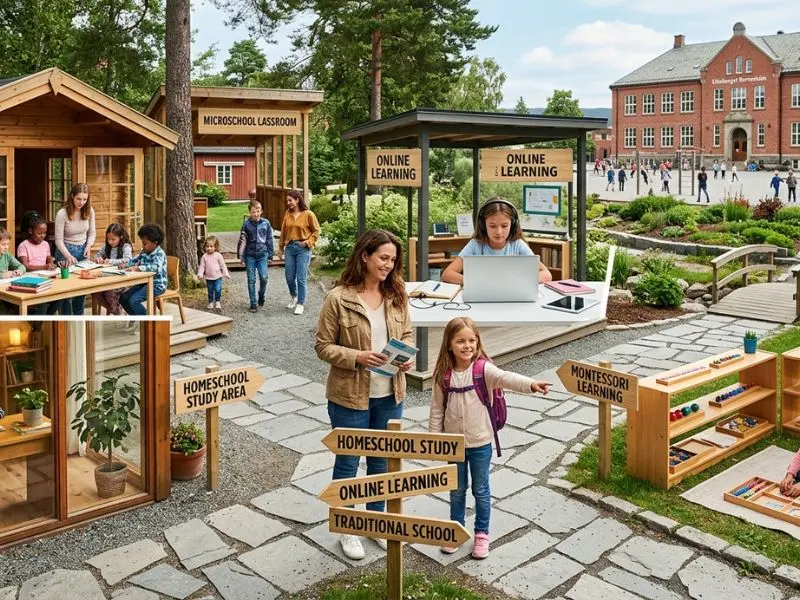
For some families, the search for alternative education options beyond traditional school begins after a series of small concerns. A child may stop talking about school, lose motivation to learn, or seem unhappy despite doing everything expected of them. Over time, parents start questioning whether the current environment is truly the right fit.
Across different education pathways and family experiences, one pattern becomes easy to notice. Educational success is not always about finding a better school. It is often about finding a learning approach that matches a child’s abilities, interests, and individual way of learning.
- Quick Answer: What Are Alternative Education Options Beyond Traditional School?
- Key Takeaways
- What Are Alternative Education Options?
- Alternative Education vs Traditional Schools
- Who Benefits from Alternative Education?
- Signs Traditional School May Not Be the Right Fit
- Quick Parent Check
- Types of Alternative Education Options
- Why Alternative Education Is Growing
- Alternative Education Options at a Glance
- Alternative Education Options Comparison
- Cost of Alternative Education Options
- Best Alternative Education Option by Grade Level
- Best Alternative Education Option for ADHD, Autism, and Learning Differences
- Are Alternative Schools Only for Struggling Students?
- Alternative Education Decision Finder
- How to Choose the Right Alternative Education Option
- Frequently Asked Questions
- Conclusion
Quick Answer: What Are Alternative Education Options Beyond Traditional School?
Alternative education options are learning paths that differ from the traditional public school model. Common alternatives include homeschooling, online schools, charter schools, magnet schools, Montessori schools, Waldorf schools, microschools, hybrid learning programs, and specialized schools. These options often provide greater flexibility, personalized instruction, and learning environments that better match a student’s needs.
Key Takeaways
- Alternative education offers learning options outside traditional public schools.
- Popular choices include homeschooling, online schools, charter schools, microschools, and Montessori schools.
- Different options support different learning styles, goals, and family situations.
- Some alternatives are free, while others charge tuition.
- Students with learning differences, gifted learners, and families seeking flexibility may benefit from alternative education.
- Choosing the right option depends on your child’s academic, social, and emotional needs.
What Are Alternative Education Options?
Alternative education options are educational approaches that provide a different learning experience than a traditional public school classroom.
Traditional schools generally follow a fixed curriculum, standardized schedules, age-based grade levels, and larger class sizes. Alternative education often offers more flexibility and personalized learning opportunities.
These educational options exist because children learn differently. A learning environment that works well for one student may not work well for another.
Today, families can choose from a wide range of educational models, including:
- Homeschooling
- Online schools
- Charter schools
- Magnet schools
- Private schools
- Montessori schools
- Waldorf schools
- Reggio Emilia programs
- Microschools
- Hybrid learning programs
- Specialized schools
Some of these options are publicly funded, while others are privately operated.
The goal of alternative education is not simply to be different from traditional school. The goal is to create a learning environment that helps students succeed academically, socially, and emotionally.
Alternative Education vs Traditional Schools
Many parents begin exploring alternatives because they wonder whether a different educational model might better support their child.
Traditional schools remain an excellent choice for many students. However, they are designed to serve large groups of learners using a standardized structure.
Alternative education often takes a different approach.
Traditional School Characteristics
Traditional schools typically include:
- Fixed schedules
- Age-based grade levels
- Larger class sizes
- Standardized curriculum
- Teacher-directed instruction
- Limited schedule flexibility
Alternative Education Characteristics
Alternative education programs often provide:
- Flexible schedules
- Smaller learning environments
- Personalized instruction
- Customized curriculum options
- Student-centered learning
- Increased parent involvement
Neither model is automatically better.
The best choice depends on the individual student and family.
Quick Comparison
| Feature | Traditional School | Alternative Education |
|---|---|---|
| Schedule | Fixed | Often Flexible |
| Class Size | Larger | Often Smaller |
| Curriculum | Standardized | Often Customized |
| Learning Pace | Group-Based | Individualized |
| Parent Involvement | Limited | Often Higher |
| Learning Environment | Classroom-Based | Multiple Options |
Who Benefits from Alternative Education?

Alternative education can benefit many different types of students and families.
Many parents assume alternative education is only for students who are struggling academically. In reality, families choose alternative education for many different reasons. Some children need more academic challenge, while others benefit from smaller learning environments, flexible schedules, personalized instruction, or specialized support services.
The goal is not simply to fix a problem. It is to find a learning environment where a child can thrive.
Students Who Learn Differently
Every child learns differently.
Some students learn best through hands-on activities. Others prefer self-paced learning or smaller learning environments.
Alternative education often provides greater flexibility to match different learning styles.
Students With ADHD, Autism, or Learning Differences
Some students need more individualized support than a traditional classroom can provide.
Students with ADHD, autism, dyslexia, executive functioning challenges, or other learning differences may benefit from:
- Smaller class sizes
- Flexible pacing
- Individualized instruction
- Specialized educational support
The right environment can improve confidence and academic progress.
Gifted and Advanced Learners
Not all students seek alternative education because they are struggling.
Some students move through material quickly and need greater academic challenge.
Alternative education options often allow advanced learners to progress at their own pace and explore subjects in greater depth.
Students Facing Social Challenges
Some children experience:
- Bullying
- School anxiety
- Social stress
- Peer pressure
- Difficulty fitting into large school environments
Smaller learning communities may help some students feel more comfortable and engaged.
Families Seeking Greater Flexibility
Alternative education can also support families who:
- Travel frequently
- Homeschool
- Have unique work schedules
- Participate in competitive sports
- Pursue performing arts opportunities
- Live in rural areas
Flexible learning options allow education to adapt to family needs rather than forcing families to adapt to a rigid schedule.
Parents Looking for a Better Educational Fit
Many families researching alternative education are not searching for a perfect school.
They are searching for a better fit.
The best educational environment is often the one that matches a child’s learning style, strengths, interests, and long-term goals.
Understanding the available options is the first step toward making a confident educational decision.
Signs Traditional School May Not Be the Right Fit
Many parents begin exploring alternative education options after noticing the same concerns week after week.
A difficult day at school is normal. However, ongoing struggles may indicate that the current learning environment is not meeting a child’s needs.
This does not automatically mean a student should leave traditional school. Instead, it may be a sign that parents should explore other educational options and compare what is available.
Common signs include:
- Loss of interest in learning
- Frequent school-related anxiety
- Constant frustration with schoolwork
- Feeling bored or unchallenged
- Difficulty keeping up with classroom pace
- Bullying or social struggles
- Learning differences that require additional support
- Schedule conflicts with sports, arts, or family commitments
When these concerns continue for months rather than weeks, many families start researching alternatives to traditional school.
The goal is not to find a perfect school. The goal is to find a learning environment where a child feels supported, challenged, and engaged.
Quick Parent Check
Use this simple checklist before making a major education decision.
- Does my child seem unhappy at school most days?
- Is my child consistently bored or unchallenged?
- Does my child need more flexibility than traditional school offers?
- Is my child struggling because of learning differences?
- Would smaller class sizes benefit my child?
- Do I feel the current environment is not meeting my child’s needs?
If you answered yes to several questions, exploring alternative education options may be worthwhile.
Types of Alternative Education Options
Alternative education is not a single program.
Instead, it includes many different learning models designed to meet different student needs.
Some options focus on flexibility. Others focus on personalized instruction, specialized curriculum, or smaller learning environments.
Understanding the strengths and challenges of each option can help families make more informed decisions.
Homeschooling
Homeschooling is one of the most popular alternatives to traditional school in the United States.
Instead of attending a public or private school, students learn at home under the guidance of parents, tutors, co-ops, or online programs.
Families can choose their own curriculum, learning schedule, teaching style, and educational goals.
This flexibility is one reason homeschooling continues to grow.
Benefits of Homeschooling
- Personalized instruction
- Flexible schedules
- Self-paced learning
- Greater parent involvement
- Ability to focus on student interests
Challenges of Homeschooling
- Requires significant parent commitment
- Parents manage curriculum decisions
- State homeschool laws vary
- Social opportunities require planning
Homeschooling often works well for students who benefit from individualized attention and flexible learning.
Online Schools
Online schools deliver education through digital learning platforms.
Students complete lessons, assignments, quizzes, and projects online while receiving instruction from teachers or educational providers.
Some online schools are public and tuition-free. Others are private and charge tuition.
Online education provides structure while allowing students to learn from home.
Benefits of Online Schools
- Flexible learning schedules
- Access to diverse courses
- Learn from any location
- Suitable for independent learners
- Supports travel and unique family schedules
Challenges of Online Schools
- Increased screen time
- Requires self-motivation
- Fewer face-to-face interactions
- Dependence on technology
Online schools can be a strong option for students who need flexibility without giving up a structured educational program.
Private Schools
Private schools are independently operated schools that are not managed by local public school districts.
Many private schools offer smaller class sizes, specialized programs, advanced academics, or unique educational philosophies.
Unlike public schools, private schools generally charge tuition.
Benefits of Private Schools
- Smaller class sizes
- Specialized academic programs
- Additional extracurricular opportunities
- Greater curriculum flexibility
Challenges of Private Schools
- Tuition costs
- Admissions requirements
- Availability varies by location
Private schools can provide an alternative for families seeking more educational choices within a structured environment.
One-to-One Personalized Schools
Some schools use a one-to-one learning model where students work directly with a teacher during lessons.
This allows instruction to be tailored to the student’s pace, strengths, and learning style.
Rather than teaching large groups, educators focus on individual academic goals.
Benefits of One-to-One Personalized Schools
- Highly customized instruction
- Flexible pacing
- Increased engagement
- Immediate academic support
Challenges of One-to-One Personalized Schools
- Higher tuition costs
- Limited availability
- Fewer traditional classroom experiences
Students who struggle in large classrooms often benefit from this highly personalized approach.
Charter Schools
Charter schools are publicly funded schools that operate independently from many district regulations.
These schools often focus on specialized teaching methods, academic innovation, or unique educational programs.
Because charter schools are public schools, they are typically free to attend.
Benefits of Charter Schools
- Tuition-free education
- Specialized academic programs
- Smaller learning environments
- Educational innovation
Challenges of Charter Schools
- Limited availability
- Admission lotteries in some areas
- Program quality varies
Charter schools can be a strong option for families seeking alternatives within the public education system.
Magnet Schools
Magnet schools are public schools that focus on specific academic subjects or career pathways.
Common magnet programs include:
- STEM
- Engineering
- Fine arts
- Performing arts
- International studies
- Medical sciences
Students usually apply to attend rather than enrolling automatically based on their address.
Benefits of Magnet Schools
- Specialized academic opportunities
- Advanced learning options
- Diverse student populations
- Strong college preparation programs
Challenges of Magnet Schools
- Competitive admissions
- Transportation challenges
- Limited availability
Students with strong interests in specific subjects often thrive in magnet school environments.
Montessori Schools
Montessori education was developed by Maria Montessori.
This educational philosophy emphasizes independence, hands-on learning, and self-directed exploration.
Students typically learn at their own pace while teachers act as guides rather than traditional lecturers.
Key Features of Montessori Education
- Hands-on materials
- Student choice
- Independent learning
- Mixed-age classrooms
- Real-world skill development
Benefits of Montessori Schools
- Encourages independence
- Supports self-motivation
- Promotes critical thinking
- Allows individualized progress
Challenges of Montessori Schools
- Can be expensive
- Limited availability in some areas
- Different structure may not fit every learner
Many families choose Montessori education because it encourages curiosity and lifelong learning skills.
Waldorf Schools
Waldorf education was founded by Rudolf Steiner.
This approach focuses on developing the whole child through academics, creativity, movement, storytelling, and practical experiences.
Technology use is often limited during the early years.
Key Features of Waldorf Education
- Strong emphasis on creativity
- Artistic learning methods
- Hands-on experiences
- Developmentally focused instruction
- Limited early technology exposure
Benefits of Waldorf Schools
- Supports creativity
- Encourages emotional development
- Promotes experiential learning
- Focuses on the whole child
Challenges of Waldorf Schools
- Tuition costs at many schools
- Limited availability
- Less emphasis on technology during early grades
Families who value creativity and experiential learning often find Waldorf education appealing.
Religious and Parochial Schools
Religious and parochial schools combine academic instruction with faith-based education.
These schools may be affiliated with churches, religious organizations, or independent faith communities.
Academic learning is combined with religious teachings and values.
Benefits of Religious Schools
- Faith-based learning environment
- Strong community support
- Structured educational programs
- Character and values education
Challenges of Religious Schools
- Tuition costs
- Curriculum may reflect specific beliefs
- Availability varies by location
Families seeking education that aligns with their religious values often consider this option.
Quick Comparison of Popular Alternative Education Options
| Option | Flexibility | Parent Involvement | Cost |
|---|---|---|---|
| Homeschooling | Very High | Very High | Low to Moderate |
| Online School | High | Moderate | Free to High |
| Private School | Low to Moderate | Low | Moderate to High |
| One-to-One School | High | Low | High |
| Charter School | Moderate | Low | Free |
| Magnet School | Moderate | Low | Free |
| Montessori School | Moderate | Moderate | Moderate to High |
| Waldorf School | Moderate | Moderate | Moderate to High |
| Religious School | Low to Moderate | Low | Moderate to High |
This comparison can help families narrow their options before exploring more specialized alternative education models.
Reggio Emilia Schools
The Reggio Emilia approach was developed by educator Loris Malaguzzi in Italy.
This educational philosophy views children as capable, curious, and active participants in their own learning.
Instead of following a rigid curriculum, teachers often build lessons around student interests, questions, and projects.
Learning happens through exploration, collaboration, creativity, and real-world experiences.
Key Features of Reggio Emilia Education
- Student-led exploration
- Project-based learning
- Collaborative classrooms
- Strong parent involvement
- Creative learning environments
Benefits of Reggio Emilia Schools
- Encourages curiosity
- Supports creativity
- Builds communication skills
- Promotes critical thinking
Challenges of Reggio Emilia Schools
- Limited availability
- Tuition costs at many schools
- Less structured than traditional education
Families who value creativity and student-driven learning often find this approach appealing.
Project-Based Learning Schools
Project-based learning schools focus on learning through real-world projects rather than relying mainly on lectures and worksheets.
Students often investigate problems, conduct research, create presentations, and work with classmates to complete meaningful projects.
This approach helps students connect learning to real-life situations.
Benefits of Project-Based Learning Schools
- Encourages critical thinking
- Supports hands-on learning
- Improves problem-solving skills
- Develops teamwork abilities
Challenges of Project-Based Learning Schools
- Different assessment methods
- May not fit every learning style
- Availability varies by location
Students who enjoy active learning and practical experiences often thrive in project-based environments.
Boarding Schools
Boarding schools provide both education and residential housing.
Students live on campus during the school year while attending classes and participating in school activities.
Some boarding schools focus on college preparation, while others specialize in athletics, leadership, arts, or specific academic programs.
Benefits of Boarding Schools
- Structured learning environment
- Strong academic support
- Independence development
- Access to extracurricular activities
Challenges of Boarding Schools
- High tuition costs
- Time away from family
- Significant lifestyle adjustment
Boarding schools are generally best suited for families seeking a highly structured educational experience.
Residential Treatment Programs
Residential treatment programs combine education with therapeutic support.
These programs are designed for students facing significant emotional, behavioral, or mental health challenges.
Students receive academic instruction while also working with therapists, counselors, and specialized support teams.
Benefits of Residential Treatment Programs
- Comprehensive support services
- Structured environment
- Individualized treatment plans
- Professional therapeutic care
Challenges of Residential Treatment Programs
- High costs
- Limited availability
- Major family decision
These programs are typically considered when specialized intervention and support are necessary.
Therapeutic Schools
Therapeutic schools provide education alongside emotional and behavioral support.
Unlike residential programs, students generally return home at the end of each school day.
These schools often serve students experiencing:
- Anxiety
- Depression
- Trauma
- Emotional regulation difficulties
- Behavioral challenges
Benefits of Therapeutic Schools
- Small class sizes
- Counseling support
- Individualized learning plans
- Safe educational environment
Challenges of Therapeutic Schools
- Limited locations
- Higher costs
- Specialized admissions processes
For some students, therapeutic schools provide the support needed to succeed both academically and emotionally.
Specialized Schools for Autism and Learning Differences
Some students need educational environments specifically designed to support their learning needs.
Specialized schools may serve students with:
- Autism spectrum disorder
- ADHD
- Dyslexia
- Dyscalculia
- Executive functioning challenges
- Speech and language disorders
These schools often use specialized teaching strategies, accommodations, and support services.
Benefits of Specialized Schools
- Individualized instruction
- Trained educational staff
- Smaller learning environments
- Targeted interventions
Challenges of Specialized Schools
- Limited availability
- Tuition expenses
- Admissions requirements
For many families, specialized schools provide support that may be difficult to access in traditional classrooms.
Microschools

Microschools are small learning communities that typically serve a limited number of students.
They combine elements of homeschooling, private schooling, and personalized education.
Class sizes are often much smaller than traditional schools, allowing for individualized instruction and stronger student-teacher relationships.
Many families are attracted to microschools because they offer flexibility without requiring parents to take full responsibility for teaching.
Key Features of Microschools
- Small class sizes
- Personalized learning
- Flexible schedules
- Multi-age learning environments
- Community-focused approach
Benefits of Microschools
- Individual attention
- Customized instruction
- Strong relationships with educators
- Flexible educational models
Challenges of Microschools
- Availability varies by location
- Tuition costs differ significantly
- Quality can vary between programs
Microschools have become increasingly popular among families looking for alternatives to large classroom settings.
Hybrid Learning Programs

Hybrid learning combines home-based education with classroom instruction.
Students may attend school several days each week and complete the rest of their learning at home.
This model is especially popular among homeschool families who want additional academic support or social opportunities.
Common Hybrid Learning Models
- Two days at school and three days at home
- Three days at school and two days at home
- Part-time learning centers
- Shared teaching responsibilities
Benefits of Hybrid Learning
- Flexible schedules
- Increased social interaction
- Parent involvement
- Structured academic support
Challenges of Hybrid Learning
- Schedule coordination
- Transportation requirements
- Limited availability in some areas
Hybrid programs can provide a balance between independent learning and classroom experiences.
Unschooling
Unschooling is a student-directed form of homeschooling.
Instead of following a traditional curriculum, learning is guided by the child’s interests, experiences, and natural curiosity.
Parents act as facilitators rather than traditional teachers.
Supporters believe that children learn best when they actively pursue topics that interest them.
Key Features of Unschooling
- Student-led learning
- Interest-based education
- Flexible schedules
- Real-world experiences
- Personalized learning paths
Benefits of Unschooling
- Encourages curiosity
- Supports independent thinking
- Allows personalized learning
- Reduces academic pressure
Challenges of Unschooling
- Requires strong parental involvement
- May be difficult for some families to structure
- Not ideal for every learner
Unschooling remains one of the most flexible alternative education models available.
Why Alternative Education Is Growing
More families are exploring alternatives to traditional school than ever before.
This shift is happening for several reasons.
Parents are becoming more aware that children learn in different ways. Many families are also looking for educational environments that provide greater flexibility, personalized instruction, and stronger support for individual needs.
According to data published by the National Center for Education Statistics (NCES), families today have access to a wider range of educational options than in previous generations, including public, private, charter, virtual, and specialized learning environments.
Several trends have contributed to the growth of alternative education:
- Increased access to online learning
- Greater awareness of learning differences
- Growth of microschools
- Demand for personalized education
- Flexible family and work schedules
- Increased interest in student-centered learning
Many parents researching alternative education are not looking for a completely different way to educate their children.
They are simply looking for a better fit.
As educational choices continue to expand, families have more opportunities than ever to find learning environments that support their child’s success, confidence, and long-term growth.
Alternative Education Options at a Glance
| Option | Best For | Structure Level |
|---|---|---|
| Reggio Emilia | Creative learners | Moderate |
| Project-Based Learning | Hands-on learners | Moderate |
| Boarding School | Students needing structure | High |
| Therapeutic School | Emotional support needs | High |
| Specialized School | Learning differences | High |
| Microschool | Personalized learning | Moderate |
| Hybrid Learning | Flexibility with support | Moderate |
| Unschooling | Independent learners | Low |
Alternative Education Options Comparison

With so many choices available, many parents struggle to determine which option best fits their child.
The table below provides a quick comparison of the most common alternatives to traditional school.
| Education Option | Flexibility | Parent Involvement | Social Interaction | Typical Cost |
|---|---|---|---|---|
| Homeschooling | Very High | Very High | Moderate | Low to Moderate |
| Online School | High | Moderate | Low to Moderate | Free to High |
| Charter School | Moderate | Low | High | Free |
| Magnet School | Moderate | Low | High | Free |
| Private School | Low to Moderate | Low | High | Moderate to High |
| Montessori School | Moderate | Moderate | High | Moderate to High |
| Waldorf School | Moderate | Moderate | High | Moderate to High |
| Microschool | High | Moderate | Moderate | Moderate |
| Hybrid Learning | High | Moderate | Moderate to High | Varies |
| Boarding School | Low | Low | High | High |
Remember that no educational option is perfect for every child.
The goal is to find a learning environment that matches your child’s needs, personality, and goals.
Cost of Alternative Education Options
Cost is often one of the first concerns parents have when considering educational alternatives.
Some options are free, while others require a significant financial investment.
The figures below are general estimates and can vary by state, city, school, and program.
| Education Option | Estimated Annual Cost |
|---|---|
| Public Charter School | Free |
| Public Magnet School | Free |
| Online Public School | Free |
| Homeschooling | $500–$2,500 |
| Hybrid Programs | $1,000–$8,000 |
| Microschools | $3,000–$15,000 |
| Montessori Schools | $5,000–$20,000+ |
| Waldorf Schools | $5,000–$25,000+ |
| Boarding Schools | $20,000–$70,000+ |
Additional costs may include:
- Curriculum materials
- Technology
- Transportation
- Extracurricular activities
- Testing fees
- Educational supplies
Understanding the total cost can help families narrow their options before making a decision.
Best Alternative Education Option by Grade Level
The best educational option often depends on a child’s age and stage of development.
A preschool student may benefit from a very different learning environment than a high school student.
Why Grade Level Matters
As children grow, their academic, social, and emotional needs change.
Younger students often benefit from hands-on exploration and play-based learning. Older students may need greater flexibility, career preparation, or specialized academic opportunities.
Looking at options by grade level can help parents identify the best fit more quickly.
Preschool
Young children often learn best through exploration, creativity, and hands-on activities.
Strong options include:
- Montessori schools
- Reggio Emilia programs
- Waldorf schools
These approaches emphasize child development, creativity, and active learning.
Elementary School
Elementary students often benefit from a balance of structure and flexibility.
Popular options include:
- Homeschooling
- Montessori education
- Charter schools
- Microschools
These environments can support both academic growth and individual learning styles.
Middle School
Middle school is often a transition period when learning preferences become more apparent.
Families frequently explore:
- Hybrid learning programs
- Charter schools
- Microschools
- Online schools
These models can provide additional flexibility and personalization.
High School
Older students often benefit from educational options aligned with future goals.
Strong alternatives include:
- Online schools
- Homeschooling
- Magnet schools
- Dual enrollment programs
- Specialized academies
These pathways can provide greater flexibility and preparation for college or careers.
Best Alternative Education Option for ADHD, Autism, and Learning Differences
Many families begin researching alternative education because traditional school is not meeting their child’s unique learning needs.
There is no single best option for every student.
The right choice depends on the child’s strengths, challenges, and support requirements.
For Students With ADHD
Students with ADHD often benefit from:
- Homeschooling
- Microschools
- Hybrid learning programs
- Specialized learning schools
Smaller learning environments and flexible schedules can help improve focus and engagement.
For Students With Autism
Students on the autism spectrum may benefit from:
- Specialized schools
- Homeschooling
- Therapeutic schools
- Structured microschools
The best environment depends on support needs, communication styles, and sensory preferences.
For Students With Dyslexia and Other Learning Differences
Students with dyslexia and similar challenges may benefit from:
- Specialized schools
- Homeschooling
- Individualized intervention programs
Schools that provide evidence-based reading instruction are often especially valuable.
Parents should carefully evaluate support services before selecting any educational program.
Are Alternative Schools Only for Struggling Students?
No.
This is one of the most common misconceptions about alternative education.
While some students move to alternative education because of academic or social challenges, many families choose these options for entirely different reasons.
Alternative education may benefit:
- Gifted learners seeking greater academic challenge
- Students with strong interests in arts, science, or technology
- Children with unique learning styles
- Families wanting more flexibility
- Students pursuing athletics or performing arts
- Learners who thrive in smaller educational settings
Choosing an alternative educational path does not mean a child has failed in traditional school.
In many cases, families simply find a learning environment that better supports their goals and values.
Alternative Education Decision Finder
This quick guide can help parents decide which alternative education option to explore first.
| If Your Child Needs… | Consider Looking At… |
|---|---|
| Maximum flexibility | Homeschooling |
| Structured home learning | Online School |
| Smaller class sizes | Microschool |
| Strong STEM programs | Magnet School |
| Personalized instruction | One-to-One School |
| Creative learning | Waldorf, Reggio Emilia |
| Specialized support | Therapeutic School, Specialized School |
| Faith-based education | Religious School |
How to Choose the Right Alternative Education Option
Choosing an educational path can feel overwhelming.
Many parents worry about making the wrong decision.
The good news is that the goal is not to find a perfect school. The goal is to find a better fit for your child’s needs.
When comparing options, consider the following factors.
Learning Style
Ask yourself:
- Does my child prefer hands-on learning?
- Do they enjoy independent learning?
- Do they learn best in small groups?
- Do they need more flexibility?
Understanding how your child learns can narrow your options significantly.
Academic Needs
Consider:
- Current academic performance
- Learning strengths
- Areas of struggle
- Future educational goals
The best educational environment should support both current needs and long-term success.
Social Needs
Think about:
- Friendships
- Group activities
- Extracurricular interests
- Social confidence
Social development remains an important part of education.
Family Lifestyle
Some educational options require more parent involvement than others.
Consider:
- Work schedules
- Travel commitments
- Transportation needs
- Available teaching time
The most effective educational option is often one that fits naturally into family life.
Budget
Educational costs vary significantly.
Understanding your budget early can help eliminate unrealistic options and focus your search.
Frequently Asked Questions
What is the best alternative to traditional school?
There is no single best alternative education option. Homeschooling, online schools, charter schools, microschools, and Montessori schools can all be excellent choices depending on a student’s needs and learning style.
Is homeschooling considered alternative education?
Yes. Homeschooling is one of the most common forms of alternative education and gives families significant flexibility over curriculum, schedule, and learning pace.
Are alternative schools recognized by colleges?
Many alternative education programs are recognized by colleges and universities. Families should review graduation requirements, transcripts, and admissions expectations when planning for higher education.
Are online schools better than traditional schools?
Online schools are not automatically better or worse. Some students thrive in flexible online environments, while others perform better in traditional classrooms.
Can students with special needs benefit from alternative education?
Yes. Many alternative education options provide individualized instruction, smaller learning environments, and specialized support services that can help students succeed academically and socially.
Conclusion
From examining alternative education pathways and family experiences, one fact stands out: there is no single educational model that works for every child. Alternative education options beyond traditional school give families more flexibility to choose an environment where students can stay engaged, build confidence, and reach their full potential.