 Skip to content
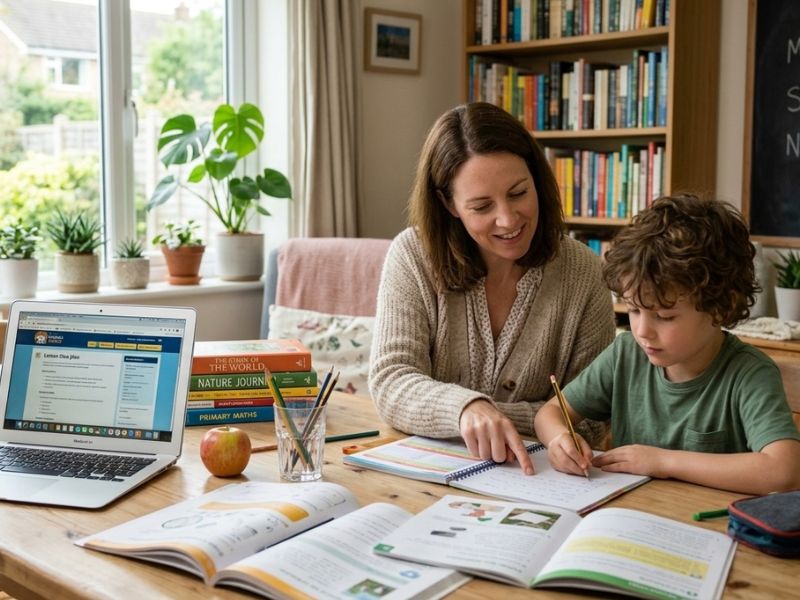
The decision to educate a child at home usually comes after a period of uncertainty. School mornings become difficult, motivation fades, and parents begin questioning whether the current system truly supports their child. Before making any change, most families first try to understand the legal framework surrounding Kansas homeschool laws.
The good news is that Kansas is considered a homeschool-friendly state. The legal requirements are simple compared to many other states. Once parents understand how the system works, the process becomes much easier to manage.
This guide is based on current Kansas homeschool regulations, homeschool compliance research, and common legal questions parents ask before starting homeschooling.
- Key Takeaways: Kansas Homeschool Laws
- Is Homeschooling Legal in Kansas?
- Compulsory School Age in Kansas
- Kansas Homeschool Laws at a Glance
- How to Start Homeschooling in Kansas
- Non-Accredited Private School Registration
- Qualifications to Homeschool in Kansas
- Kansas Homeschool Subject Requirements
- Homeschool Curriculum Options
- Homeschooling a Child With Special Needs in Kansas
- Kansas Homeschool Attendance Requirements
- Kansas Homeschool Record-Keeping Requirements
- Kansas Homeschool Assessments and Evaluations
- Immunization Requirements for Homeschoolers in Kansas
- Do Homeschool Students Need Transcripts?
- Graduation Requirements for Homeschoolers
- Sports Opportunities for Homeschoolers in Kansas
- Homeschool Groups and Co-ops in Kansas
- Financial Resources for Kansas Homeschool Families
- Field Trip Opportunities for Homeschoolers
- Frequently Asked Questions
- Conclusion
Key Takeaways: Kansas Homeschool Laws
- Homeschooling is legal in Kansas.
- Homeschools operate as Non-Accredited Private Schools (NAPS).
- Parents must register the homeschool with the state.
- Children must attend school between ages 7 and 18.
- Kansas does not require standardized testing.
- Parents can choose any curriculum they prefer.
- Instruction time should be similar to public school learning time.
Is Homeschooling Legal in Kansas?
Yes. Homeschooling is fully legal under Kansas homeschool laws.
In Kansas, homeschooling is treated as a non-accredited private school. This means parents create and run their own private school at home.
Families do not need approval from the local school district. However, the homeschool must be registered with the Kansas State Department of Education.
Homeschooling laws can vary significantly from one state to another. If you want to understand how regulations differ nationwide, you can explore our full guide to Homeschooling laws by state for a broader overview.
Compulsory School Age in Kansas
Kansas law requires children to attend school between 7 and 18 years old.
This rule applies to:
- Public schools
- Private schools
- Homeschools
Parents must provide education during these years. Homeschooling is one of the legal ways to meet this requirement.
Kansas Homeschool Laws at a Glance

| Requirement | Kansas Law |
|---|---|
| Legal option | Non-Accredited Private School |
| Registration | Required |
| Compulsory age | 7–18 |
| Teacher qualification | Competent instructor |
| Required subjects | None specified |
| Testing | Not required |
| Record keeping | Not required by law |
| Attendance time | Substantially equivalent to public school |
Kansas is considered a low-regulation homeschool state. Parents who want to see how Kansas compares with other states may also find it helpful to explore our guide to the Best states for homeschooling which explains where families have the most freedom to educate their children at home.
Homeschool Regulation Level in Kansas
| Regulation Level | Description |
|---|---|
| Low Regulation | States with minimal reporting requirements and flexible homeschooling laws. |
| Moderate Regulation | States that require periodic reports or evaluations. |
| High Regulation | States with strict testing, reporting, or approval requirements. |
How to Start Homeschooling in Kansas

Kansas Homeschool Compliance Checklist
- ✔ Choose a homeschool name
- ✔ Register as a Non-Accredited Private School (NAPS)
- ✔ Withdraw your child from public school if currently enrolled
- ✔ Plan instruction time similar to public schools
- ✔ Select homeschool curriculum for your student
- ✔ Keep optional learning records for future reference
Starting homeschooling in Kansas is a simple process for most families.
Step 1: Choose a Homeschool Name
Your homeschool must have a name because it will be registered as a private school.
Step 2: Register as a Non-Accredited Private School
Parents must register the homeschool with the Kansas State Department of Education.
Registration usually includes:
- School name
- Address
- Contact information
Registration is typically completed once when the homeschool is established.
Step 3: Withdraw from Public School
If your child currently attends school, notify the school that you are withdrawing your child for homeschooling.
Step 4: Begin Teaching
After registration, parents can begin homeschooling immediately.
Non-Accredited Private School Registration
Kansas homeschools operate under the Non-Accredited Private School (NAPS) category.
This means the homeschool functions as a private school that is not accredited by the state.
Parents are responsible for:
- Teaching the student
- Selecting curriculum
- Planning the learning schedule
The state does not control daily lessons.
Qualifications to Homeschool in Kansas
Kansas homeschool laws require the teacher to be a competent instructor.
The law does not define this term clearly. It simply means the parent should be capable of teaching the child.
Parents do not need:
- A teaching license
- A college degree
- Professional certification
Many families successfully homeschool without formal teaching training.
Kansas Homeschool Subject Requirements
Kansas law does not require specific subjects for homeschool students.
Parents have full freedom to choose what their child studies.
However, many families include subjects such as:
- Math
- Reading
- Writing
- Science
- Social studies
Parents can adjust lessons based on their child’s interests and learning pace.
Homeschool Curriculum Options
Kansas homeschool families can choose many different learning methods.
Common curriculum options include:
- Printed homeschool curriculum
- Online learning programs
- Parent-designed lesson plans
- Unit studies
- Hybrid learning programs
This flexibility allows parents to design a personalized education plan.
Homeschooling a Child With Special Needs in Kansas
Kansas law allows parents to homeschool children with special learning needs. Many families choose homeschooling because it allows flexible teaching methods and personalized learning plans.
Parents can adjust lessons based on their child’s pace and abilities. In some cases, homeschool families may request limited services from their local public school district, although support options may vary.
Parents who need additional support may contact their local school district to learn about available services.
Kansas Homeschool Attendance Requirements
Kansas law states that homeschool instruction should be substantially equivalent to public school instruction time.
Public schools typically operate around:
- 186 school days per year
- About 1,100 hours of instruction
Homeschool schedules can be flexible as long as learning time is similar.
Many homeschool families prefer shorter lessons with more breaks.
Kansas Homeschool Record-Keeping Requirements
Kansas homeschool laws do not require formal record keeping. However, many experts recommend keeping basic records.
Helpful records may include:
- Attendance logs
- Work samples
- Grade reports
- Reading lists
These records can help if a student transfers schools or applies to college.
Kansas Homeschool Assessments and Evaluations
Kansas homeschool laws do not require standardized testing.
Parents decide how to evaluate their child’s progress.
Common methods include:
- Parent grading
- Portfolio reviews
- Online testing programs
- Educational assessments
Families often track progress through daily lessons and completed assignments.
Immunization Requirements for Homeschoolers in Kansas
Kansas homeschool laws do not require families to submit vaccination records when educating their children at home.
However, immunization documentation may be required if a homeschool student participates in certain public school programs, sports activities, or shared classes offered by a local district.
Parents should check with their local school district for specific requirements.
Do Homeschool Students Need Transcripts?
High school homeschool students usually need transcripts when applying to college.
A homeschool transcript may include:
- Course names
- Grades
- Credits earned
- Graduation date
Parents typically create these transcripts themselves.
Graduation Requirements for Homeschoolers
Kansas does not set official graduation requirements for homeschool students.
Parents decide when their child has completed high school.
After finishing studies, parents may issue a homeschool diploma.
Many colleges accept homeschool diplomas when transcripts are provided.
Sports Opportunities for Homeschoolers in Kansas
Sports participation rules may vary by local school district.
Some districts allow homeschool students to participate in public school sports programs, while others do not.
Homeschool students may also join:
- Community sports leagues
- Private sports clubs
- Homeschool athletic teams
These programs provide opportunities for physical activity and teamwork.
Homeschool Groups and Co-ops in Kansas
Many Kansas homeschool families join support groups and co-ops.
These groups often offer:
- Shared classes
- Group learning activities
- Field trips
- Parent support networks
Joining a homeschool group can help families connect with other homeschool students and parents.
Financial Resources for Kansas Homeschool Families
Kansas does not provide direct public funding for homeschool education. Families typically pay for curriculum, books, and learning materials themselves.
However, many families reduce costs by using:
- Free online educational resources
- Public library programs
- Homeschool group curriculum sharing
- Discounted homeschool learning platforms
Some homeschool groups also organize group discounts for educational programs and field trips.
Field Trip Opportunities for Homeschoolers
Field trips are a valuable part of many homeschool programs.
Kansas homeschool families often visit:
- Museums
- Science centers
- Historical landmarks
- Nature parks
These experiences allow students to learn through real-world exploration.
Frequently Asked Questions
Do homeschoolers have to register in Kansas?
Yes. Parents must register their homeschool as a Non-Accredited Private School with the Kansas State Department of Education.
Do Kansas homeschoolers need to take standardized tests?
No. Kansas homeschool laws do not require standardized testing.
Can you start homeschooling mid-year in Kansas?
Yes. Families can begin homeschooling at any time after registering their homeschool.
Do homeschool families need to file a Notice of Intent in Kansas?
Kansas does not require a traditional Notice of Intent. Instead, parents register their homeschool as a Non-Accredited Private School, which fulfills the legal requirement.
Conclusion
For many families, understanding the legal rules is the step that turns uncertainty into confidence. Kansas homeschool laws are designed to give parents flexibility while still meeting basic education expectations. Once the requirements are clear, families can focus on creating a learning path that truly supports their child’s development and future.