 Skip to content
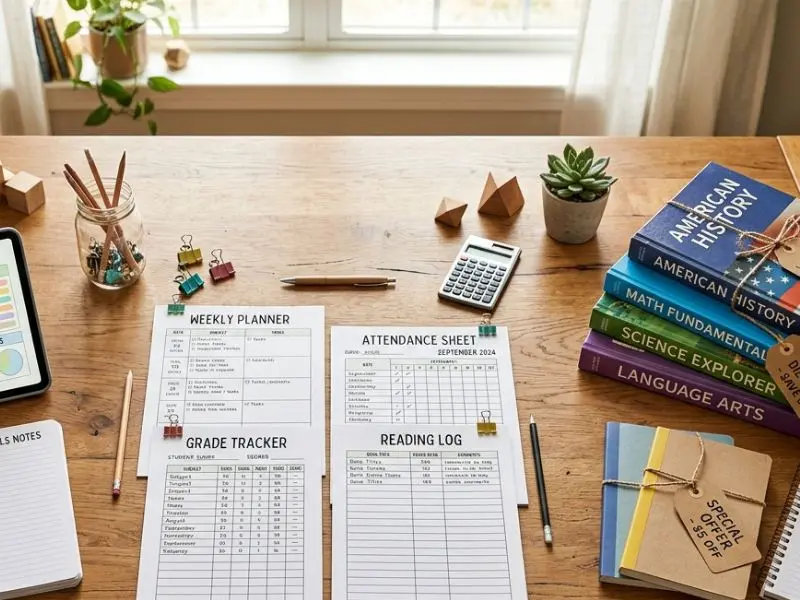
Homeschooling is easier when you use the right tools from the beginning. Many parents waste time downloading too many planners, templates, and printables, then struggle to keep everything organized while spending more than necessary.
After researching trusted homeschool resources and practical planning systems, one thing stands out. A few reliable tools, useful templates, and well-timed discounts can simplify planning, keep records organized, and help you save money without adding extra work.
- Homeschool Tools at a Glance
- Free Homeschool Tools
- Free and Low-Cost Homeschool Tools Worth Considering
- Free Homeschool Resources
- Featured Freebies
- Monthly Deals
- Where to Find Homeschool Discounts
- Homeschool Help
- Homeschool Planning Hub
- What to Include in Your Homeschool Binder
- Best Academic Planner for Homeschoolers
- Report Card Templates
- Homeschool Organization Kit
- Monthly Homeschool Calendar
- Journal Prompts
- Unit Studies
- Summer Learning Tools
- Guide to Homeschooling High School
- Homeschool Printable Pack
- Essential Homeschool Templates Every Family Should Have
- Which Homeschool Template Format Should You Choose?
- Start With Only the Tools You Need
- How to Choose the Right Homeschool Tools
- Homeschool Portfolio
- High School Transcript
- High School GPA Worksheet
- High School Four-Year Plan
- Community Service Log
- Grade Book Spreadsheet
- Sanity Saver Planner
- End of the Year Checklist
- Frequently Asked Questions
- Conclusion
Homeschool Tools at a Glance
If you are searching for homeschool tools, templates, and discounts, start with resources that help you stay organized and reduce everyday costs. A lesson planner, attendance tracker, grade book, simple calendar, and homeschool portfolio template are enough for most new homeschool families.
Many parents think they need dozens of printable forms before they can begin homeschooling. In reality, starting with a few essential tools is usually the better approach. As your homeschool grows, you can add more planners and templates only when they solve a real need.
Using the right resources from the beginning can help you:
- Plan lessons more efficiently
- Keep important homeschool records organized
- Track academic progress
- Build a homeschool portfolio
- Prepare for high school record keeping
- Reduce unnecessary spending on planning supplies
Which Homeschool Tool Do You Need?
| If You Want To | Use This Tool |
|---|---|
| Plan daily lessons | Lesson planner |
| Track school days | Attendance tracker |
| Record grades | Grade book |
| Monitor completed books | Reading log |
| Organize the school year | Curriculum planner |
| Save learning samples | Homeschool portfolio |
| Manage high school records | Transcript, GPA worksheet, and credit tracker |
| Control homeschool spending | Budget tracker and discount list |
Free Homeschool Tools
Homeschool tools are designed to simplify planning, record keeping, and daily learning. The best tools are not always the most advanced. They are the ones your family can use consistently every week.
Instead of downloading dozens of planners, begin with a small group of tools that support your daily routine. A simple system is easier to maintain and often saves more time than a complicated one.
Lesson Planner
A lesson planner keeps daily or weekly learning organized. It allows you to see upcoming lessons, assignments, and learning goals without searching through multiple notebooks or documents.
Choose a planner that matches your teaching style. Some parents prefer detailed weekly plans, while others work better with flexible daily checklists.
Attendance Tracker
An attendance tracker records the days your child completes school. Homeschool record requirements vary by state, so it is important to understand your state’s rules before deciding which records you must keep.
Even when attendance records are not required, they provide a helpful learning history and make your homeschool files more complete.
Grade Book
A grade book records quizzes, assignments, projects, and tests. Keeping grades updated throughout the year prevents last-minute work when preparing progress reports or high school transcripts.
Many families use digital spreadsheets because calculations update automatically, while others prefer printable grade books for paper records.
Daily Schedule
A daily schedule creates a predictable routine without forcing your homeschool to follow a traditional school timetable.
One advantage of homeschooling is flexibility. Your schedule can change as your child’s learning needs, appointments, or family activities change.
Curriculum Planner
A curriculum planner gives you a clear view of the school year before lessons begin. Breaking large goals into smaller weekly tasks helps prevent students from falling behind.
It also makes vacations, holidays, and unexpected schedule changes easier to manage.
Reading Log
A reading log records books completed during the school year. It encourages regular reading while creating useful documentation for homeschool portfolios and high school records.
Include the title, author, reading dates, and a few notes about each completed book.
Assignment Tracker
An assignment tracker shows completed work and upcoming tasks in one place. Older students especially benefit from seeing their responsibilities clearly.
Checking assignments regularly also helps parents identify unfinished work before it becomes a larger problem.
Free and Low-Cost Homeschool Tools Worth Considering

Many excellent homeschool tools are available at little or no cost. These resources help families organize lessons, manage records, and store important files without purchasing expensive software.
If you are new to homeschooling, begin with one digital planning tool and one printable record system. Learning too many apps at the same time often creates more confusion than organization.
| Tool | Main Use | Free Option | Best For |
|---|---|---|---|
| Google Calendar | Planning lessons and activities | Yes | Family schedules |
| Google Sheets | Attendance, grades, and budgets | Yes | Editable records |
| Google Drive | Storing homeschool files | Yes | Digital portfolios |
| Google Docs | Lesson plans and reports | Yes | Editable documents |
| Canva | Designing planners and printables | Yes | Custom templates |
| Trello | Organizing assignments | Yes | Visual planning |
| Notion | Managing homeschool dashboards | Yes | Parents and older students |
| Microsoft Excel | Detailed grade and budget tracking | Depends on access | Advanced spreadsheets |
| Printable binder | Organizing paper records | Low cost | Families who prefer printed forms |
Every family teaches differently. Choose tools that fit your routine instead of selecting the ones with the most features.
Free Homeschool Resources
Free homeschool resources allow families to build an organized learning system before investing in paid curriculum or planning tools. Many of these resources remain useful even after your homeschool expands.
Common free resources include printable forms, lesson planners, worksheets, reading logs, educational activities, and record-keeping templates. Using a few trusted resources consistently is usually more effective than collecting hundreds of downloads you never open.
Common Free Resources
Many homeschool families regularly use:
- Printable lesson planners
- Attendance sheets
- Grade books
- Reading logs
- Daily schedule templates
- Educational worksheets
- Unit study resources
- Science activities
- Writing prompts
- Homeschool record forms
As your homeschool grows, you can combine these free resources with paid curriculum while keeping planning simple and organized. Families looking for free educational materials can also explore the digital collections and classroom resources available through the Library of Congress.
Featured Freebies
Many homeschool websites regularly offer free downloads that parents can use immediately. These resources often change throughout the year, making it worthwhile to check trusted homeschool websites before buying new planning materials.
Popular Free Downloads
Some of the most useful free resources include:
- Printable homeschool planners
- Attendance logs
- Curriculum planners
- Homeschool portfolio templates
- Report card forms
- High school transcript templates
- Reading logs
- Assignment trackers
- Field trip logs
- Seasonal learning packs
Before downloading, decide whether you need an editable file or a printable version. Editable templates work well for records you update throughout the year, while printable PDFs are ideal if you keep a homeschool binder.
Remember that more downloads do not always create a better homeschool system. Choosing a few resources that you will actually use is often the best way to stay organized from the first day of homeschooling.
Monthly Deals
One of the easiest ways to lower homeschool costs is to plan purchases around seasonal discounts. Many curriculum publishers, educational stores, and learning platforms offer promotions throughout the year. Buying at the right time can save money without reducing the quality of your child’s education.
Instead of purchasing resources as soon as you find them, create a list of what you actually need. This helps you avoid spending money on materials that may never be used.
Curriculum Sales and Bundle Discounts
Many homeschool curriculum companies sell complete subject bundles or grade-level packages. These bundles often cost less than purchasing every book or course separately.
Before buying a bundle, check whether every included resource matches your child’s learning level. A smaller package that you use completely may provide better value than a larger one with unused materials.
Teacher and Educator Discounts
Some educational companies and retailers extend teacher discounts to homeschool parents. However, every company has its own eligibility rules.
You may be asked to provide homeschool documentation, membership information, or another form of verification before receiving a discount. Always review the company’s current requirements before making a purchase.
Museum, Zoo, and Field Trip Discounts
Learning does not always happen at home. Museums, zoos, aquariums, science centers, and historical sites sometimes offer homeschool days, family memberships, or discounted educational programs.
If you belong to a homeschool group or co-op, ask whether group pricing is available. Booking together can sometimes reduce admission costs.
Software and Subscription Discounts
Many online learning platforms offer free trials, annual plans, or family subscriptions. Comparing the total yearly cost instead of the monthly price gives a better picture of the actual expense.
Before subscribing, check whether the plan renews automatically and whether additional users or subjects require extra fees.
Used Curriculum and Book Discounts
Buying used curriculum is another practical way to reduce homeschool expenses. Many books, teacher guides, and educational games can be reused for several years.
Before purchasing secondhand materials, confirm that the edition still matches the resources you plan to use.
Seasonal Homeschool Sales
Homeschool promotions often appear during back-to-school season, major holiday sales, and the end of an academic year. Since every company follows its own sales schedule, compare prices instead of assuming every promotion offers the best value.
Planning your purchases before a sale begins also reduces impulse buying.
Check These Details Before Using a Discount
Not every discount provides the same value. Before completing your purchase, review:
- Expiration date
- Eligibility requirements
- Minimum purchase amount
- Shipping charges
- Automatic renewal terms
- Refund policy
- Trial period conditions
- Required homeschool documentation
- Whether discounts can be combined
Remember that buying only the resources you truly need usually saves more money than purchasing unnecessary items simply because they are on sale.
Where to Find Homeschool Discounts

Finding homeschool discounts is often easier when you know where to look. Many families save money every year simply by planning purchases around trusted sources instead of paying full price throughout the year.
Checking several places before buying curriculum or supplies can help you compare prices and avoid unnecessary spending.
Curriculum Publishers
Many curriculum publishers offer seasonal promotions, grade-level bundles, or discounts for returning customers. Signing up for their newsletters can also give you early access to upcoming sales.
Educational Retailers
Educational retailers sometimes run promotions on books, school supplies, learning games, and classroom materials. Comparing prices between retailers can help you find better value.
Local Homeschool Groups
Many homeschool groups organize curriculum swaps where families exchange or sell gently used learning materials. This is an affordable way to find books and teaching resources.
Museums, Zoos, and Science Centers
Educational attractions often host homeschool days or offer discounted family memberships. These programs allow students to enjoy hands-on learning while reducing admission costs.
Email Newsletters
Many homeschool companies announce exclusive discounts through email newsletters before sharing them publicly. Subscribing to trusted companies can help you learn about new promotions early.
Seasonal Sales
Back-to-school events, Black Friday, Cyber Monday, and end-of-school-year promotions are common times for homeschool discounts. Planning purchases around these sales can reduce your yearly homeschooling costs.
Homeschool Help
Every homeschool family faces challenges at different stages. Some parents need help choosing curriculum, while others struggle with scheduling, record keeping, or teaching multiple children. Getting support from trusted sources can make homeschooling more enjoyable and less stressful.
The goal is not to copy another family’s homeschool. It is to learn practical ideas that fit your own children and teaching style.
Where to Find Homeschool Help
Reliable homeschool support is available through:
- Local homeschool groups
- State homeschool organizations
- Curriculum publishers
- Online homeschool communities
- Parent workshops
- Educational websites
- Homeschool conferences
Connecting with experienced homeschool families can answer questions that are difficult to solve alone.
Homeschool Planning Hub
A homeschool planning hub keeps your most important information together. Instead of storing lesson plans, attendance sheets, and schedules in different places, organize everything in one simple system.
Your planning hub can be completely digital, completely paper-based, or a combination of both. The best system is the one your family will update regularly.
What to Include
Your homeschool planning hub may contain:
- Yearly goals
- Curriculum planner
- Monthly calendar
- Weekly lesson plans
- Attendance records
- Grade book
- Reading log
- Assignment tracker
- Field trip log
- Portfolio checklist
- Assessment records
Start with the essentials. As your homeschool grows, you can expand your planning system without replacing everything you already use.
Protect Your Child’s Information
Many families store homeschool records digitally because they are easy to update and access. If you use cloud storage or online planning tools, protect your child’s personal information.
Avoid sharing public links to files that contain names, grades, addresses, birth dates, or testing records. Use strong passwords, review sharing permissions, and keep a separate backup of important files.
What to Include in Your Homeschool Binder
A homeschool binder keeps everyday planning materials together so you can quickly find what you need. Whether you teach one child or several, a well-organized binder saves time throughout the school year.
You do not need hundreds of pages. Include only the documents you use regularly.
Family Information
Keep emergency contacts, important dates, and your yearly homeschool calendar near the front of the binder.
Lesson Plans and Schedules
Store weekly lesson plans, daily routines, and subject schedules together. This makes it easy to see what has been completed and what comes next.
Attendance Records
Place attendance sheets in date order. Organized records are much easier to review if you need them later.
Grade Records
Keep quizzes, tests, projects, and grading sheets in one section. Updating grades regularly prevents paperwork from piling up.
Reading Log
Record completed books, reading dates, and brief notes. A reading log also provides useful evidence of learning for your homeschool portfolio.
Portfolio Samples
Save selected writing assignments, artwork, science projects, and photographs that show your child’s progress during the year.
Important Documents
Store curriculum information, assessment records, field trip notes, and any documents required under your state’s homeschool laws.
Review your binder once each month. Removing unnecessary papers keeps it useful instead of becoming overcrowded.
Best Academic Planner for Homeschoolers
The best homeschool planner is the one that matches your family’s daily routine. Some parents prefer printable planners they can write in, while others want digital planners they can update from different devices.
There is no perfect planner for every homeschool family. Choose one that encourages consistency instead of adding unnecessary complexity.
Homeschool Planner for Parents
A parent planner helps organize lessons, attendance, appointments, grades, and long-term learning goals.
Families teaching multiple children often find a parent planner especially useful because it keeps everyone’s schedules together.
Kid Zone Planner
A student planner helps children develop independence. Students can record assignments, reading goals, project deadlines, and completed work without relying on reminders throughout the day.
Elementary and middle school students often become more responsible when they help manage their own learning.
ADHD Planner for Kids
Children with ADHD may benefit from planners that divide larger tasks into smaller steps. Simple layouts, visual checklists, and shorter daily goals can make planning feel less overwhelming.
Choose a planner that reduces distractions instead of adding unnecessary details.
Choosing Between Printable and Digital Planners
Printable planners work well for families who enjoy writing by hand and keeping paper binders. Digital planners are easier to edit, back up, and access from different devices.
If you are homeschooling for the first time, begin with one planning method instead of switching between several systems. A simple routine that your family follows every week is more valuable than using multiple planners that never become part of your daily schedule.
Report Card Templates
A homeschool report card is a simple way to summarize your child’s academic progress. While traditional report cards are usually optional, your state may require other records such as attendance, assessments, portfolios, or progress documentation. Understanding your state’s homeschool rules helps you decide which records to maintain.
Using the same report card format throughout the year makes it easier to review progress and compare learning over time.
What to Include in a Report Card
A complete homeschool report card usually includes:
- Student name
- Grade level
- School year
- Subjects studied
- Grades or performance levels
- Teacher comments
- Attendance summary
- Parent or teacher signature
Some families use letter grades, while others prefer written evaluations or mastery-based assessments. Choose the format that best matches your teaching style.
Homeschool Organization Kit
A homeschool organization kit combines your most important planning and record-keeping tools into one easy-to-manage system. Instead of searching through different folders, you can keep everything together and update it throughout the year.
You do not need a complicated setup. A simple organization system is often easier to maintain and saves time every week.
Essential Planning Tools
A practical homeschool organization kit may include:
- Lesson planner
- Attendance tracker
- Grade book
- Curriculum planner
- Weekly planner
- Daily schedule
- Reading log
- Assignment tracker
- Portfolio checklist
- Field trip log
- Report card template
- Year-end checklist
Choose only the tools that fit your family’s routine. You can always add more resources later if your needs change.
Homeschool Budget Tracker
Planning your homeschool budget helps you understand where your money is going and where you can save.
Your budget tracker can include:
- Curriculum
- Books
- Printing
- Educational subscriptions
- Co-op fees
- Field trips
- Technology
- Art supplies
- Science materials
- Testing costs
- Memberships
- Amount saved through discounts
Updating your budget after each purchase helps you prepare for future homeschool years with fewer surprises.
Monthly Homeschool Calendar
A monthly homeschool calendar gives you a clear picture of upcoming lessons, appointments, holidays, and learning goals. Looking at the entire month instead of planning one day at a time makes it easier to balance school with family life.
Review your calendar at the beginning of each month and adjust it as your plans change.
What to Track
A monthly calendar can include:
- Weekly learning goals
- Holidays
- Library visits
- Field trips
- Science projects
- Assessment dates
- Family vacations
- Curriculum milestones
Planning ahead helps reduce last-minute changes and keeps learning moving forward.
Journal Prompts
Journal prompts encourage children to think, observe, and write regularly. They also strengthen communication skills while creating meaningful writing samples for your homeschool portfolio.
Short prompts work well for younger learners, while older students can respond with longer reflections and creative writing.
Popular Journal Topics
Try prompts such as:
- My favorite book
- Something new I learned
- If I could travel anywhere
- A problem I solved
- My science experiment
- A family tradition
- My dream career
- How I helped someone today
Saving a few journal entries throughout the year also provides valuable examples of your child’s writing progress.
Unit Studies
Unit studies teach several subjects through one central topic. Instead of studying science, history, reading, and writing separately, students learn how these subjects connect.
This approach often makes learning more interesting because children explore one topic from different perspectives.
Popular Unit Study Ideas
Many homeschool families enjoy topics like:
- Space
- Oceans
- Weather
- Dinosaurs
- American history
- Animals
- Plants
- Geography
- Inventors
- Community helpers
Free unit study resources often include reading lists, worksheets, projects, and hands-on activities.
Summer Learning Tools
Summer does not have to look like a regular homeschool year. A lighter routine helps children continue learning while still enjoying their break.
Simple educational activities each week can prevent learning loss without creating unnecessary pressure.
Summer Activity Kit
A summer activity kit may include:
- STEM projects
- Nature journals
- Reading challenges
- Art activities
- Science experiments
- Outdoor scavenger hunts
- Writing prompts
- Educational games
Hands-on learning often keeps children more engaged than traditional worksheets during the summer.
Summer Planner
A summer planner helps families organize vacations, educational activities, and personal goals in one place.
Many families use it to schedule:
- Weekly reading goals
- Library visits
- Museum trips
- Outdoor learning
- Family projects
- Skill practice
- Educational videos
- Vacation plans
Keeping a simple routine over the summer makes the transition into the next homeschool year much easier.
Guide to Homeschooling High School

High school homeschooling requires careful planning because students begin preparing for graduation, college, careers, military service, apprenticeships, or vocational training. Good records become much more valuable during these years.
Keeping grades, course information, and credits updated every semester saves time when creating transcripts or applying to educational programs.
Records Worth Keeping
Organize and update:
- Course descriptions
- Credits earned
- Grades
- Reading lists
- Volunteer hours
- Extracurricular activities
- Standardized test scores
- Awards and certificates
Starting good record-keeping habits in ninth grade makes graduation planning much less stressful.
Homeschool Printable Pack
A homeschool printable pack collects many commonly used planning forms into one convenient download. Instead of searching for separate files, you can keep everything together and print only the pages you need.
Many homeschool families build their entire planning system around one printable pack.
Common Printables
A homeschool printable pack often includes:
- Lesson planner
- Attendance sheet
- Grade tracker
- Daily planner
- Weekly planner
- Reading log
- Assignment checklist
- Goal tracker
- Curriculum planner
- Field trip record
Simple printable forms are often easier to maintain than complicated planning systems with dozens of pages.
Essential Homeschool Templates Every Family Should Have

There are hundreds of homeschool templates available online, but most families only use a small number of them regularly. Starting with the essentials keeps your planning system simple while covering the records you are most likely to need.
As your homeschool grows, you can add more templates without replacing the system you already use.
Planning Templates
Planning templates help organize daily teaching and long-term learning goals.
Useful planning templates include:
- Lesson planner
- Weekly planner
- Daily schedule
- Curriculum planner
- Monthly calendar
Record-Keeping Templates
Good records make it easier to monitor progress and stay organized throughout the school year.
Many homeschool families use:
- Attendance sheet
- Grade book
- Reading log
- Assignment tracker
- Progress report
High School Templates
Students in high school usually need more detailed academic records.
Important templates include:
- Transcript
- GPA worksheet
- Credit tracker
- Community service log
- Four-year course plan
Organization Templates
These templates help manage the overall homeschool system instead of individual subjects.
Examples include:
- Budget tracker
- Portfolio checklist
- Field trip log
- Supply checklist
- Year-end checklist
Which Homeschool Template Format Should You Choose?
Not every homeschool family organizes records the same way. Some prefer paper binders, while others update everything digitally. Choosing the right format depends on how you plan lessons and store records.

| Format | Best For | Main Limitation |
|---|---|---|
| Printable PDF | Paper binders | Difficult to edit after printing |
| Fillable PDF | Typed records | Limited customization |
| Google Docs | Lesson plans and written reports | Usually requires internet access |
| Google Sheets | Attendance, grades, and budgets | Requires basic spreadsheet knowledge |
| Microsoft Word | Editable forms | Formatting may change on different devices |
| Microsoft Excel | Detailed calculations | Software access may not be free |
| Canva | Custom planners and printables | Not designed for automatic calculations |
Printable PDFs work well if you enjoy paper planning. Editable templates are usually a better choice for records that change throughout the school year.
Start With Only the Tools You Need
One of the biggest mistakes new homeschool families make is downloading too many planners and templates. A simple system is easier to learn, easier to update, and much more likely to become part of your daily routine.
Build your homeschool organization system gradually instead of trying to organize everything at once.
New Homeschool Families
Start with:
- Lesson planner
- Attendance tracker
- Weekly schedule
- Curriculum list
Elementary Students
Helpful tools include:
- Reading log
- Daily routine
- Portfolio folder
- Assignment tracker
Middle School Students
Consider adding:
- Grade book
- Weekly planner
- Project tracker
- Goal sheet
High School Students
Prioritize:
- Grade book
- Four-year plan
- Credit tracker
- GPA worksheet
- Transcript file
Families Teaching Multiple Children
Use one shared family calendar for activities that involve everyone. Keep separate attendance, grades, and progress records for each child.
Paper-Free Homeschool Families
A cloud storage system, editable spreadsheets, shared calendar, and digital planner can organize nearly every homeschool record without using printed forms.
Starting with only the essentials gives you confidence while keeping your homeschool organized from the very beginning.
“`htmlWhen to Start Using Each Homeschool Tool
You do not need to set up every form on the first day. Add tools gradually as your planning and record-keeping needs grow.
| Stage | Recommended Tools |
|---|---|
| Before homeschooling begins | Lesson planner, curriculum planner, and family calendar |
| During the first month | Attendance tracker, daily schedule, and reading log |
| Throughout the school year | Grade book, assignment tracker, and homeschool portfolio |
| At the end of each semester | Progress report and high school GPA worksheet |
| At the end of the school year | Portfolio review, transcript update, and year-end checklist |
How to Choose the Right Homeschool Tools
The best homeschool tools depend on your family’s routine, teaching style, and the age of your children. Instead of trying every planner or app, choose tools that solve your biggest challenge first.
As your homeschool changes, you can add new resources without rebuilding your entire planning system.
For New Homeschool Families
If you are just getting started, focus on a few essential tools.
Begin with:
- Lesson planner
- Attendance tracker
- Weekly schedule
- Curriculum planner
These resources provide a strong foundation without creating unnecessary work.
For Families Teaching Multiple Children
Managing several grade levels can become confusing without a simple organization system.
Helpful tools include:
- Shared family calendar
- Digital lesson planner
- Assignment tracker
- Color-coded grade records
Keeping common schedules together while maintaining separate student records makes daily planning easier.
For Paper-Based Homeschooling
Some families prefer printed planners because they are easy to write on and keep inside a homeschool binder.
A paper system often includes:
- Printable planner
- Attendance sheets
- Grade book
- Portfolio folder
For Digital Homeschooling
Digital planning works well for families who want editable records and automatic backups.
Popular digital tools include:
- Google Calendar
- Google Docs
- Google Sheets
- Google Drive
Using one or two digital tools consistently is usually more effective than switching between several apps.
For High School Homeschooling
High school students benefit from tools that prepare them for graduation and future educational opportunities.
Prioritize:
- Transcript
- GPA worksheet
- Credit tracker
- Four-year course plan
- Community service log
Keeping these records updated throughout high school saves significant time later.
Homeschool Portfolio
A homeschool portfolio is a collection of records and learning samples that show your child’s progress over time. Portfolio requirements vary by state. Some families keep one because it is required, while others use it to organize work, prepare for evaluations, or document learning for future reference.
Updating your portfolio throughout the year is much easier than trying to collect everything at the end of the school year.
What to Include in a Homeschool Portfolio
Choose work that demonstrates growth instead of saving every assignment. A balanced portfolio may include:
- Writing samples
- Math worksheets
- Science projects
- Artwork
- Reading logs
- Book reports
- Field trip photos
- Test results
- Certificates
- End-of-unit projects
Review the portfolio every month and remove duplicate or unnecessary papers. A well-organized portfolio is easier to use and better reflects your child’s progress.
High School Transcript
A high school transcript is one of the most important homeschool records. It summarizes the courses, credits, and grades a student earns during high school. Colleges, scholarship programs, trade schools, dual-enrollment programs, and some employers may request it.
Most homeschool transcripts are created by the parent or homeschool administrator. Keeping accurate records from the beginning of ninth grade makes transcript preparation much easier.
What to Include in a Transcript
A complete homeschool transcript usually contains:
- Student’s full name
- Homeschool name, if applicable
- Graduation year or expected graduation date
- Course titles
- Grade levels or academic years
- Credits earned
- Final grades
- Grading scale
- Semester and cumulative GPA
- Total credits completed
- Parent or administrator signature
- Date the transcript was prepared
Review the transcript after every semester. Updating it regularly reduces mistakes and saves time when students apply for future opportunities.
High School GPA Worksheet
A GPA worksheet helps you calculate and monitor your student’s grade point average throughout high school. Keeping it updated after each grading period prevents unnecessary work later.
Many families use digital spreadsheets because they automatically calculate averages, making record keeping faster and reducing calculation errors.
Information to Track
A GPA worksheet should include:
- Course title
- Credit value
- Final grade
- Grade points
- Semester GPA
- Cumulative GPA
Always review your calculations before transferring GPA information to an official transcript.
High School Four-Year Plan
A four-year plan outlines the courses and learning goals a student hopes to complete before graduation. It is a planning tool, not a universal list of legal graduation requirements. Graduation expectations can vary depending on your state’s homeschool laws, your family’s goals, and the admission requirements of colleges or training programs.
Planning ahead helps students build a balanced high school schedule without rushing important decisions during their final years.
Planning Your Courses
A four-year plan often includes:
- English
- Mathematics
- Science
- Social studies
- Electives
- Foreign language
- Fine arts
- Career preparation
- Dual enrollment opportunities
Review the plan each year and adjust it as your student’s interests and future goals change.
High School Credit Tracker
A credit tracker records progress toward graduation and connects your four-year plan with your final transcript.
Keep track of:
- Course title
- Subject area
- Academic year
- Credit attempted
- Credit completed
- Final grade
- Course provider
- Completion date
- Additional notes
Updating your credit tracker every semester helps you identify missing credits before graduation.
Community Service Log
Volunteer work helps students build practical skills while serving their communities. Keeping a community service log creates a clear record that may be useful for scholarships, college applications, and personal achievements.
Record each activity soon after it is completed so important details are not forgotten.
What to Record
Include:
- Organization name
- Volunteer activity
- Date completed
- Hours served
- Supervisor name
- Contact information
- Student reflections
Small volunteer activities completed consistently over several years often create a stronger record than trying to complete many hours at the last minute.
Grade Book Spreadsheet
A grade book spreadsheet organizes assignment scores, quizzes, projects, and tests throughout the school year. It gives parents a clear picture of academic progress and helps identify subjects that need additional attention.
Digital spreadsheets also simplify grading by calculating averages automatically.
Suggested Columns
Your spreadsheet may include:
- Student name
- Subject
- Assignment title
- Date completed
- Score earned
- Total points
- Percentage
- Semester average
- Teacher notes
Cloud-based spreadsheets can be accessed from different devices, but always review sharing settings and keep a backup copy of important records.
Sanity Saver Planner
A sanity saver planner focuses on keeping homeschooling manageable rather than creating a perfect schedule. Every homeschool week looks different, and flexibility is often one of the greatest advantages of learning at home.
Instead of planning every minute, focus on the tasks that matter most.
What to Include
Many parents include:
- Weekly priorities
- Flexible lesson plans
- Family appointments
- Meal planning
- Household reminders
- Personal goals
- Weekly homeschool checklist
A planner should reduce stress, not create additional work. If your planning system becomes difficult to maintain, simplify it instead of adding more pages.
End of the Year Checklist
Before closing one homeschool year and preparing for the next, take time to organize your records. Completing a few important tasks now prevents unnecessary work later.
A year-end review also helps you see how much progress your child has made.
Year-End Tasks
Complete the following before starting a new homeschool year:
- Review attendance records
- Update the grade book
- Finish report cards
- Organize the homeschool portfolio
- Save important writing samples
- Archive lesson plans
- Back up digital files
- Update reading logs
- Review curriculum progress
- Prepare next year’s planner
Keeping your records organized at the end of each year creates a smoother transition into the next one.
Frequently Asked Questions
What are the most important homeschool tools?
Most homeschool families begin with a lesson planner, attendance tracker, grade book, curriculum planner, daily schedule, and reading log. These tools help organize lessons and maintain important records without making planning complicated.
Are free homeschool templates good enough?
Yes. Many free templates provide everything needed for planning lessons, tracking attendance, recording grades, organizing portfolios, and managing daily schedules. As your homeschool grows, you can add paid resources only if they provide features you truly need.
Should I choose printable or digital homeschool templates?
Both options work well. Printable templates are ideal for families who prefer paper binders, while digital templates are easier to edit, search, back up, and access from different devices.
Do homeschool parents qualify for teacher discounts?
Some companies extend teacher discounts to homeschool educators, while others do not. Eligibility rules vary, so always review the company’s current requirements before expecting a discount.
Are homeschool templates legally required?
Not always. Homeschool record-keeping requirements vary by state. Use templates that match your state’s rules and the records you want to maintain for your family’s own organization.
How can I save money on homeschool supplies?
Plan purchases around seasonal sales, compare curriculum bundles, consider used materials, use free templates when possible, and create a homeschool budget before buying new resources. Buying only what your family will actually use is usually the best way to reduce long-term costs.
Conclusion
Homeschool tools, templates, and discounts are resources that help families stay organized, keep accurate records, and reduce homeschooling costs. From comparing trusted homeschool planning methods, the most effective approach is to use a few dependable resources consistently and add new ones only when they truly support your family’s needs.