 Skip to content
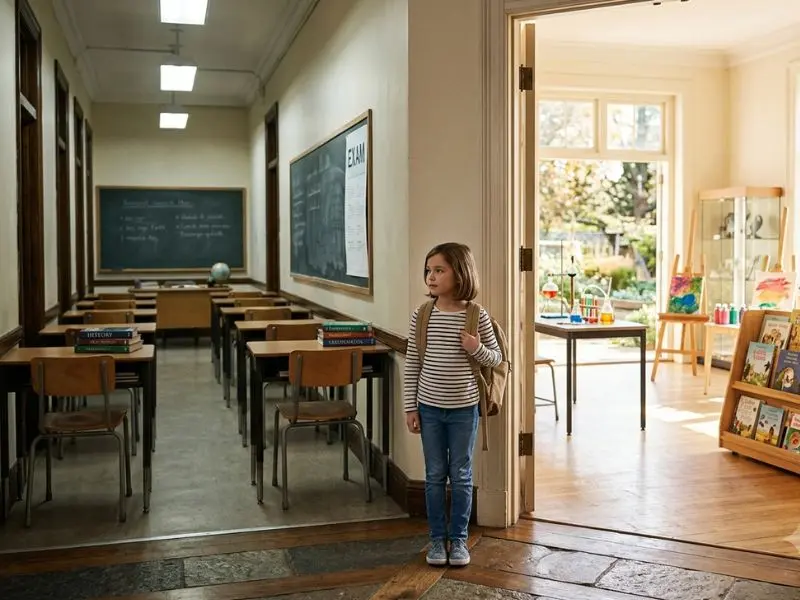
At first glance, unschooling sounds like the opposite of education. Many parents hear the term for the first time and assume it means children learn without guidance, structure, or goals. That misunderstanding is one reason so many families feel confused when researching what is unschooling.
The more I studied child-led education and the experiences of homeschooling families, the clearer one fact became. Unschooling is not about removing learning from a child’s life. It is about changing where learning comes from by allowing curiosity, interests, and everyday experiences to play a larger role.
- Quick Answer: What Is Unschooling?
- Key Takeaways
- What Is Unschooling?
- What Unschooling Is Not
- Where Unschooling Comes From
- Unschooling Is Child-Led Learning
- Formal Curriculum Is Often Not Required
- Learning Is a Lifestyle
- What Unschooling Looks Like Day to Day
- Example of an Unschooling Day
- The Spectrum of Unschooling
- Why Families Choose Unschooling
- Benefits of Unschooling
- Limitations and Considerations
- Pros and Cons of Unschooling at a Glance
- Unschooling vs Homeschooling
- Common Misconceptions About Unschooling
- Can You Blend Unschooling With Structure?
- Real Examples of Unschooling Interests
- How to Start Unschooling
- Unschooling Decision Chart for Parents
- How Do Unschoolers Learn Reading, Writing, and Math?
- Is Unschooling Legal?
- Is Unschooling Legal in Every State?
- Can Unschoolers Go to College?
- What Research Says About Unschooling
- Unschooling Fit Snapshot
- Is Unschooling Right for Your Family?
- Frequently Asked Questions
- Conclusion
Quick Answer: What Is Unschooling?
Unschooling is a child-led homeschooling approach where children learn through their interests, real-life experiences, and everyday activities instead of following a traditional curriculum. Parents still guide learning by providing resources, support, and opportunities for exploration.
Key Takeaways
- Unschooling is a child-led form of homeschooling.
- Formal curriculum is often not required.
- Learning happens through daily life and personal interests.
- Parents guide and support rather than formally teach.
- Unschooling is legal wherever homeschooling is legal.
- Many families blend unschooling with structured learning.
- Unschoolers can attend college and pursue higher education.
What Is Unschooling?
Unschooling is an educational philosophy that believes children learn best when they follow their natural curiosity. Instead of sitting through scheduled lessons, children explore topics that interest them and develop skills through real-world experiences.
For example, a child interested in space may spend time reading books about planets, watching documentaries, building models, and visiting science museums. Through these activities, they naturally practice reading, research, problem-solving, and critical thinking.
Unlike traditional schooling, unschooling places less emphasis on:
- Grade levels
- Standardized tests
- Fixed curricula
- Homework assignments
- Traditional classroom schedules
Instead, learning becomes part of everyday life.
What Unschooling Is Not
Many people misunderstand unschooling when they first hear about it.
Unschooling is not:
- Ignoring education
- Letting children do nothing all day
- A lack of parental involvement
- Anti-learning
- Educational neglect
Parents remain actively involved. They provide resources, answer questions, encourage exploration, and help create learning opportunities. The difference is that learning follows the child’s interests rather than a fixed curriculum.
Where Unschooling Comes From
The modern unschooling movement is closely connected to educator and author John Holt.
During the 1960s and 1970s, Holt observed that many children were naturally curious and eager to learn. However, he believed traditional schools often reduced that curiosity through excessive testing and rigid instruction.
His work helped inspire the unschooling movement and the broader concept of self-directed education. Holt believed children could learn effectively when given freedom, support, and meaningful opportunities to explore the world around them.
Many of the ideas behind modern unschooling are closely connected to self-directed education. Parents who want to explore this philosophy further can learn more through the Alliance for Self-Directed Education, a nonprofit organization focused on learner-driven education.
Unschooling Is Child-Led Learning

One of the most important ideas behind unschooling is child-led learning.
In traditional schools, teachers decide what students learn and when they learn it. In unschooling, children play a much larger role in directing their education.
For example, a child interested in animals may:
- Read books about wildlife
- Watch nature documentaries
- Visit zoos and aquariums
- Research species online
- Volunteer with animals
Every activity becomes part of the learning process.
Because learning connects directly to personal interests, many children stay highly engaged and motivated.
Formal Curriculum Is Often Not Required
Many homeschooling families purchase textbooks, lesson plans, and online programs. Unschoolers often take a different approach.
Instead of following a predetermined curriculum, learning resources are chosen based on the child’s interests.
These resources may include:
- Books
- Podcasts
- Educational websites
- Museums
- Travel experiences
- Community classes
- Hands-on projects
For example, cooking can naturally teach:
- Fractions
- Measurements
- Reading skills
- Science concepts
- Budgeting
Learning happens through meaningful experiences rather than formal lessons.
Learning Is a Lifestyle

For many unschooling families, education is not limited to school hours.
Children learn while:
- Playing games
- Reading books
- Exploring nature
- Traveling
- Building projects
- Talking with adults
- Participating in hobbies
This approach is often called life-based learning because learning happens naturally throughout the day.
Instead of separating school from life, unschoolers view life itself as the classroom.
What Unschooling Looks Like Day to Day
One common question parents ask is whether unschooling means having no routine.
The answer depends on the family.
Some families follow a loose rhythm while others prefer complete flexibility.
A typical day may include:
- Reading
- Outdoor exploration
- Creative projects
- Educational videos
- Community activities
- Hobby-based learning
- Conversations about current events
The focus remains on meaningful learning rather than completing assignments.
Example of an Unschooling Day
| Activity | Skills Being Learned |
|---|---|
| Baking cookies | Fractions, measurements, science |
| Grocery shopping | Math, budgeting, decision-making |
| Watching a documentary | Science, critical thinking |
| Building with LEGO | Engineering, creativity |
| Reading about dinosaurs | Research, comprehension |
| Playing strategy games | Logic, planning |
The Spectrum of Unschooling
Not all unschooling families follow the same approach.
Some families use a relaxed version of unschooling while still providing occasional structure. Others allow children greater freedom to direct their learning.
Most families fall somewhere in the middle.
Radical Unschooling
Radical unschooling extends child-led principles beyond academics.
Some families allow children greater choice regarding:
- Bedtimes
- Food preferences
- Media use
- Daily routines
Not all unschoolers practice radical unschooling. Many combine freedom with family expectations and boundaries.
Why Families Choose Unschooling
Families choose unschooling for many different reasons.
Some feel traditional education focuses too heavily on tests and grades. Others believe children learn better when they can follow their own interests.
For many families, the decision is not about rejecting education. It is about finding a learning environment that better matches their child’s needs. Some children become disengaged in traditional classrooms, while others feel limited by fixed schedules and standardized learning expectations.
Common reasons families explore unschooling include:
- Greater flexibility
- Personalized learning
- Less academic pressure
- More family time
- Real-world learning opportunities
Benefits of Unschooling
Child-Led Curiosity
Children are naturally curious. Unschooling allows that curiosity to drive learning.
Flexibility
Families can adapt learning to fit a child’s interests, pace, and needs.
Real-Life Learning
Children learn practical skills through real experiences.
Fewer Power Struggles
Many families experience less conflict because children have more ownership of their learning.
Quality Time at Home
Parents and children often spend more meaningful time together.
Encouragement of Intrinsic Motivation
Children learn because they are interested, not because they are chasing grades or rewards.
Supports Different Learning Styles
Children learn in different ways. Some prefer reading, while others learn best through movement, projects, conversation, or hands-on activities.
This flexibility is one reason some parents of gifted, creative, ADHD, or autistic children explore self-directed learning.
Limitations and Considerations
Lack of Academic Structure
Some parents worry important subjects may receive less attention.
Inconsistent Coverage of Core Subjects
Children may focus heavily on favorite subjects while avoiding others.
Parental Burnout or Overwhelm
Parents still invest significant time supporting learning.
Social Perception and Pressure
Friends and relatives may not understand the approach.
Difficult to Measure Progress
Traditional grades and report cards are usually absent.
Pros and Cons of Unschooling at a Glance
| Pros | Cons |
|---|---|
| Flexible learning | Less academic structure |
| Personalized education | Harder to measure progress |
| Encourages curiosity | Potential learning gaps |
| Real-world learning | Requires active parent involvement |
| Supports self-directed learning | May face criticism |
| Reduces academic pressure | Not ideal for every child |
Unschooling vs Homeschooling
Although related, unschooling and homeschooling are not the same thing.
| Feature | Unschooling | Traditional Homeschooling |
|---|---|---|
| Curriculum | Usually optional | Commonly used |
| Schedule | Flexible | Often structured |
| Learning Style | Child-led | Parent-led |
| Testing | Rare | Sometimes used |
| Educational Direction | Student-driven | Parent-directed |
Unschooling is one approach within the broader homeschooling community.
Common Misconceptions About Unschooling
Myth #1: Unschooling Means No Learning
Learning still happens. It simply happens differently.
Myth #2: Children Never Learn Math
Math appears naturally through daily life activities.
Myth #3: Unschoolers Do Whatever They Want
Most families still maintain rules, responsibilities, and expectations.
Myth #4: Unschoolers Cannot Attend College
Many unschoolers successfully attend colleges and universities.
Myth #5: Parents Do Not Participate
Parents remain actively involved as mentors and guides.
Can You Blend Unschooling With Structure?
Yes.
Many families combine child-led learning with structured subjects.
For example:
- Child-led science
- Child-led history
- Structured math
- Scheduled reading practice
This approach is often called relaxed homeschooling.
Real Examples of Unschooling Interests

A Child Who Loves Video Games
May learn:
- Reading
- Problem-solving
- Coding
- Strategic thinking
A Child Who Loves Animals
May learn:
- Biology
- Research skills
- Writing
- Observation
A Child Who Loves Cooking
May learn:
- Math
- Science
- Budgeting
- Reading
These examples show how learning can grow from genuine interests.
How to Start Unschooling
1. Observe Your Child’s Interests
Notice what naturally excites them.
2. Reduce Dependence on Rigid Schedules
Allow more flexibility for exploration.
3. Provide Learning Resources
Offer books, classes, museums, documentaries, and experiences.
4. Encourage Curiosity
Help children find answers to their questions.
5. Understand Your State’s Laws
Follow homeschool requirements where you live.
6. Give the Process Time
Many families experience an adjustment period.
Unschooling Decision Chart for Parents
Use this simple chart to decide whether unschooling is worth exploring for your family.
| Question | If Yes | If No |
|---|---|---|
| Does your child enjoy learning independently? | Unschooling may work well | Consider more structure |
| Are you comfortable with flexible learning? | Continue exploring unschooling | Traditional homeschooling may fit better |
| Can you provide resources and support? | You have a strong foundation | Build learning resources first |
| Are you willing to follow state homeschool laws? | You can legally pursue unschooling | Review your state requirements first |
How Do Unschoolers Learn Reading, Writing, and Math?

Reading
Children often learn through books, websites, instructions, and hobbies.
Writing
Writing develops through journaling, emails, storytelling, and projects.
Math
Math appears through:
- Cooking
- Shopping
- Budgeting
- Construction projects
- Games
Learning often happens when children see real-world applications.
Is Unschooling Legal?
Yes.
Unschooling is legal wherever homeschooling is legal. However, families must still follow homeschool laws in their state.
Requirements may include:
- Attendance records
- Portfolios
- Progress reports
- Testing
- Notices of intent
Is Unschooling Legal in Every State?
Yes, but requirements vary.
| State Regulation Level | Examples |
|---|---|
| Low Regulation | Texas, Oklahoma, Idaho |
| Moderate Regulation | Florida, Virginia |
| Higher Regulation | New York, Pennsylvania |
Families can practice unschooling while still meeting state requirements.
Can Unschoolers Go to College?

Yes.
Many unschooled students attend colleges, universities, trade schools, and community colleges.
Parents often worry that a flexible education may limit future opportunities. However, many colleges evaluate applicants based on demonstrated learning, academic readiness, achievements, and growth rather than educational labels.
Admissions may consider:
- Portfolios
- Transcripts
- Test scores
- Essays
- Interviews
- Dual-enrollment courses
Ways Unschoolers Prepare for College
- SAT or ACT testing
- Community college classes
- Online courses
- Volunteer work
- Internships
- Personal projects
What Research Says About Unschooling
Research on unschooling is limited compared to traditional education.
However, studies on homeschooling and self-directed education suggest potential benefits such as:
- Increased motivation
- Greater independence
- Strong problem-solving skills
- Lifelong learning habits
Outcomes often depend on family involvement, learning opportunities, and individual child needs.
Unschooling Fit Snapshot
This quick table can help parents understand whether unschooling may fit their child’s learning style.
| If Your Child… | Unschooling May Be… |
|---|---|
| Loves exploring personal interests | A strong fit |
| Learns well through hands-on experiences | A strong fit |
| Enjoys self-directed learning | A strong fit |
| Needs constant structure and routines | More challenging |
| Prefers teacher-led instruction | More challenging |
| Feels overwhelmed by too much freedom | Better with a blended approach |
Is Unschooling Right for Your Family?
Unschooling may work well for families who value flexibility and child-led learning.
It may be a good fit if your child:
- Enjoys independent learning
- Loves exploring interests
- Learns through experiences
- Dislikes rigid schedules
Parents often feel pressure to choose the perfect educational method. In reality, many families adjust their approach over time. Some begin with traditional homeschooling and later adopt unschooling principles, while others combine structure and child-led learning.
The goal is not to follow a label. The goal is to create an environment where your child can thrive.
Frequently Asked Questions
What is the difference between unschooling and homeschooling?
Homeschooling is a broad term. Unschooling is one homeschooling method that focuses on self-directed learning.
Can unschooling work in high school?
Yes. Many teenagers continue unschooling through internships, college courses, volunteer work, and independent projects.
Conclusion
After examining how unschooling works in practice, the biggest lesson is that learning does not always have to follow a traditional path. What is unschooling is ultimately a question about educational choice, and families who understand both its benefits and limitations can make more confident decisions for their child’s future.